
IBISWorld Platform
Answer any industry question in minutes with our entire database at your fingertips.

In 2026, electric power consumption is estimated to reach 4,267.9 billion kilowatt hours, a 1.7% increase from the previous year. Large computing facilities are now the primary force behind demand growth, with commercial sector sales set to exceed residential sales for the first time as AI and cloud campuses ramp up in Texas, the Mid-Atlantic and the Southeast. Industrial use is also expanding as semiconductor fabs, battery plants and other reshored manufacturing capacity come online, while electrification of heating and vehicles lifts baseline load. A milder start to the winter than in 2025 is holding residential sales roughly flat, tempering headline growth. Rapidly rising retail electricity prices are encouraging households and small businesses to manage usage more closely, which further restrains volume gains in 2026.From 2021 to 2026, electric power consumption grew at an annualized rate of 1.6%. Electric power consumption has expanded through the current period after more than a decade of little movement. Recovery from the pandemic drove gains in 2021 and 2022 as commercial buildings reopened and industrial output rebounded, with hot summers pushing cooling load higher. Consumption then fell in 2023, primarily because an unusually mild winter across the Midwest and Northeast cut heating demand and soft manufacturing activity weighed on industrial sales. That decline proved to be an outlier rather than a turning point.Growth resumed in 2024 and accelerated in 2025 as a much hotter summer, a cold start to the year and the arrival of large data center loads combined to lift totals to successive records. The composition of demand shifted decisively over the period. The commercial sector, which houses data centers, contributed the bulk of incremental volume, while industrial demand rose for the first time in decades on the back of onshoring, semiconductor and battery investment and the electrification of industrial processes. Cryptocurrency mining added a smaller but fast-growing increment.Offsetting forces kept growth modest relative to underlying load additions. Efficiency standards, LED lighting, better building envelopes and smart grid controls continued to reduce consumption per unit of activity. Retail electricity prices have climbed far faster than inflation, with residential rates up sharply since 2021, prompting more careful usage and drawing political scrutiny of how data center costs are allocated. Grid constraints have also limited how quickly new load can connect, deferring some consumption into later years.
Curious about what drives these trends? IBISWorld's analyst coverage on the electric power consumption includes detailled analysis on the current performance, outlook and industries affected.
1980-2032
Electric power consumption represents the total amount of electricity consumed in the United States. The data, measured in kilowatt-hours (kWh), is sourced from the US Energy Information Administration.
IBISWorld Industry Reports are available in multiple formats to fit seamlessly into your workflow.

Answer any industry question in minutes with our entire database at your fingertips.
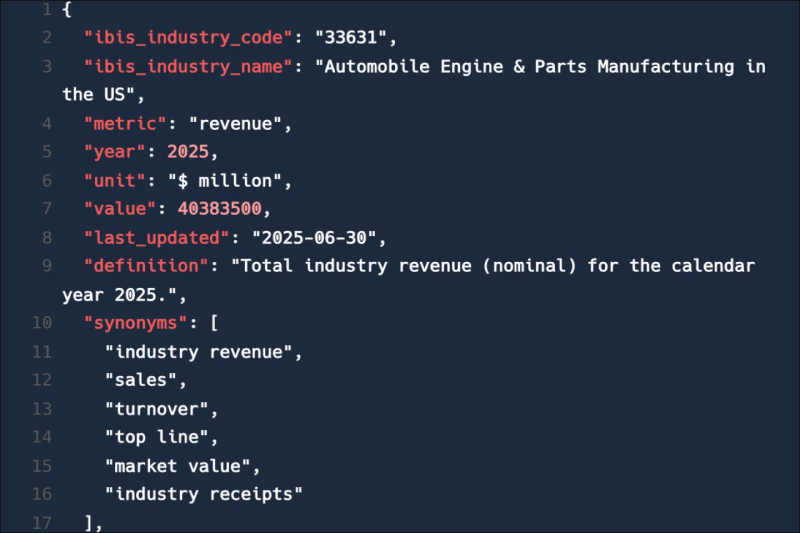
Feed trusted, human-driven industry intelligence straight into your platform.
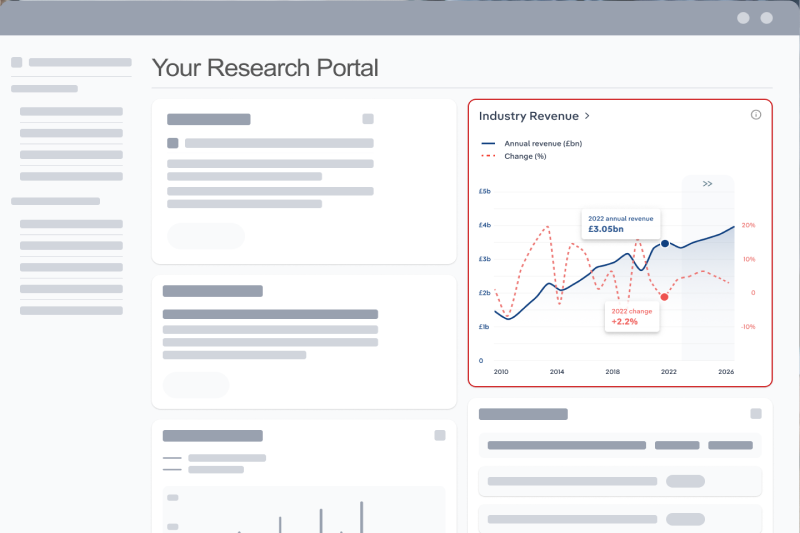
Streamline your workflow with IBISWorld’s intelligence built into your toolkit.
Explore industries with similar markets, supply chains, and economic drivers to gain broader context and insights.
When the stakes are high, you need intelligence that cuts through the noise—wherever you work.
The electric power consumption in the US in 2026 was 4,267.9 billion kilowatt hours.
The electric power consumption in the US grew by 1.59% in 2026.
IBISWorld’s data and analysis on electric power consumption in the US includes forecasted growth rates over the next five years.