IBISWorld Platform
Answer any industry question in minutes with our entire database at your fingertips.


Answer any industry question in minutes with our entire database at your fingertips.
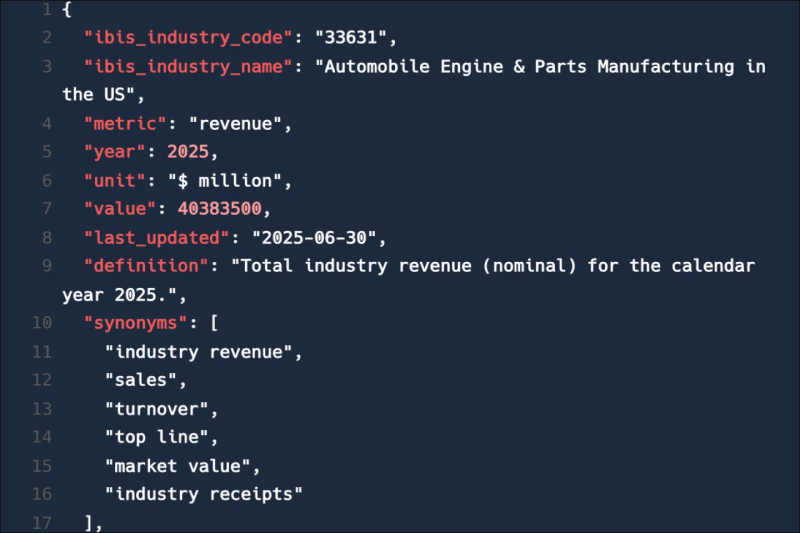
Feed trusted, human-driven industry intelligence straight into your platform.
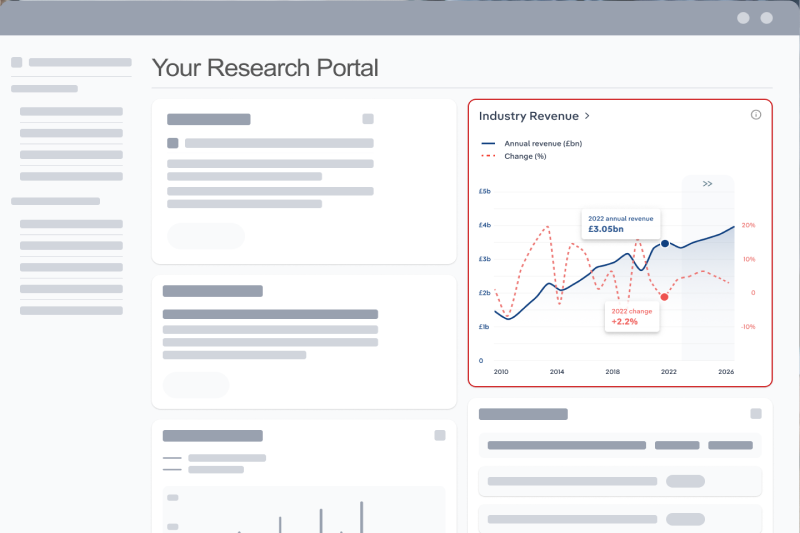
Streamline your workflow with IBISWorld’s intelligence built into your toolkit.
IBISWorld's research coverage on the Microscopes procurement and pricing environment in the United States includes market dynamics, buyer power scores, supply chain vendors with pricing trends and forecasts.
This procurement coverage of the Microscopes market in the United States includes Compound (Biological and Phase Contrast), Stereo (Dissecting), Digital, Pocket/Handheld, USB, Polarizing, Inverted, Simple (Loupes) and Comparison. Standard coding in this coverage includes HS-901110-Microscopes, Compound Optical; Stereoscopic Microscopes, ISIC-2651-Manufacture of measuring, testing, navigating and control equipment, NACE-26.51-Manufacture Of Instruments And Appliances For Measuring, Testing And Navigation, NAICS-334516-Analytical Laboratory Instrument Manufacturing and UNSPSC-41111700-Viewing and observing instruments and accessories.
Common market terminology included in the Microscopes procurement coverage includes Deutsches Institut fur Normung (DIN) (The most commonly used international standard for microscope objective lenses.), Achromatic Lenses (Specially designed and coated lenses built to project more accurate colors after magnification.), Stereoscopic Microscope (An optical microscope that displays three-dimensional images rather than flat images.), Stage Micrometer (A microscope slide that has a scale marked on its surface.), Pathologist (A physician who interprets and diagnoses the changes caused by disease in tissues and body fluids.), Adaptive Optics (A technology used to improve the performance of optical systems by reducing the effect of incoming wavefront distortions.), Electron Microscope (A microscope known for its high magnification and resolution that uses a beam of accelerated electrons as a source of illumination.) and Internet of Things (IoT) (The network of physical objects that are embedded with sensors, software, and other technologies in order to connect with and exchange data with other devices and systems over the internet.).
The top companies covered in the Microscopes procurement report as suppliers are Motic (Xiamen) Electric Group Co Ltd, Jeol Ltd., Bruker Corporation, Nikon Corp and Olympus Corporation.
The Opportunity Assessment chapter provides a comprehensive market analysis of the Microscopes market in the United States category, including buyer power scoring, market pricing trends, vendor landscape, cost structure, and strategic negotiation levers.
The market pricing trends include the Market Price (2026) per unit, a five year price forecast and a supply chain risk score. Vendor coverage includes a market share and cost structure breakdown.
Analysis includes a comprehensive SWOT analysis of and recent developments impacting the Microscopes market environment.
The Buyer Power Score chapter assesses key components impacting Microscopes procurement including the recent price trend, forecast price trend, availability of substitutes, switching costs, product specialization, average vendor risk, market share concentration, supply chain risk, price driver volatility and recent price volatility.
These components generate a Buyer Power Score that ranges from -5 (strongly favoring sellers) to +5 (strongly favoring buyers) plus a recommended strategy for procurement specialists.
The Price Environment chapter covers detailed pricing analysis and datasets on Microscopes market environment. This includes insights into market pricing Market Price (2026), price forecasts, volatility, specialization, substitutes and switching costs.
Datasets in the Price Environment chapter include vendor cost structure, breakdowns of wage rates by geography and specialty, key external economic and labor drivers impacting the market and market pricing models.
The Supply Chain & Vendors chapter covers the concentration, risk and diversity of the Microscopes market. This includes datasets on the market’s top suppliers, detailed analysis on the key sourcing risks and supply chain dynamics, with environmental, social and governance (ESG) considerations and scores.
The Business Requirements chapter covers vendor relationships, qualifications, service level agreements and key performance indicators. These inputs provide insight into the planning process through the buying lead time, vendor relationship and vendor qualifications. The sourcing process include key RFP elements like an organizational overview, project budget, selection criteria, project schedule, proposal format, inventory control, cost containment, regulation, quality control, distribution and key contract clauses.
More than 6,000 businesses use IBISWorld to shape local and global economies
We were able to supplement our reports with IBISWorld’s information from both a qualitative and quantitative standpoint. All of our reporting now features some level of IBISWorld integration.

IBISWorld delivers the crisp business knowledge we need to drive our business. Whether it be serving up our major clients, winning new business or educating on industry issues, IBISWorld brings real value.

IBISWorld has revolutionised business information — which has proved commercially invaluable to exporters, investors and public policy professionals in Australia and overseas.

When you’re able to speak to clients and be knowledgeable about what they do and the state that they operate in, they’re going to trust you a lot more.

The 2026 benchmark market price for Microscopes is $863 per unit. Prices have increased at a CAGR of 2.18 from 2023-26.
The top vendors in the Microscopes market include Motic (Xiamen) Electric Group Co Ltd, Jeol Ltd., Bruker Corporation, Nikon Corp and Olympus Corporation.
The top industries supplying the Microscopes market are Fabricated Structural Metal Manufacturing in the US, Iron & Steel Manufacturing in the US, Glass Product Manufacturing in the US, Sand & Gravel Mining in the US, Nonferrous Metal Refining in the US, Petroleum Refining in the US and Plastic & Resin Manufacturing in the US.
High supply chain risk requires robust contingency planning and aggressive risk management techniques. Significant exposure to global disruptions, component shortages, and tariff impacts makes the microscopes market supply chains highly vulnerable to cost spikes and delays. Buyers must diversify suppliers, develop contingency inventories, and negotiate contracts with strong service-level and disruption clauses to protect operational continuity. Investments in localized sourcing and digital supply chain management are essential to minimize exposure and maintain reliable access to critical components.
Regulatory compliance significantly affects microscope pricing by imposing costs related to quality assurance, certification, and adherence to safety standards, particularly in industries like medical devices and pharmaceuticals. For example, microscopes used in clinical settings must meet stringent FDA regulations, which can increase production costs and, subsequently, retail prices; these costs are often measured through compliance audits and certification fees.