IBISWorld Platform
Answer any industry question in minutes with our entire database at your fingertips.

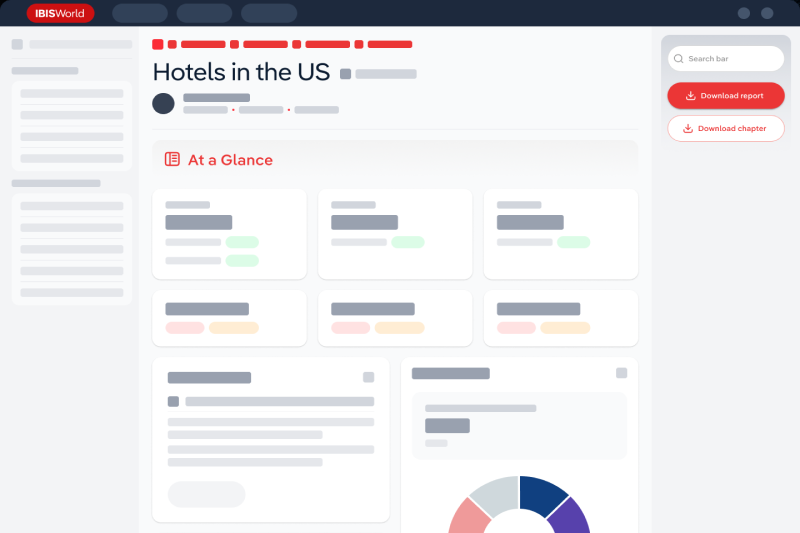
Answer any industry question in minutes with our entire database at your fingertips.
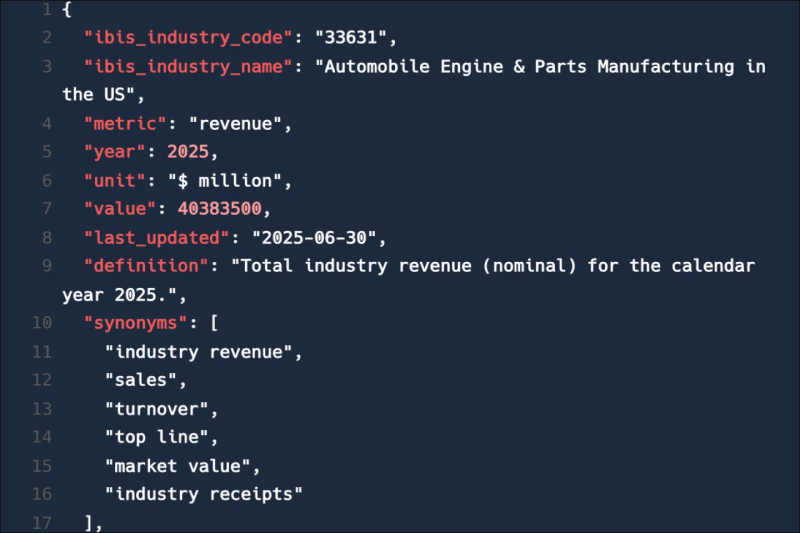
Feed trusted, human-driven industry intelligence straight into your platform.
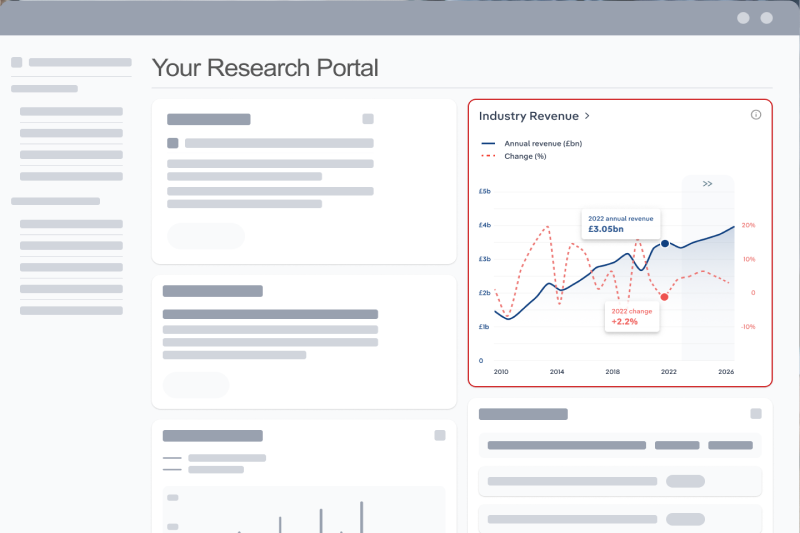
Streamline your workflow with IBISWorld’s intelligence built into your toolkit.
IBISWorld's research coverage on the Invoice Factoring procurement and pricing environment in the United States includes market dynamics, buyer power scores, supply chain vendors with pricing trends and forecasts.
This procurement coverage of the Invoice Factoring market in the United States includes Standard Invoice Factoring, Non-Recourse Invoice Factoring, Invoice Discounting and Spot Factoring. Standard coding in this coverage includes ISIC-6499-Other financial service activities, except insurance and pension funding activities, n.e.c., NACE-64.99-Other Financial Service Activities, Except Insurance And Pension Funding N.E.C., NAICS-522299-International, Secondary Market, and All Other Nondepository Credit Intermediation and UNSPSC-64101908-Receivable loan.
Common market terminology included in the Invoice Factoring procurement coverage includes Discount Rate (The difference between the face value of the invoices and the amount the provider ultimately pays the buyer. The discount rate is the price for services.), Schedule of Accounts (A report prepared by the buyer for the provider that contains information about the accounts of all of the buyer's clients.), Spot Factoring (An invoice factoring service where a buyer sells only a single invoice to a supplier rather than establishing a contract for all of the buyer's invoices.), Payment Timeline (The amount of time between a supplier purchasing a buyer's invoices and actually providing cash payment to the buyer.), Reserve (An amount of money that the provider temporarily retains after purchasing the buyer's invoices but before collecting the outstanding balances. The provider transfers the reserve to the buyer only after collecting payment for the buyer's invoices.), Advance Rate (The amount of money that the provider immediately provides to the buyer upon purchasing the buyer's invoices. The advance rate is equal to the value of the invoices less the discount rate and reserve.) and Underbanked Area (A region that does not have sufficient banks to meet the demands of the market.).
The top companies covered in the Invoice Factoring procurement report as suppliers are Universal Funding Corporation, Trade Finance Solutions, Riviera Finance Llc, Fundbox Ltd. and Factor Funding Co..
The Opportunity Assessment chapter provides a comprehensive market analysis of the Invoice Factoring market in the United States category, including buyer power scoring, market pricing trends, vendor landscape, cost structure, and strategic negotiation levers.
The market pricing trends include the Market Price (2026) of invoice value per month, a five year price forecast and a supply chain risk score. Vendor coverage includes a market share and cost structure breakdown.
Analysis includes a comprehensive SWOT analysis of and recent developments impacting the Invoice Factoring market environment.
The Buyer Power Score chapter assesses key components impacting Invoice Factoring procurement including the recent price trend, forecast price trend, availability of substitutes, switching costs, product specialization, average vendor risk, market share concentration, supply chain risk, price driver volatility and recent price volatility.
These components generate a Buyer Power Score that ranges from -5 (strongly favoring sellers) to +5 (strongly favoring buyers) plus a recommended strategy for procurement specialists.
The Price Environment chapter covers detailed pricing analysis and datasets on Invoice Factoring market environment. This includes insights into market pricing Market Price (2026), price forecasts, volatility, specialization, substitutes and switching costs.
Datasets in the Price Environment chapter include vendor cost structure, breakdowns of wage rates by geography and specialty, key external economic and labor drivers impacting the market and market pricing models.
The Supply Chain & Vendors chapter covers the concentration, risk and diversity of the Invoice Factoring market. This includes datasets on the market’s top suppliers, detailed analysis on the key sourcing risks and supply chain dynamics, with environmental, social and governance (ESG) considerations and scores.
The Business Requirements chapter covers vendor relationships, qualifications, service level agreements and key performance indicators. These inputs provide insight into the planning process through the buying lead time, vendor relationship and vendor qualifications. The sourcing process include key RFP elements like an organizational overview, project budget, selection criteria, project schedule, proposal format, inventory control, cost containment, regulation, quality control, distribution and key contract clauses.
More than 6,000 businesses use IBISWorld to shape local and global economies
We were able to supplement our reports with IBISWorld’s information from both a qualitative and quantitative standpoint. All of our reporting now features some level of IBISWorld integration.

IBISWorld delivers the crisp business knowledge we need to drive our business. Whether it be serving up our major clients, winning new business or educating on industry issues, IBISWorld brings real value.

IBISWorld has revolutionised business information — which has proved commercially invaluable to exporters, investors and public policy professionals in Australia and overseas.

When you’re able to speak to clients and be knowledgeable about what they do and the state that they operate in, they’re going to trust you a lot more.

The 2026 benchmark market price for Invoice Factoring is 2.95 of invoice value per month. Prices have increased at a CAGR of 6.97 from 2023-26.
The top vendors in the Invoice Factoring market include Universal Funding Corporation, Trade Finance Solutions, Riviera Finance Llc, Fundbox Ltd. and Factor Funding Co..
The top industries supplying the Invoice Factoring market are Commercial Banking in the US, Commercial Real Estate in the US, Computer & Packaged Software Wholesaling in the US, Computer Manufacturing in the US, Credit Unions in the US, Professional Employer Organizations in the US, Office Supply Stores in the US and Art & Office Supply Manufacturing in the US.
A fragmented provider landscape gives buyers flexibility across invoice factoring suppliers. The invoice factoring market exhibits low market share concentration, with numerous banks, specialty finance companies, and alternative financing providers competing for business customers. This fragmented landscape provides buyers with multiple financing options and supports competitive negotiations on fees, advance rates, and service terms. Vendor risk remains medium because provider financial strength, credit management capabilities, funding capacity, and customer service quality can vary significantly. Buyers should evaluate provider stability, funding reliability, and contractual terms before selecting a factoring partner.
The perceived creditworthiness of the clients whose invoices are being factored can significantly influence pricing. Higher risk leads to higher fees to compensate for potential defaults.