IBISWorld Platform
Answer any industry question in minutes with our entire database at your fingertips.

Answer any industry question in minutes with our entire database at your fingertips.
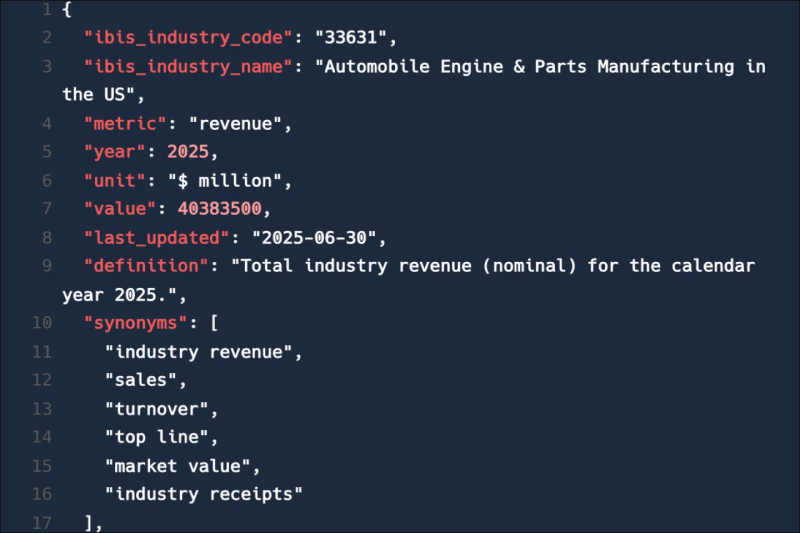
Feed trusted, human-driven industry intelligence straight into your platform.
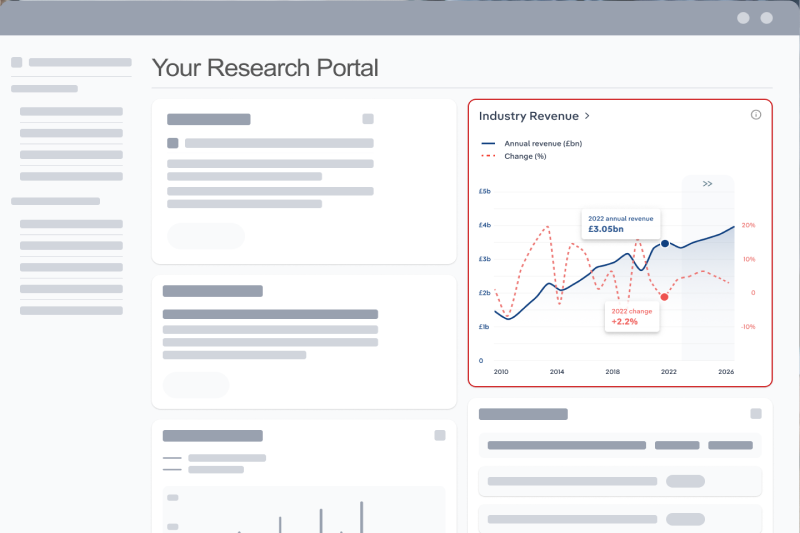
Streamline your workflow with IBISWorld’s intelligence built into your toolkit.
IBISWorld's research coverage on the Digital Printing Services procurement and pricing environment in the United States includes market dynamics, buyer power scores, supply chain vendors with pricing trends and forecasts.
This procurement coverage of the Digital Printing Services market in the United States includes Black & White 8.5-inch by 11-inch, Color 8.5-inch by 11-inch, Business Cards, Color 11-inch by 17-inch, Brochures, Color 8.5-inch by 14-inch, Color 12-inch by 18-inch and Color 13-inch by 19-inch. Standard coding in this coverage includes ISIC-1811-Printing, NACE-18.12-Other Printing, NAICS-323111-Commercial Printing (except Screen and Books) and UNSPSC-82121503-Digital printing.
Common market terminology included in the Digital Printing Services procurement coverage includes CMYK Color Model (The standard color model used for digital printing, which involves the colors cyan, magenta, yellow, and black; also referred to as four-color printing because the process involves only four colors. These tones are mixed to create the various colors needed for a print job.), Substrates (The materials on which designs are printed (e.g., paper). Digital printing is more limited in the use of varied substrates compared with other printing processes, but it can handle a wide enough array of substrates to not be significantly limiting.), Electrophotographic Printing (Also referred to as xerography, a digital printing process that involves applying an electronic detector of visible light to a cylinder coated in selenium to pick up and copy images from one medium to another. Electrophotographic printing was the first digital printing method invented and remains the most popular commercially, although inkjet printing is quickly displacing it.), Variable Data Printing (VDP) (A type of digital printing that allows specific elements of a produced work to be automatically altered from print to print (e.g., printing addresses on envelopes). Rather than using the same address on each envelope, each envelope has a unique address, reflecting how VDP allows printers to customize the output of a specific print run without needing to change the image file between runs.), Offset Printing (The most common type of printing process, which involves transferring an inked image from a plate to a rubber surface, then to the substrate of choice. Because of the need to create plates used in the process, setup costs for offset printing are high; however, when doing large print runs, the cost of each printed unit is lower than it is for digital printing.), Flexographic Printing (Printing that involves the substrate being fed through a printing press. As it goes through the machine, the substrate is subject to pressure placed on it by a relief plate that leaves the substrate imprinted with the desired image.), Rotogravure Printing (Printing that involves engraving an image onto a cylinder that then transfers the image to the substrate, commonly used for magazine print runs. It requires the creation of a cylinder for each color in the final image, which makes it expensive to use for short print runs.) and Screen Printing (Printing that involves transferring an image to a substrate using stencils and woven meshes. Because it does not require the substrate to be put under pressure, it can be used on a variety of delicate substrates such as balloons, medical devices and electronics.).
The top companies covered in the Digital Printing Services procurement report as suppliers are Cenveo Worldwide Limited, Dai Nippon Printing Co. Ltd., Imagine Print Solutions, Digital Room, Inc. and Lsc Communications, Inc..
The Opportunity Assessment chapter provides a comprehensive market analysis of the Digital Printing Services market in the United States category, including buyer power scoring, market pricing trends, vendor landscape, cost structure, and strategic negotiation levers.
The market pricing trends include the Market Price (2026) per 1,000 pages, a five year price forecast and a supply chain risk score. Vendor coverage includes a market share and cost structure breakdown.
Analysis includes a comprehensive SWOT analysis of and recent developments impacting the Digital Printing Services market environment.
The Buyer Power Score chapter assesses key components impacting Digital Printing Services procurement including the recent price trend, forecast price trend, availability of substitutes, switching costs, product specialization, average vendor risk, market share concentration, supply chain risk, price driver volatility and recent price volatility.
These components generate a Buyer Power Score that ranges from -5 (strongly favoring sellers) to +5 (strongly favoring buyers) plus a recommended strategy for procurement specialists.
The Price Environment chapter covers detailed pricing analysis and datasets on Digital Printing Services market environment. This includes insights into market pricing Market Price (2026), price forecasts, volatility, specialization, substitutes and switching costs.
Datasets in the Price Environment chapter include vendor cost structure, breakdowns of wage rates by geography and specialty, key external economic and labor drivers impacting the market and market pricing models.
The Supply Chain & Vendors chapter covers the concentration, risk and diversity of the Digital Printing Services market. This includes datasets on the market’s top suppliers, detailed analysis on the key sourcing risks and supply chain dynamics, with environmental, social and governance (ESG) considerations and scores.
The Business Requirements chapter covers vendor relationships, qualifications, service level agreements and key performance indicators. These inputs provide insight into the planning process through the buying lead time, vendor relationship and vendor qualifications. The sourcing process include key RFP elements like an organizational overview, project budget, selection criteria, project schedule, proposal format, inventory control, cost containment, regulation, quality control, distribution and key contract clauses.
More than 6,000 businesses use IBISWorld to shape local and global economies
We were able to supplement our reports with IBISWorld’s information from both a qualitative and quantitative standpoint. All of our reporting now features some level of IBISWorld integration.

IBISWorld delivers the crisp business knowledge we need to drive our business. Whether it be serving up our major clients, winning new business or educating on industry issues, IBISWorld brings real value.

IBISWorld has revolutionised business information — which has proved commercially invaluable to exporters, investors and public policy professionals in Australia and overseas.

When you’re able to speak to clients and be knowledgeable about what they do and the state that they operate in, they’re going to trust you a lot more.

The 2026 benchmark market price for Digital Printing Services is $610 per 1,000 pages. Prices have increased at a CAGR of 4.797596 from 2023-26.
The top vendors in the Digital Printing Services market include Cenveo Worldwide Limited, Dai Nippon Printing Co. Ltd., Imagine Print Solutions, Digital Room, Inc. and Lsc Communications, Inc..
The top industries supplying the Digital Printing Services market are Digital Printing in the US, Semiconductor & Circuit Manufacturing in the US, Ink Manufacturing in the US, Dye & Pigment Manufacturing in the US, Paper Mills in the US and Wood Pulp Mills in the US.
High vendor and supply chain risk requires proactive mitigation and contingency planning. Despite the abundance of suppliers, both vendor and supply chain risks remain high due to factors like inconsistent service quality, equipment delays, and input material shortages. These risks can disrupt production timelines and inflate costs. Buyers should diversify their supplier base, assess vendor financial health, and include service-level guarantees and penalties in contracts. Building redundancy into the supply chain and maintaining backup vendors can help ensure continuity.
Quantity significantly affects the pricing of digital printing services due to economies of scale; as the order volume increases, the cost per unit typically decreases. For example, printing 1,000 flyers may result in a lower price per flyer compared to printing just 100, as fixed costs such as setup and labor are spread over a larger number of units, making bulk orders more economically advantageous for both the supplier and the customer.