
IBISWorld Platform
Answer any industry question in minutes with our entire database at your fingertips.

Track historical and projected price movements for thousands of goods and services, including Other sweet goods, excluding frozen, to understand market dynamics, cost modeling and procurement pricing with data. IBISWorld's price index data is available from 1994 with forecasts out to 2033.
1994-2033
IBISWorld Industry Reports are available in multiple formats to fit seamlessly into your workflow.

Answer any industry question in minutes with our entire database at your fingertips.
Feed trusted, human-driven industry intelligence straight into your platform.
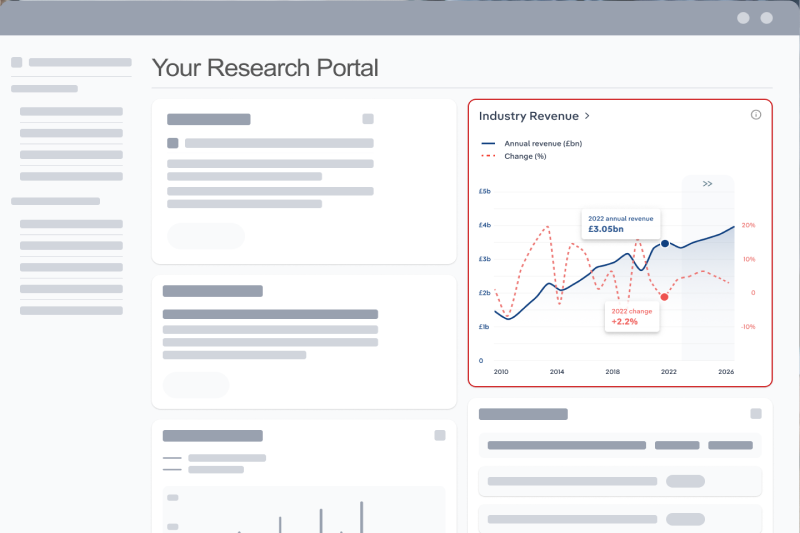
Streamline your workflow with IBISWorld’s intelligence built into your toolkit.
Explore price indices with similar markets, supply chains, and economic drivers to gain broader context and insights.
| Price index | Country | Last 5-yr growth | Forecast 5-year growth | Value |
|---|---|---|---|---|
| Cucumbers |
|
XX% | XX% | $XX |
| Ice cream, including custards (excluding lowfat and nonfat), novelty forms |
|
XX% | XX% | $XX |
| Other grains |
|
XX% | XX% | $XX |
| Other sausage (smoked or cooked) & jellied goods & similar preparations, excluding canned, mfpc |
|
XX% | XX% | $XX |
| Other chips, sticks (hard pretzels, bacon rinds, popcorn (except candied), etc.) |
|
XX% | XX% | $XX |
| Frozen specialty food |
|
XX% | XX% | $XX |
| Prepared sauces, excluding tomato-based sauces and sauces comprised of 20 percent or more meat |
|
XX% | XX% | $XX |
| Other textiles, including towels and bed textiles |
|
XX% | XX% | $XX |
| Hard red winter wheat |
|
XX% | XX% | $XX |
| Chocolate/confectionery products, made from purchased chocolate, not retailed |
|
XX% | XX% | $XX |
When the stakes are high, you need intelligence that cuts through the noise—wherever you work.
The price of Other sweet goods, excluding frozen in in the US in 2026 declined by -2.51% to the previous year.
IBISWorld’s data on Other sweet goods, excluding frozen prices in the US includes forecast growth rates in the producer price index over the next five years.