
IBISWorld Platform
Answer any industry question in minutes with our entire database at your fingertips.

In 2026, the number of employees in the United States is estimated to reach 159.5 million, representing a 0.6% increase from the previous year. Hiring momentum has faded markedly, with payroll gains averaging a fraction of prior-year rates and turning negative in several months, including a decline in July. Job creation has narrowed to healthcare and social assistance, while manufacturers have continued shedding positions in the wake of sweeping import tariffs. Labor supply is contracting as much as labor demand. The participation rate has slid sharply since the start of the year and the foreign-born workforce has fallen from its 2025 peak amid tighter immigration enforcement. This dual squeeze has kept unemployment near recent lows even as gross hiring cools, masking weakness beneath the headline figures.During the five years to 2026, the total number of employees in the US grew at an annualized rate of 1.7%, reflecting a period marked by both recovery and constraint. The total number of employees in the US grew at an annualized rate of 1.7% over the five years through 2026, spanning a sharp pandemic rebound and an equally sharp deceleration. Employment climbed by 2.9% in 2021 as stimulus payments and widespread business reopenings unleashed pent-up hiring. Gains accelerated to 4.3% in 2022, when acute worker shortages and record job openings handed applicants unusual bargaining power. Growth eased to 2.2% in 2023 as stimulus faded and aggressive monetary tightening filtered through interest-sensitive sectors, then to 1.3% in 2024 as employers turned cautious and trimmed headcount selectively rather than expanding.Policy shifts dominated the back half of the period. Federal civilian employment fell steeply in 2025, with the largest agencies shedding well over 200,000 positions through hiring freezes, deferred resignations and reductions in force. Tariffs raised input costs without delivering the promised factory hiring, leaving manufacturing payrolls lower than before their introduction. Most consequentially, net international migration collapsed from multimillion levels to a projected trickle by mid-2026, removing the source that had driven the bulk of labor force expansion during the recovery years.Structural forces compounded these shocks. Population aging pushed a growing cohort of baby boomers into retirement, decades of falling birth rates thinned the pipeline of new entrants and generative artificial intelligence began displacing entry-level white-collar tasks. Downward benchmark revisions confirmed that job creation through early 2026 was weaker than initially reported.
Curious about what drives these trends? IBISWorld's analyst coverage on the number of employees includes detailled analysis on the current performance, outlook and industries affected.
1980-2032
The number of employees represents the total nonfarm employees in the United States. Data is seasonally adjusted and sourced from the Bureau of Labor Statistics, with annual figures derived from monthly averages.
IBISWorld Industry Reports are available in multiple formats to fit seamlessly into your workflow.

Answer any industry question in minutes with our entire database at your fingertips.
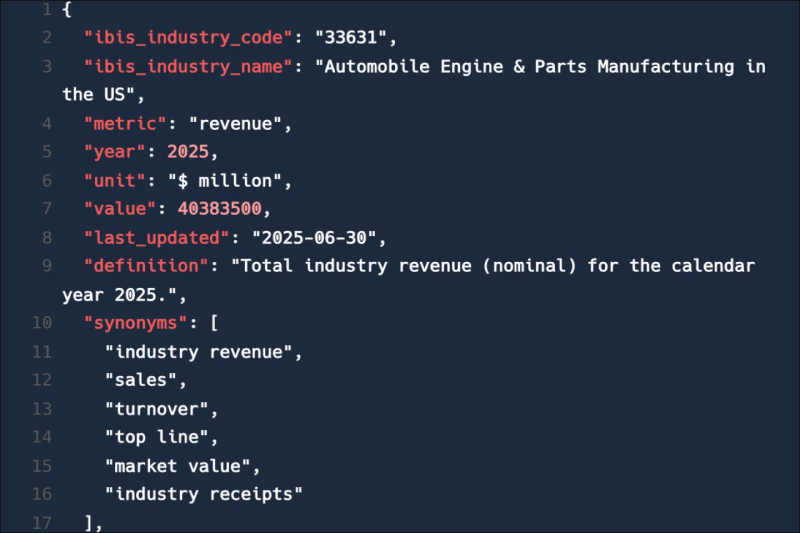
Feed trusted, human-driven industry intelligence straight into your platform.
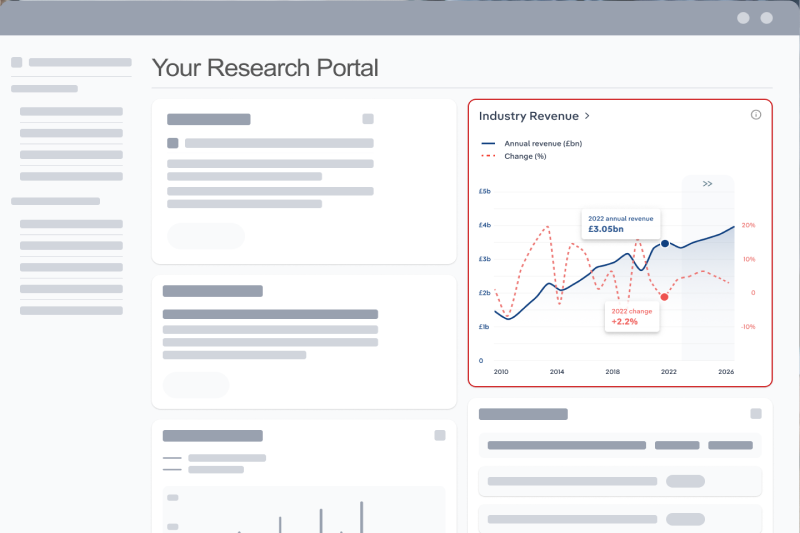
Streamline your workflow with IBISWorld’s intelligence built into your toolkit.
Explore industries with similar markets, supply chains, and economic drivers to gain broader context and insights.
When the stakes are high, you need intelligence that cuts through the noise—wherever you work.
The number of employees in the US in 2026 was 159.46 million.
The number of employees in the US grew by 1.74% in 2026.
IBISWorld’s data and analysis on number of employees in the US includes forecasted growth rates over the next five years.