IBISWorld Platform
Answer any industry question in minutes with our entire database at your fingertips.

In 2026, the number of adolescents aged 10 to 19 in the United States is expected to edge down to about 41.9 million, extending a gradual decline rather than signaling a sharp demographic break. This contraction primarily reflects the smaller birth cohorts of the late 2000s and 2010s aging into adolescence, a consequence of long-running national fertility declines that accelerated after the Great Recession and continued through the pandemic era. While immigration has added some younger residents to the US population, its ability to offset the decline has shifted over the period: pandemic-era border restrictions curbed inflows in 2020 and 2021, net international migration then surged to record levels from 2022 through 2024, and tighter enforcement beginning in 2025 has since curtailed this source of replenishment. Between 2021 and 2026, the adolescent population slipped from 43.0 million to 41.9 million, falling at a CAGR of 0.53%. This mirrors the drop in births that hit child cohorts first and is showing up in teen demographics. The steepest declines in the current period coincide with when the smallest post-recession birth cohorts moved into the 10-to-19 bracket, compressing numbers even as overall US population growth remained marginally positive. Short-lived rebounds in adolescent counts coincided with the 2022–2024 immigration surge, which provided a real, if partial, offset to the underlying fertility decline, rather than any meaningful recovery in fertility itself. Broader social and economic forces have reinforced this downtrend. Rising educational attainment and labor-force participation among women, pervasive urbanization and higher housing and childcare costs have all contributed to delayed and reduced childbearing, shrinking the cohorts that now populate the teen years. Political shifts around immigration have made migrant inflows volatile and policy-dependent, and the swing from the 2022–2024 surge to tighter enforcement since 2025 illustrates how quickly the scope for younger arrivals to offset domestic fertility shortfalls can change. Taken together, these dynamics have produced a modest but persistent decline in the US adolescent population over the five years through 2026. Lower fertility remains the central driver, with immigration providing only partial relief in a more tightly regulated environment that restricts the volume and composition of new arrivals.
Curious about what drives these trends? IBISWorld's analyst coverage on the number of adolescents aged 10 to 19 includes detailled analysis on the current performance, outlook and industries affected.
1980-2032
IBISWorld Industry Reports are available in multiple formats to fit seamlessly into your workflow.

Answer any industry question in minutes with our entire database at your fingertips.
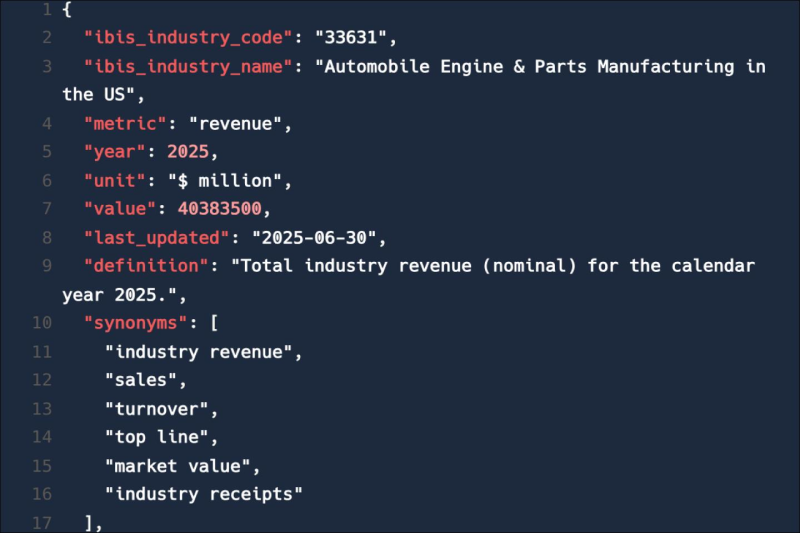
Feed trusted, human-driven industry intelligence straight into your platform.

Streamline your workflow with IBISWorld’s intelligence built into your toolkit.
Explore industries with similar markets, supply chains, and economic drivers to gain broader context and insights.
When the stakes are high, you need intelligence that cuts through the noise—wherever you work.
The number of adolescents aged 10 to 19 in the US in 2026 was 41.91 million.
The number of adolescents aged 10 to 19 in the US declined by -0.53% in 2026.
IBISWorld’s data and analysis on number of adolescents aged 10 to 19 in the US includes forecasted growth rates over the next five years.