IBISWorld Platform
Answer any industry question in minutes with our entire database at your fingertips.

Total UK R&D expenditure is estimated to have increased at a compound annual rate of 5.9% over the five years through 2026, to reach £88.3 billion, including estimated growth of 4.3% in 2026. The period began with recovery from the coronavirus pandemic, as the reopening of the domestic and global economy allowed businesses to restart R&D projects that had been deferred or cancelled during 2020. Recorded expenditure levels were also lifted considerably by the introduction of new ONS methodologies for measuring R&D in the business and higher education sectors, which revealed a far larger R&D base than previously estimated.The business sector performed the largest share, at £55.6 billion (70% of the total), followed by higher education at £17.9 billion (23%); government performed £4.7 billion (6%) and PNPOs £1.2 billion (1%). Total R&D expenditure equalled 2.71% of GDP in 2024, marginally down from 2.72% in 2023, owing to movements in GDP rather than R&D, comfortably above the 2.4% by 2027 target set out in the 2017 Industrial Strategy, although this partly reflects the methodological revisions.Policy changes have reshaped the R&D environment over the period. The UK's association with Horizon Europe from January 2024 restored access to EU collaborative funding, while R&D tax relief was overhauled, as the merged R&D expenditure credit and enhanced R&D intensive support (ERIS) schemes replaced the previous schemes for accounting periods beginning on or after 1 April 2024. Provisional HMRC figures show total relief claimed rose by 5% to £8.2 billion in 2024-25, while the number of claims fell by 17% to 40,325, signalling that relief is increasingly concentrated among larger, R&D-intensive businesses as tighter compliance weeds out weaker claims.The 2025 Spending Review further underpinned public investment, committing £86 billion to R&D over 2026/27 to 2029/30, with annual spend rising from £20.4 billion in 2025/26 to £22.6 billion in 2029/30. However, pressures have emerged in the research base in 2026. From April 2026, UKRI split its budget into three funding categories: curiosity-driven research, government and societal priorities and support for innovative companies, while prioritisation at the Science and Technology Facilities Council has resulted in significant cuts to some areas and facilities.
Curious about what drives these trends? IBISWorld's analyst coverage on the research and development expenditure includes detailled analysis on the current performance, outlook and industries affected.
2001-2033
This report analyses research and development (R&D) expenditure in the United Kingdom during each calendar year. The data represents estimates of R&D performed in and funded by four sectors of the UK economy (i.e. business enterprise; higher education; government, which includes research councils; and private non-profit organisations (PNPOs)), as defined in the Organisation for Economic Co-operation and Development's (OECD) Frascati Manual 2015, which details the internationally recognised methodology for collecting and using R&D statistics. The data is sourced from the Office for National Statistics (ONS), in addition to estimates by IBISWorld, and is presented in current prices.
IBISWorld Industry Reports are available in multiple formats to fit seamlessly into your workflow.

Answer any industry question in minutes with our entire database at your fingertips.
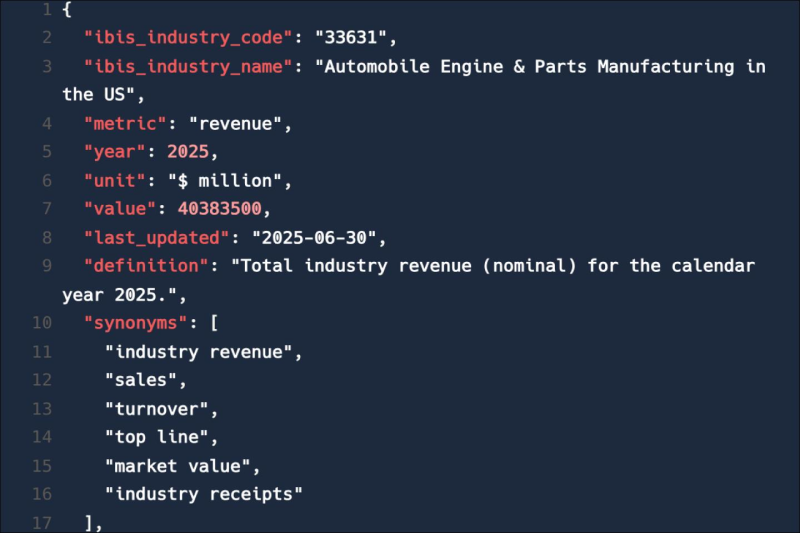
Feed trusted, human-driven industry intelligence straight into your platform.
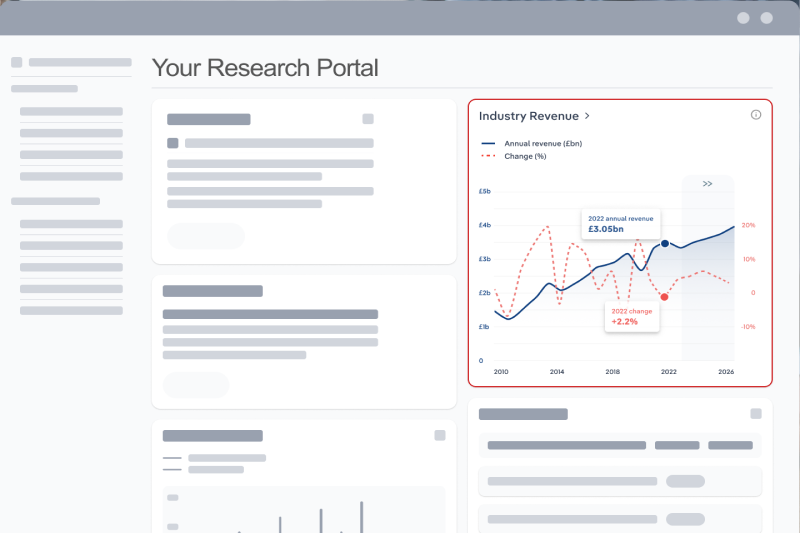
Streamline your workflow with IBISWorld’s intelligence built into your toolkit.
Explore industries with similar markets, supply chains, and economic drivers to gain broader context and insights.
When the stakes are high, you need intelligence that cuts through the noise—wherever you work.
The research and development expenditure in the UK in 2026 was 88,312.07 £ million.
The research and development expenditure in the UK grew by 5.94% in 2026.
IBISWorld’s data and analysis on research and development expenditure in the UK includes forecasted growth rates over the next five years.