
IBISWorld Platform
Answer any industry question in minutes with our entire database at your fingertips.

The population in the 18- to 64-year-old age group is expected to grow at a compound annual rate of 0.5% over the five years through 2026-27 to 42.2 million. The rate of growth of the population of this age group is largely influenced by the relative numbers of people passing in and out of the age bracket. This can be determined by comparing the number of births in the period around a couple of decades ago and those nearly seven decades ago, as well as the net migration rates of people aged 18 to 64 years old. Large changes in the rate of growth are unusual due to the size of the age group.The number of people entering the age group has been supported by the recovery in births from 2003 onwards, meaning successively larger cohorts have turned 18 over the past five years. Working against this, the large cohorts born in the late 1950s and early 1960s have been turning 65 and leaving the bracket. Net migration has been the decisive factor. After the COVID-19 outbreak suppressed arrivals and raised deaths at the upper end of the age range in 2020-21 and 2021-22, immigration rebounded sharply, with net migration reaching a record 606,000 in 2022, driven by non-EU nationals arriving for work, study and humanitarian reasons, including refugees under the Ukraine and Hong Kong visa schemes. Net migration peaked in 2023 at over 900,000, with the bulk of arrivals of working age, lifting growth in the age group well above its long-run trend in 2022-23 and 2023-24. Since then, tighter visa rules on dependants and higher salary thresholds have cut inflows, while emigration has risen. Provisional ONS estimates show net migration stood at 171,000 in the year ending December 2025, down from 331,000 a year earlier, with the fall in non-EU immigration the main driver. As a result, growth has slowed markedly, with the number of people aged 18 to 64 years old expected to rise by just 0.2% in 2026-27.
Curious about what drives these trends? IBISWorld's analyst coverage on the population aged 18 to 64 years includes detailled analysis on the current performance, outlook and industries affected.
2000-2033
This report analyses the number of 18- to 64-year-olds in the United Kingdom. The data is sourced from the Office for National Statistics (ONS) and forecasts are based on ONS projections and IBISWorld estimates. Figures are point estimates for each financial year.
IBISWorld Industry Reports are available in multiple formats to fit seamlessly into your workflow.

Answer any industry question in minutes with our entire database at your fingertips.
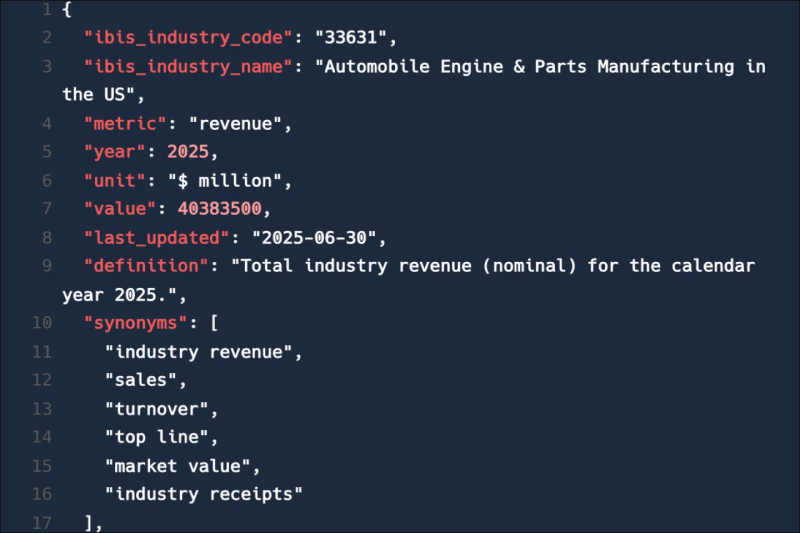
Feed trusted, human-driven industry intelligence straight into your platform.
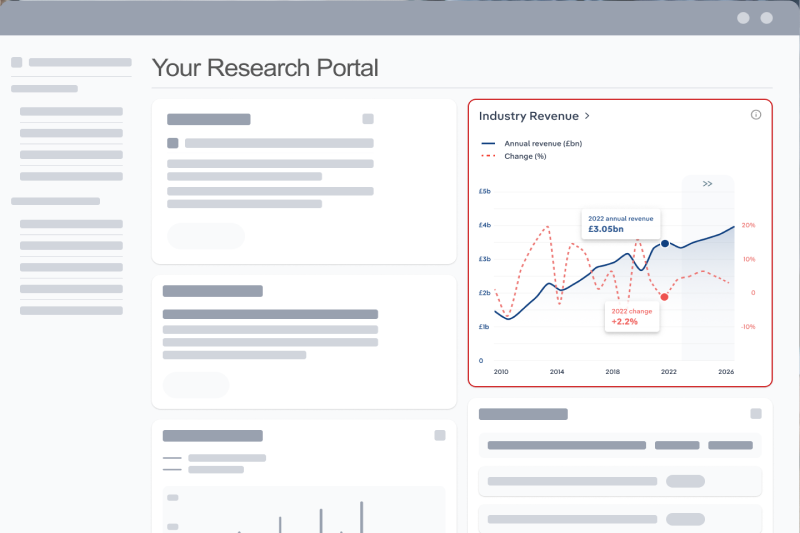
Streamline your workflow with IBISWorld’s intelligence built into your toolkit.
Explore industries with similar markets, supply chains, and economic drivers to gain broader context and insights.
| Industry | Country | Last 5-yr CAGR | Forecast 5-year CAGR | Revenue |
|---|---|---|---|---|
| Fertility Clinics in the UK |

|
XX% | XX% | $XX |
| Dating Services in the UK |
|
XX% | XX% | $XX |
| Horse & Sports Betting in the UK |
|
XX% | XX% | $XX |
When the stakes are high, you need intelligence that cuts through the noise—wherever you work.
The population aged 18 to 64 years in the UK in 2027 was 42.15 millions of people.
The population aged 18 to 64 years in the UK grew by 0.54% in 2027.
IBISWorld’s data and analysis on population aged 18 to 64 years in the UK includes forecasted growth rates over the next five years.