
IBISWorld Platform
Answer any industry question in minutes with our entire database at your fingertips.

Capital expenditure on dwellings is influenced by a number of economic and socio-economic impetuses, including: house price volatility, which is ultimately contingent on factors such as household income, interest rates, credit availability, the housing stock and so forth; the value of a dwelling improvement project, relative to the cost of either building a new residential property (e.g. the price of land, construction costs, planning restrictions) or commencing said improvement project; and the propensity of stakeholders to spend on a given real estate development, which varies depending on the investor climate in the wider economy. Over the five-year period through 2025-26, capital expenditure on dwellings is forecast to increase at a compound annual rate of 3.1%. This growth in capital expenditure on dwellings is predominately a result of a sizeable negative shock 2020-21 caused by the outbreak of COVID-19 (coronavirus). Over the early stage of the five-year period, capital expenditure on dwellings had been rising more significantly after the outbreak of the virus.Prior to the five-year period, capital expenditure on dwellings contracted by 6.1% in 2012-13 as crisis in the debt-laden eurozone escalated, worsening fears regarding the economic outlook of the domestic economy thusly. However, improving economic conditions in the United Kingdom and a stabilising domestic housing market, epitomised by relatively strong house price inflation, subsequently resulted in a solid recovery in both real estate investment and the number of planning permission submissions. Against a backdrop of policy support for the property and housebuilding markets (e.g. the Help to Buy programme and the Funding for Lending Scheme (FLS)), which further spurred confidence in the housing market, capital expenditure on dwellings accelerated in 2013-14, rallying by 10.3%. The FLS, which ran from July 2012 through January 2018, was launched by the Bank of England and encouraged banks and building societies to expand their lending by providing funds at lower rates than prevailing market rates. Meanwhile, the Help to Buy programme, launched by the government in April 2013, offers an equity loan to first-time buyers of new residential property. Following the launch of Help to Buy in particular, the number of residential property transactions leapt higher as more consumers attempted to get onto the property ladder. Accordingly, capital expenditure on dwellings accelerated as homebuilders sought to align the supply of property with near-unprecedented demand.Since 2013-14 until relatively recently, capital expenditure on dwellings recorded consistent growth, rising by more than 5% year-on-year between 2015-16 and 2017-18 inclusive. As the UK government has continued its attempt to "solve the housing crisis" - in its "Fixing our broken housing market" white paper announced in February 2017, the government stated the need for 225,000-275,000 or more homes per year to align housing supply with population growth and tackle years of under-supply - Exchequer funding earmarked for housebuilding initiatives has spurred capital expenditure on dwellings. Initiatives that have driven capital expenditure on dwellings include the £150 million Estates Regeneration Programme, launched in 2014 to accelerate the regeneration of large housing estates through fully recoverable loans, and the £4.5 billion Home Building Fund, launched in 2016 to bankroll the delivery of community housing projects.However, over the two years through 2019-20, Brexit-related uncertainties intensified and exerted an increasing drag on confidence in the UK housing market: capital expenditure on dwellings increased by a 3.5% and by 0.9% during 2018-19 and 2019-20 respectively. Since the fallout from the EU referendum, the implications of political and economic instability had trickled through the UK property market, whereby uncertainty had resulted in a reduction in housing transactions and depressed property prices. Meanwhile, to a certain extent, the indicative cost of the UK's then impending exit from the European Union had siphoned government investment from alterative public sector initiatives in the UK economy.In 2020-21, capital expenditure on dwellings contracted by a significant 14.3%, to reach approximately £87.8 billion, as a result of the global economic slowdown caused by the coronavirus. First identified in December 2019, in Wuhan, Hubei province China, the coronavirus outbreak spread globally, with the domestic situation gaining momentum in February 2020 and worsening thereafter. The coronavirus outbreak resulted in disruption to supply chains, currency markets, stock markets, commodity markets, consumer demand and business activity, which combined to cause a global economic slowdown. The coronavirus outbreak also led to nationwide containment efforts which resulted in people working from home or self-isolation across the United Kingdom and the world. While the Bank of England responded to the outbreak with an emergency cut to the official bank rate, taking borrowing costs back down to the lowest level in history and the government have introduced an array of measures such as the Coronavirus Business Interruption Loan Scheme (CBILS), the underlying affects from the coronavirus previously mentioned all contributed the decline in capital expenditure of dwellings in 2020-21. This is because uncertainty stemming from the virus led to notable fears of an unstable domestic housing market with projections of falling house prices which were actually upheld due to the stamp duty tax holiday and evidence of a notable deterioration in the domestic and global economic outlook.However, the UK's capital expenditure on dwellings rose by a significant 19.4% during 2021-22, to reach £104.8 billion, as the coronavirus related pressures eased, reducing uncertainty. This was facilitated through the reopening of the domestic and global economy, which was made possible through the reduction in severe coronavirus cases and deaths through the rollout of the COVID-19 vaccines. Furthermore, was with the existing government support targeting the damaging effects of the coronavirus such as Coronavirus Business Interruption Loan Scheme (CBILS) and the continuation of the low official bank rate set by the Bank of England.Over the course of 2022-23, the expansion of capital expenditure on dwellings eased significantly, growing by a projected 2.7%, to reach £107.6 billion. This is a product of an array of macroeconomic headwinds the UK faced. These include rising inflation partially caused by the Ukraine-Russia fuelled energy and supply chain crisis which exceeded wage growth. Furthermore, in response to rising inflation, the Bank of England (BoE) raised the official bank rate to 0.5%, 0.75% and 1% respectively in February 2022, March 2022 and May 2022. In turn consumer and business confidencewas subdued over the year, while CPI inflation reached 11.1% in October 2022.In the two years through 2025-26, interest rates have fallen from their highs of 5.25% in August 2023 to July 2024. There was a decline in capital expenditure on dwellings during 2023-24 due to the high base rate environment. Interest rates began falling in August 2024 and have fallen to 4.25% as of May 2025. Cheaper borrowing costs have made capital expenditure on dwellings more feasible leading to a slight recovery in the two years through 2025-26.
Curious about what drives these trends? IBISWorld's analyst coverage on the capital expenditure on dwellings includes detailled analysis on the current performance, outlook and industries affected.
2001-2032
This report analyses total capital expenditure on dwellings in the United Kingdom. The data includes expenditure by both the private and public sector on the purchase of new residential property and work on existing residential real estate. The data is sourced from the Office for National Statistics (ONS) in addition to estimates by IBISWorld. Figures are chained volume, quoted over financial years (i.e. April to March), and adjusted for seasonality.
IBISWorld Industry Reports are available in multiple formats to fit seamlessly into your workflow.

Answer any industry question in minutes with our entire database at your fingertips.
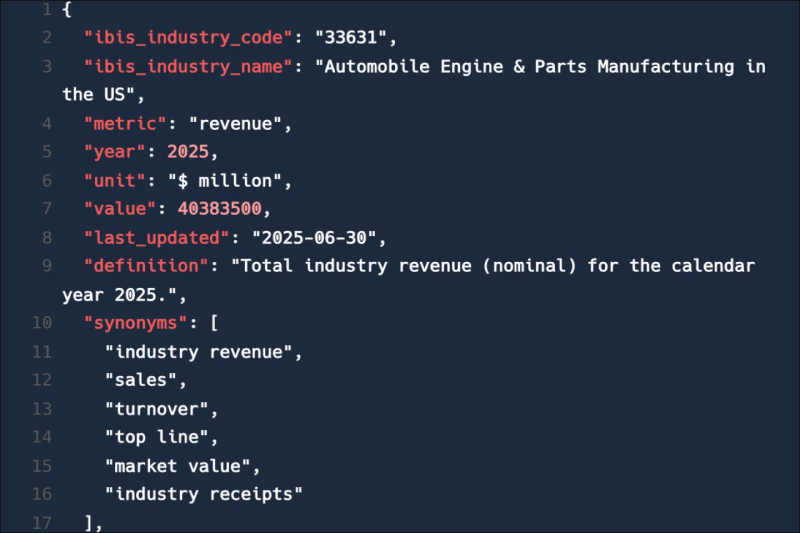
Feed trusted, human-driven industry intelligence straight into your platform.
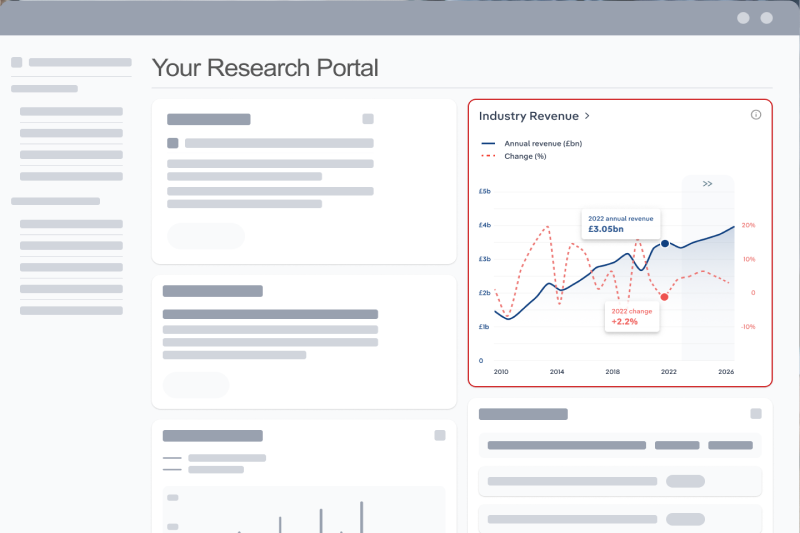
Streamline your workflow with IBISWorld’s intelligence built into your toolkit.
Explore industries with similar markets, supply chains, and economic drivers to gain broader context and insights.
When the stakes are high, you need intelligence that cuts through the noise—wherever you work.
The capital expenditure on dwellings in the UK in 2057 was 0 .
The capital expenditure on dwellings in the UK declined by 0% in 2057.
IBISWorld’s data and analysis on capital expenditure on dwellings in the UK includes forecasted growth rates over the next five years.