IBISWorld Platform
Answer any industry question in minutes with our entire database at your fingertips.

Over the five years through 2026-27, average real wages are expected to rise at a compound annual rate of 0.3%, including a 0.2% rise in 2026-27, reaching £529.90 per week on average. A sharp fall at the start of the period has largely offset the gains made since. In 2022-23, average real wages declined as soaring energy bills pushed inflation well beyond nominal wage growth, with CPI inflation reaching a 41-year high of 11.1% in October 2022. Real wages returned to growth in 2023-24, as nominal pay rose at a record pace while inflation eased; in the three months to July 2023, wages rose faster than prices for the first time since October 2021. Successive increases in minimum and living wage floors continued to support earnings, with the National Living Wage rising by 6.7% in April 2025 and a further 4.1% to £12.71 per hour in April 2026. However, employer National Insurance rose from 13.8% to 15% and its secondary threshold fell to £5,000 a year in April 2025, raising the cost of employment, with many firms responding by accepting lower profits, raising prices and cutting staff hours. As a result, the labour market has loosened, with unemployment at 4.9% in the three months to July 2026, up from 4.7% a year earlier. Over the current year, growth in the UK's real average wage is expected to slow, with the real average wage forecast to reach £529.90 per week. While annual regular pay growth was 3.5% in May to July 2026, inflation is again eroding these gains. Conflict in the Middle East has driven up global energy prices, raising inflation and squeezing household spending power, with CPI inflation rising to 3.1% in August 2026, largely due to higher motor fuel prices. The Bank of England expects inflation to climb to around 3.75% in the fourth quarter of 2026 and slightly above 4% in the first quarter of 2027, while private sector regular wage growth has eased to 2.9% from 3.3% at the start of 2026.
Curious about what drives these trends? IBISWorld's analyst coverage on the average real wage includes detailled analysis on the current performance, outlook and industries affected.
2001-2033
This report analyses real average weekly earnings - before tax - for all workers over 15 years of age in all industries across the United Kingdom. Weekly earnings data is gathered each month and contains seasonally adjusted total pay, bonus pay and regular pay. Monthly data is averaged over financial years (i.e. 1 April through 31 March) and is sourced from the Office for National Statistics (ONS). The change in the average real wage is implied by comparing growth in nominal wages with the rate of Consumer Price Index (CPI) inflation. The CPI is sourced from the ONS in addition to forecast data derived from the Office for Budget Responsibility's Economic and Fiscal Outlook. The index base year is 2015 - that is, the average of the 2015 calendar year equals 100.
IBISWorld Industry Reports are available in multiple formats to fit seamlessly into your workflow.

Answer any industry question in minutes with our entire database at your fingertips.
Feed trusted, human-driven industry intelligence straight into your platform.
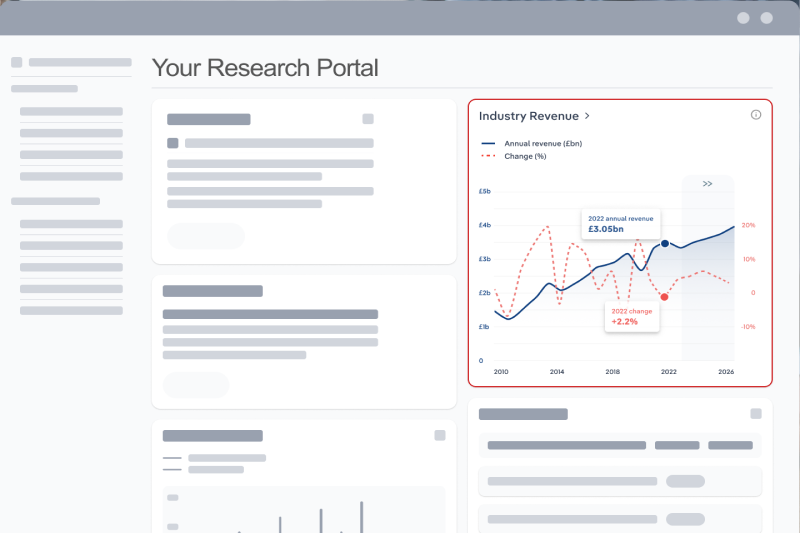
Streamline your workflow with IBISWorld’s intelligence built into your toolkit.
Explore industries with similar markets, supply chains, and economic drivers to gain broader context and insights.
| Industry | Country | Last 5-yr CAGR | Forecast 5-year CAGR | Revenue |
|---|---|---|---|---|
| Consumer Electronics Manufacturing in the UK |

|
XX% | XX% | $XX |
| Festival Operations in the UK |
|
XX% | XX% | $XX |
| Food Markets in the UK |
|
XX% | XX% | $XX |
| Recreational Boat & Yacht Building in the UK |
|
XX% | XX% | $XX |
When the stakes are high, you need intelligence that cuts through the noise—wherever you work.
The average real wage in the UK in 2027 was 529.91 £.
The average real wage in the UK grew by 0.32% in 2027.
IBISWorld’s data and analysis on average real wage in the UK includes forecasted growth rates over the next five years.