IBISWorld Platform
Answer any industry question in minutes with our entire database at your fingertips.

IBISWorld expects the population of New Zealand to increase 0.6% during 2026-27, to total 5,384,300 people. This is expected to primarily be driven by the number of births outweighing the number of deaths by over 20,000 across the course of the year. Net migration is also expected to remain positive at above 15,000 people, further supporting population growth. In the June 2026 quarter, the population only marginally expanded by 5,400, according to data from StatsNZ. If this rate continues, thoughout the remainded of the year, the annual population growth rate is likely to decline from the currently forecasted 0.6%.Over the past five years, the population of New Zealand has risen, albeit at a slower rate than the preceding decade. Over the longer term, improving medical technology and advances in healthcare have driven an increase in the life expectancy of New Zealand residents. This trend has driven an increase in the number of people aged 65 and over. However, this growth has been limited by declines in the New Zealand birth rate. Additionally, New Zealand's strong economy and pristine environment makes the country a desirable destination for migration, supporting positive levels of net migration.New Zealand's population growth rate has tanked since reaching 5.0 million people in 2019-20. Global migration flow collapsed during the pandemic, a situation that was accentuated by the New Zealand Government's border restrictions in response to the COVID-19 pandemic. As pandemic restrictions wound down, including in New Zealand, net migration rebounded strongly, driving an uptick in population growth across 2022-23 and 2023-24. Across this period, cumulative net migration saw over 170,000 new residents enter New Zealand, setting an all-time record for a two year period. However, tigher visa requirements implemented in 2024-25 caused net migration to plummet to below 14,000 people. This trend has continued across 2025-26 and 2026-27, resulting an a sharp slow-down in the population growth rate. Overall, IBISWorld forecasts the population of New Zealand to grow at a compound annual rate of 1.2% over the five years through 2026-27.
Curious about what drives these trends? IBISWorld's analyst coverage on the population includes detailled analysis on the current performance, outlook and industries affected.
1991-2034
This report analyses the estimated resident population of New Zealand. The estimated resident population refers to all the people who usually live in New Zealand on a given date. The data from this report is sourced from Statistics New Zealand (Tatauranga Aotearoa) and is measured in people residing in New Zealand at the end of each financial year.
IBISWorld Industry Reports are available in multiple formats to fit seamlessly into your workflow.

Answer any industry question in minutes with our entire database at your fingertips.

Feed trusted, human-driven industry intelligence straight into your platform.
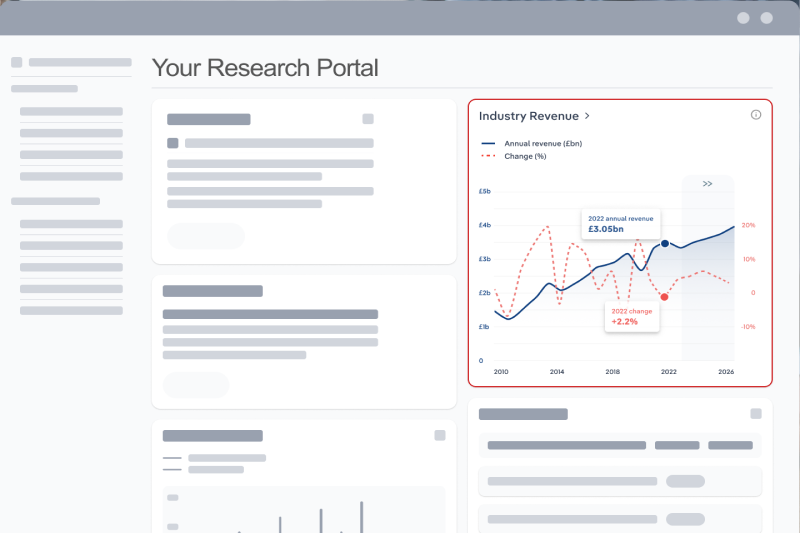
Streamline your workflow with IBISWorld’s intelligence built into your toolkit.
Explore industries with similar markets, supply chains, and economic drivers to gain broader context and insights.
When the stakes are high, you need intelligence that cuts through the noise—wherever you work.
The population in New Zealand in 2027 was 5,384,300 people.
The population in New Zealand grew by 1.16% in 2027.
IBISWorld’s data and analysis on population in New Zealand includes forecasted growth rates over the next five years.