
IBISWorld Platform
Answer any industry question in minutes with our entire database at your fingertips.

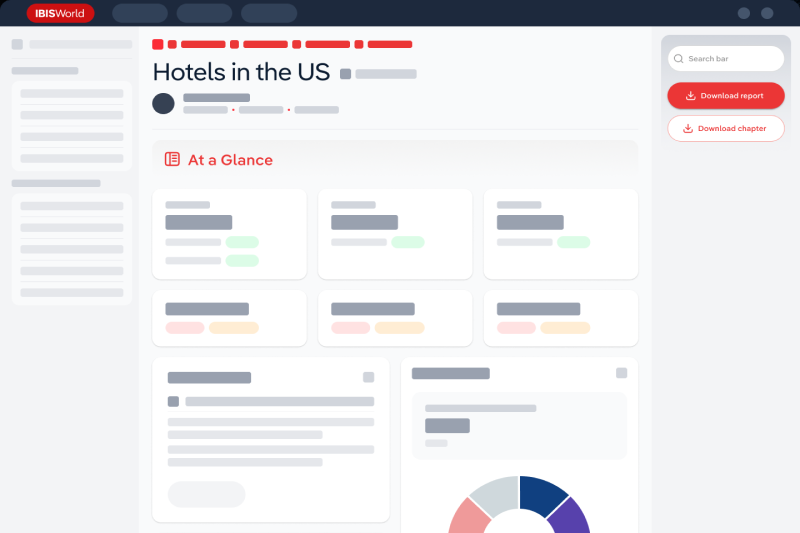
Answer any industry question in minutes with our entire database at your fingertips.
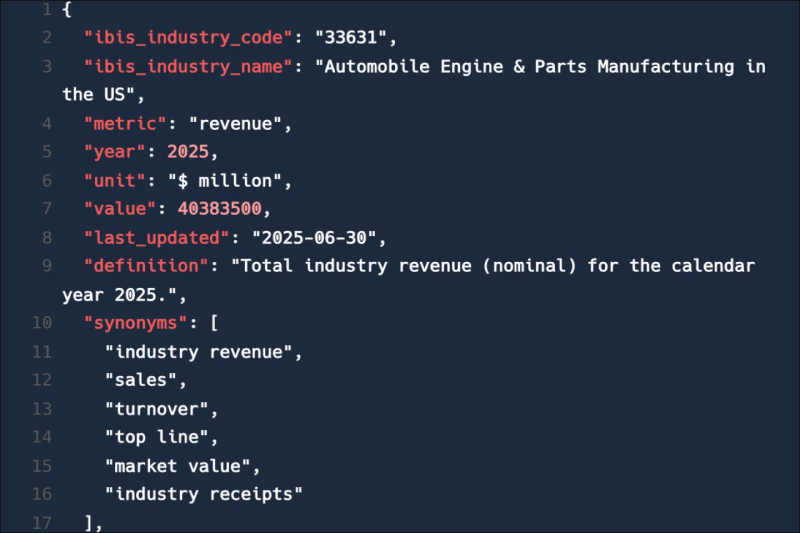
Feed trusted, human-driven industry intelligence straight into your platform.
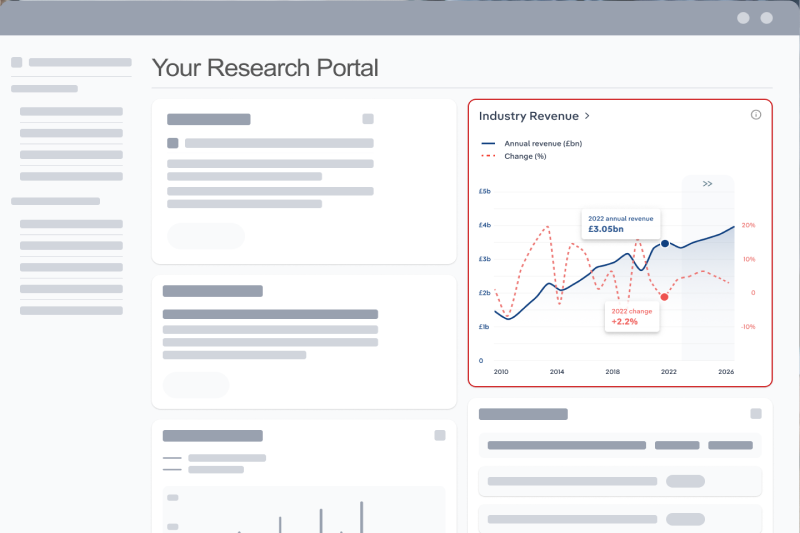
Streamline your workflow with IBISWorld’s intelligence built into your toolkit.
IBISWorld's research coverage on the Internet Services procurement and pricing environment in Europe includes market dynamics, buyer power scores, supply chain vendors with pricing trends and forecasts.
This procurement coverage of the Internet Services market in Europe includes Fiber-Optic Internet, DSL Internet, Satellite Internet, Wireless Internet and VPN Services. Standard coding in this coverage includes ISIC-611-Wired telecommunications activities, NACE-61.10-Wired Telecommunications Activities, NAICS-517111-Wired Telecommunications Carriers and UNSPSC-81112101-Internet service providers ISP.
Common market terminology included in the Internet Services procurement coverage includes Data Caps (Limits on internet usage based on monthly volume. Overuse will sometimes lead to overage fees, slow internet services or disconnected service.), Latency (The time it takes to send packets of information from one point to another. The higher the latency, the slower the internet.), Upstream/Downstream Speeds (The amount of data that can be transferred at any given time from a connection. Bandwidth is typically measured in megabits per second (Mbps).), Bandwidth (Bandwidth is the amount of data that can be transferred at any given time from a connection, typically measured in megabits per second (Mbps).) and Broadband (The umbrella term for high-speed internet. It implies larger bandwidth. Broadband usually refers to high-speed cable internet but can also encompass high-speed DSL.).
The top companies covered in the Internet Services procurement report as suppliers are Hutchison 3G UK Limited, Deutsche Telekom Ag, Telefonica SA, Sky Group Ltd and Orange SA.
The Opportunity Assessment chapter provides a comprehensive market analysis of the Internet Services market in Europe category, including buyer power scoring, market pricing trends, vendor landscape, cost structure, and strategic negotiation levers.
The market pricing trends include the Market Price (2026) per month, a five year price forecast and a supply chain risk score. Vendor coverage includes a market share and cost structure breakdown.
Analysis includes a comprehensive SWOT analysis of and recent developments impacting the Internet Services market environment.
The Buyer Power Score chapter assesses key components impacting Internet Services procurement including the recent price trend, forecast price trend, availability of substitutes, switching costs, product specialization, average vendor risk, market share concentration, supply chain risk, price driver volatility and recent price volatility.
These components generate a Buyer Power Score that ranges from -5 (strongly favoring sellers) to +5 (strongly favoring buyers) plus a recommended strategy for procurement specialists.
The Price Environment chapter covers detailed pricing analysis and datasets on Internet Services market environment. This includes insights into market pricing Market Price (2026), price forecasts, volatility, specialization, substitutes and switching costs.
Datasets in the Price Environment chapter include vendor cost structure, breakdowns of wage rates by geography and specialty, key external economic and labor drivers impacting the market and market pricing models.
The Supply Chain & Vendors chapter covers the concentration, risk and diversity of the Internet Services market. This includes datasets on the market’s top suppliers, detailed analysis on the key sourcing risks and supply chain dynamics, with environmental, social and governance (ESG) considerations and scores.
The Business Requirements chapter covers vendor relationships, qualifications, service level agreements and key performance indicators. These inputs provide insight into the planning process through the buying lead time, vendor relationship and vendor qualifications. The sourcing process include key RFP elements like an organizational overview, project budget, selection criteria, project schedule, proposal format, inventory control, cost containment, regulation, quality control, distribution and key contract clauses.
More than 6,000 businesses use IBISWorld to shape local and global economies
We were able to supplement our reports with IBISWorld’s information from both a qualitative and quantitative standpoint. All of our reporting now features some level of IBISWorld integration.

IBISWorld delivers the crisp business knowledge we need to drive our business. Whether it be serving up our major clients, winning new business or educating on industry issues, IBISWorld brings real value.

IBISWorld has revolutionised business information — which has proved commercially invaluable to exporters, investors and public policy professionals in Australia and overseas.

When you’re able to speak to clients and be knowledgeable about what they do and the state that they operate in, they’re going to trust you a lot more.

The 2026 benchmark market price for Internet Services is €122 per month. Prices have increased at a CAGR of 0.55 from 2023-26.
The top vendors in the Internet Services market include Hutchison 3G UK Limited, Deutsche Telekom Ag, Telefonica SA, Sky Group Ltd and Orange SA.
The top industries supplying the Internet Services market are Communication Equipment Manufacturing in Europe, Electronic Component & Board Manufacturing in Europe, Wiring & Wiring Device Manufacturing in Europe, Wired Telecommunications Services in Europe and Computer & Peripheral Equipment Manufacturing in Europe.
Moderate market share concentration restricts choices for buyers and weakens price negotiation. Moderate market share concentration leaves buyers with fewer choices and weakens competitive pressures as major vendors control the market. As a result, buyers have less power to secure better pricing or contract terms by leveraging competition. Buyers may want to consider consolidating demand internally for greater leverage, and securing multi-year contracts with price caps to guard against unilateral price increases.
Performance and speed are critical factors in determining the pricing of internet services, as higher bandwidth and lower latency directly correlate with enhanced user experience and productivity. For example, businesses requiring reliable, high-speed connections for cloud services or video conferencing are often willing to pay a premium for fiber-optic connections, which typically offer superior performance compared to DSL or cable options.