IBISWorld Platform
Answer any industry question in minutes with our entire database at your fingertips.

Answer any industry question in minutes with our entire database at your fingertips.
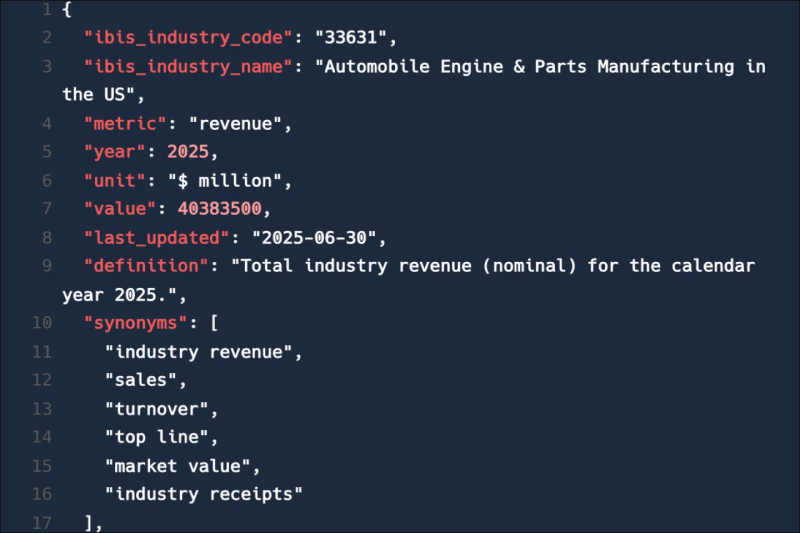
Feed trusted, human-driven industry intelligence straight into your platform.
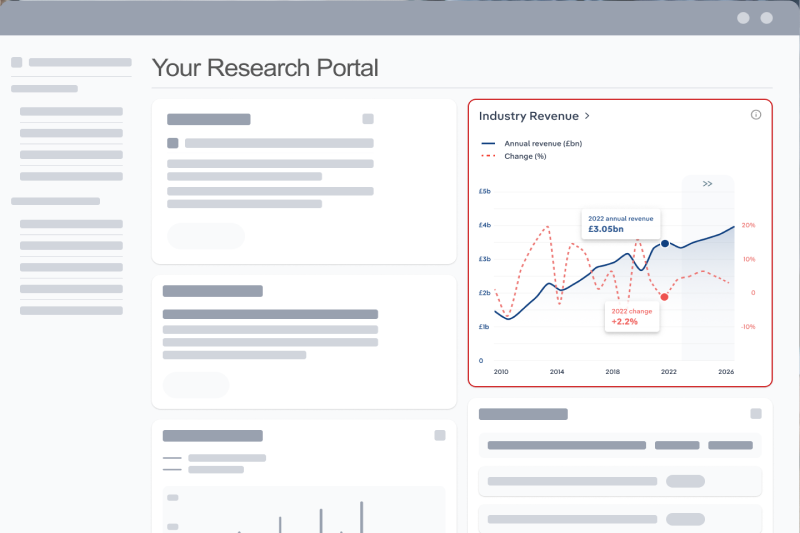
Streamline your workflow with IBISWorld’s intelligence built into your toolkit.
IBISWorld's research coverage on the Business Credit Card Services procurement and pricing environment in Europe includes market dynamics, buyer power scores, supply chain vendors with pricing trends and forecasts.
This procurement coverage of the Business Credit Card Services market in Europe includes Business Credit Cards and New Business Credit Card Accounts. Standard coding in this coverage includes ISIC-6492-Other credit granting, NACE-64.92-Other Credit Granting, NAICS-522210-Credit Card Issuing and UNSPSC-84141602-Credit card service providers.
Common market terminology included in the Business Credit Card Services procurement coverage includes Annual Percentage Rate (APR) (The annual rate buyers are charged on their credit card's remaining balance at the end of each billing period.), Basis Point (One hundredth of one percent (e.g. 25 basis points is 0.25%).), Card Association (A network of banks that process credit card payments.), Federal Funds Rate (The interest rate that banks pay to borrow other banks' funds held at the Federal Reserve.), Insolvency (The state of being unable to pay debts.), Liquidity (The degree to which a company has enough cash (or assets that can be converted to cash quickly) to pay its short-term debts immediately.) and Receiver (A person or entity appointed by a court or secured creditor to run a company for a short period of time.).
The top companies covered in the Business Credit Card Services procurement report as suppliers are Capital One Financial Corp, Citigroup Inc., Bank of America Corporation, Jpmorgan Chase & Co and Credit Agricole SA.
The Opportunity Assessment chapter provides a comprehensive market analysis of the Business Credit Card Services market in Europe category, including buyer power scoring, market pricing trends, vendor landscape, cost structure, and strategic negotiation levers.
The market pricing trends include the Market Price (2026) annual percentage rate, a five year price forecast and a supply chain risk score. Vendor coverage includes a market share and cost structure breakdown.
Analysis includes a comprehensive SWOT analysis of and recent developments impacting the Business Credit Card Services market environment.
The Buyer Power Score chapter assesses key components impacting Business Credit Card Services procurement including the recent price trend, forecast price trend, availability of substitutes, switching costs, product specialization, average vendor risk, market share concentration, supply chain risk, price driver volatility and recent price volatility.
These components generate a Buyer Power Score that ranges from -5 (strongly favoring sellers) to +5 (strongly favoring buyers) plus a recommended strategy for procurement specialists.
The Price Environment chapter covers detailed pricing analysis and datasets on Business Credit Card Services market environment. This includes insights into market pricing Market Price (2026), price forecasts, volatility, specialization, substitutes and switching costs.
Datasets in the Price Environment chapter include vendor cost structure, breakdowns of wage rates by geography and specialty, key external economic and labor drivers impacting the market and market pricing models.
The Supply Chain & Vendors chapter covers the concentration, risk and diversity of the Business Credit Card Services market. This includes datasets on the market’s top suppliers, detailed analysis on the key sourcing risks and supply chain dynamics, with environmental, social and governance (ESG) considerations and scores.
The Business Requirements chapter covers vendor relationships, qualifications, service level agreements and key performance indicators. These inputs provide insight into the planning process through the buying lead time, vendor relationship and vendor qualifications. The sourcing process include key RFP elements like an organizational overview, project budget, selection criteria, project schedule, proposal format, inventory control, cost containment, regulation, quality control, distribution and key contract clauses.
More than 6,000 businesses use IBISWorld to shape local and global economies
We were able to supplement our reports with IBISWorld’s information from both a qualitative and quantitative standpoint. All of our reporting now features some level of IBISWorld integration.

IBISWorld delivers the crisp business knowledge we need to drive our business. Whether it be serving up our major clients, winning new business or educating on industry issues, IBISWorld brings real value.

IBISWorld has revolutionised business information — which has proved commercially invaluable to exporters, investors and public policy professionals in Australia and overseas.

When you’re able to speak to clients and be knowledgeable about what they do and the state that they operate in, they’re going to trust you a lot more.

The 2026 benchmark market price for Business Credit Card Services is 35.5 annual percentage rate. Prices have declined at a CAGR of -1.19 from 2023-26.
The top vendors in the Business Credit Card Services market include Capital One Financial Corp, Citigroup Inc., Bank of America Corporation, Jpmorgan Chase & Co and Credit Agricole SA.
The top industries supplying the Business Credit Card Services market are Direct Real Estate Activities in Europe, Third-Party Real Estate Activities in Europe, Monetary Intermediation in Europe, Computer, Peripheral Equipment & Software Wholesaling in Europe, Accounting & Auditing in Europe and General Office Administrative Services in Europe.
Competition remains strong despite moderate market share concentration. The market has a moderate level of concentration, with the top four vendors accounting for about 40% of market share. Credit card rates are generally set across the market place with some minor variances and move in line with central bank rates, forcing vendors to compete in the market on card benefits and rewards. As such, vendors with lower market share can still compete through favorable card perks. Buyers can look to leverage volume commitments or pan-European deals, extracting favorable terms, bundled services, and enhanced support. However, buyers must ensure robust contract management to avoid over-reliance on a single vendor. Strategic sourcing initiatives, like aggregating spend across divisions or countries, can further strengthen buyers' negotiation positions.
Card rewards and perks include cash back on select purchases and point multiplier systems, as well as services such as concierge services, travel insurance, and travel booking. While rewards and perks are primarily ways that lenders compete in the market to attract debtors and do not impact pricing heavily, some cards with bare minimum rewards start at lower APRs than cards with luxury services and higher-tier rewards.