IBISWorld Platform
Answer any industry question in minutes with our entire database at your fingertips.

Canadian R&D expenditure increased by 1.6% in 2025 to reach $44.8 billion, reversing prior declines and marking a return to growth after a period of stagnation. Lower interest rates, prompted by monetary policy adjustments from the Bank of Canada, reduced financing costs and restored profitability for Canadian firms, encouraging renewed investment in research activities. The resurgence in R&D was also accompanied by significant increases in investments targeting automation and artificial intelligence, reflecting an economy-wide prioritization of innovation and technological advancement as businesses capitalized on improved financial conditions.From 2020 to 2025, Canadian R&D spending was characterized by notable volatility as macroeconomic challenges repeatedly interrupted funding cycles. At the outset, the COVID-19 pandemic and subsequent uncertainty diverted corporate resources away from research and toward debt servicing and payroll obligations. As a result, overall expenditure stagnated, particularly affecting the industrial and energy sectors, which reduced R&D budgets due to weak commodity prices and limited profitability. Outsourcing of R&D increased, notably in 2023, in response to persistent profit volatility, marking the largest year-on-year spending drop of the period at 0.9%. Despite initial signs of recovery after border reopenings in the latter half of 2020, inflation and elevated interest rates continued to restrict investment, with 2022 and 2023 seeing additional declines. This period also built upon contractions observed in prior years, such as 2013 and 2015, illustrating the cyclical nature and vulnerability of corporate R&D to broader macroeconomic conditions. Only with the onset of more accommodative monetary policy in 2024 did corporate profits and labor market conditions improve, leading to renewed business confidence and R&D expansion. The five-year CAGR for R&D expenditure reached 1.9%, shaped by intermittent periods of growth and decline as firms adjusted to shifting external pressures.Macro trends fundamental to the driver included persistent inflationary pressures, evolving lending practices, and lagging wage and productivity levels across the economy. These trends limited corporate investment capacity, making R&D budgets highly responsive to policy changes and profitability cycles. Fluctuations in interest rate policy shaped both short-term and long-term investment prospects, while subdued wage growth and productivity gains constrained the economy's ability to sustain higher innovation outlays.
Curious about what drives these trends? IBISWorld's analyst coverage on the research and development expenditure includes detailled analysis on the current performance, outlook and industries affected.
1980-2031
Research and development (R&D) expenditure reflects total Canadian gross domestic expenditure on R&D. Data is sourced from Statistics Canada and measured in constant 2012 dollars.
IBISWorld Industry Reports are available in multiple formats to fit seamlessly into your workflow.

Answer any industry question in minutes with our entire database at your fingertips.
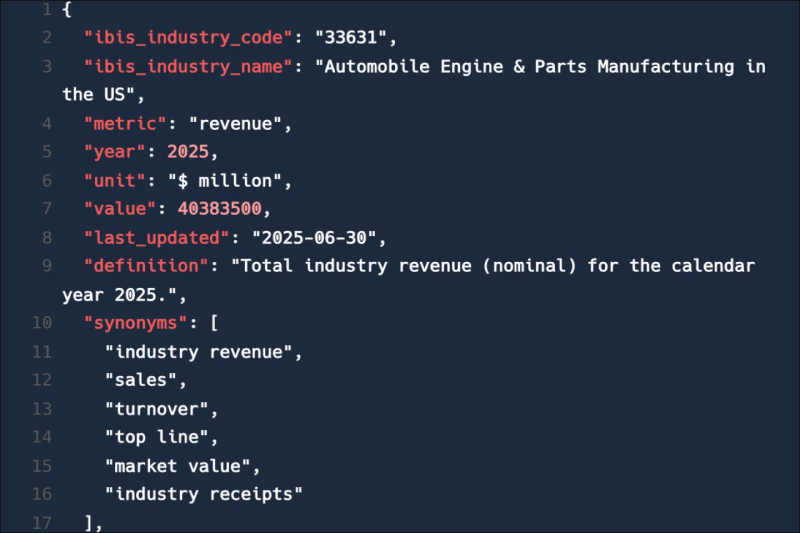
Feed trusted, human-driven industry intelligence straight into your platform.
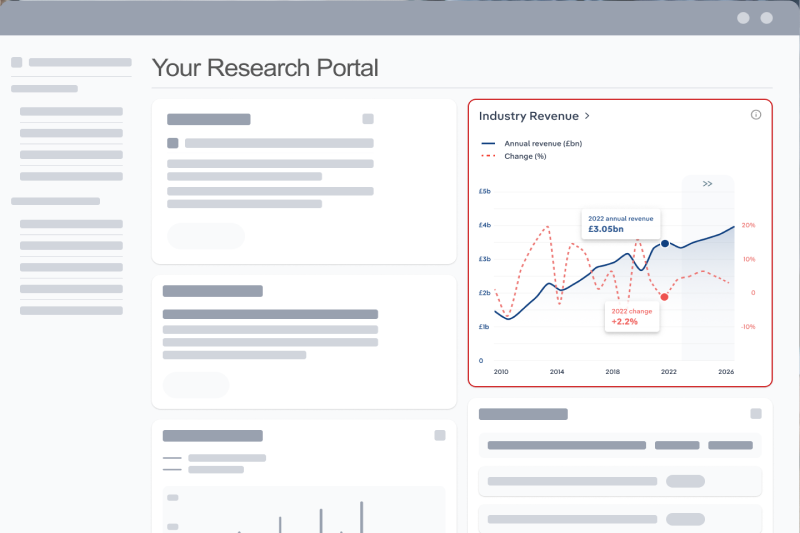
Streamline your workflow with IBISWorld’s intelligence built into your toolkit.
Explore industries with similar markets, supply chains, and economic drivers to gain broader context and insights.
When the stakes are high, you need intelligence that cuts through the noise—wherever you work.
The research and development expenditure in Canada in 2025 was $44.83 billion.
The research and development expenditure in Canada grew by 1.93% in 2025.
IBISWorld’s data and analysis on research and development expenditure in Canada includes forecasted growth rates over the next five years.