IBISWorld Platform
Answer any industry question in minutes with our entire database at your fingertips.

The number of deaths in Canada grew 1.7% to reach 337,064 in 2026. An aging population is the biggest driver, with the number of people aged 85 and older growing quickly as the oldest baby boomers move into their 80s. This age group accounts for a large share of deaths from leading causes like dementia, pneumonia and influenza. Dementia deaths have climbed steadily and severe respiratory virus seasons have added pressure on older Canadians. Access to primary care is strained, with a shrinking share of Canadians reporting a regular health care provider; this is also weighing on outcomes for chronic illness. However, mortality rates continue to improve across age groups, and deaths tied to COVID-19 and opioid toxicity have fallen, tempering growth. Sharp cuts to immigration are slowing population growth, though newcomers are typically younger and have little near-term effect on deaths.The number of deaths has increased over the five years through 2026, though the path has been uneven. The period began with deaths already elevated by the COVID-19 pandemic, which hit long-term care homes particularly hard during early waves. Deaths climbed further as the Omicron variant spread rapidly, pandemic restrictions eased and delayed diagnoses and treatment for conditions like cancer and heart disease took a toll. Life expectancy fell over these years as mortality rates peaked.Other pressures added to the rise. The toxic drug crisis drove record overdose deaths among younger adults, particularly in British Columbia and Alberta. Extreme heat events, including the 2021 heat dome in western Canada, also contributed to spikes in mortality. Medical assistance in dying was legalized in 2016 and expanded in 2021 to people whose natural death is not reasonably foreseeable. It has grown to account for a notable share of deaths, though it mostly changes when deaths happen rather than how many there are.Mortality conditions improved later in the period. COVID-19 deaths fell sharply in 2024 and the virus dropped down the list of leading causes, while life expectancy recovered close to its prepandemic level. Opioid-related deaths also declined from their peak. Even so, population aging has kept deaths on an upward trend. Cancer and heart disease remain the leading causes of death, while dementia deaths have risen as more Canadians live into their late 80s and 90s. Record population growth earlier in the period, driven by immigration, had a limited effect on deaths given the younger age profile of newcomers. Overall, the number of deaths has grown at a compound annual rate of 1.9% over the five years through 2026.
Curious about what drives these trends? IBISWorld's analyst coverage on the number of deaths includes detailled analysis on the current performance, outlook and industries affected.
1972-2032
The number of deaths is recorded for the period between July 1 and June 30 each year. Preliminary and updated estimates of deaths were produced by the Demography Division of Statistics Canada, while final data was produced by the Health Statistics Division of Statistics Canada.
IBISWorld Industry Reports are available in multiple formats to fit seamlessly into your workflow.

Answer any industry question in minutes with our entire database at your fingertips.

Feed trusted, human-driven industry intelligence straight into your platform.
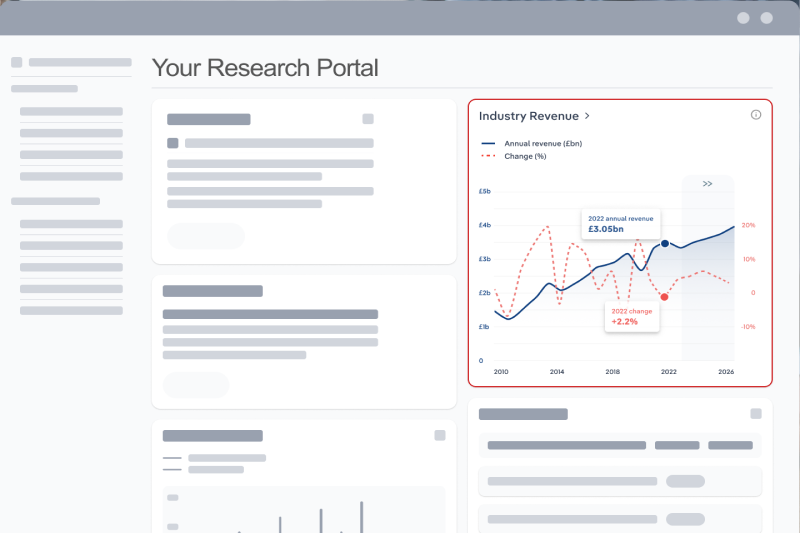
Streamline your workflow with IBISWorld’s intelligence built into your toolkit.
Explore industries with similar markets, supply chains, and economic drivers to gain broader context and insights.
| Industry | Country | Last 5-yr CAGR | Forecast 5-year CAGR | Revenue |
|---|---|---|---|---|
| Funeral Services in Canada |

|
XX% | XX% | $XX |
When the stakes are high, you need intelligence that cuts through the noise—wherever you work.
The number of deaths in Canada in 2026 was 337,064 people.
The number of deaths in Canada grew by 1.87% in 2026.
IBISWorld’s data and analysis on number of deaths in Canada includes forecasted growth rates over the next five years.