IBISWorld Platform
Answer any industry question in minutes with our entire database at your fingertips.

The number of businesses is set to drop in 2026 as operating conditions turn less favourable and small businesses contend with regulatory burden, tax pressure and rising costs that discourage expansion. Sylvain Charlebois, a professor of food distribution and policy at Dalhousie University, estimated in early 2026 that Canada will lose at least 4,000 restaurants during the year, citing cost pressure, labour shortages and insurance expenses that fall hardest on independent operators without franchise affiliation or the buying leverage that comes with scale. The CFIB identified an entrepreneurship drought that has been running since 2024 and warned that private equity acquisitions of smaller firms, combined with regulatory requirements, are squeezing small-business activity out of the market. The organization also noted that federal investment policy focuses on large capital spending rather than entrepreneurship, directing support toward established companies and leaving smaller operators without the assistance they need to grow or to replace businesses that close each year.Business activity in Canada expanded, but with pressure. New Canadian businesses continued to enter the market, aiming to contribute to the economy and capitalize on renewed growth. More recently, the economy was driven by strong performances in the housing market and construction sector in the early years of the current period. Broader economic indicators in corporate profit and domestic GDP generally renewed confidence for new and existing business owners to form or expand, pre-pandemic. Inflation is causing the price of goods to rise, hurting business profit and consumers propensity to spend. As a result of a prolonged period of high interest rates and high inflation, growth in the number of businesses has been limited. Overall, the number of businesses is forecast to increase at an annualized rate of 0.9% over the five years to 2026 as the Canadian economy recovers and eventually expands. Uncertainty surrounding tariffs threatens expansion.
Curious about what drives these trends? IBISWorld's analyst coverage on the number of businesses includes detailled analysis on the current performance, outlook and industries affected.
2000-2032
This driver measures the number of private-employer business establishments. Nonemployers are not included. Data is sourced from Statistics Canada (Canadian Business Patterns Database).
IBISWorld Industry Reports are available in multiple formats to fit seamlessly into your workflow.

Answer any industry question in minutes with our entire database at your fingertips.
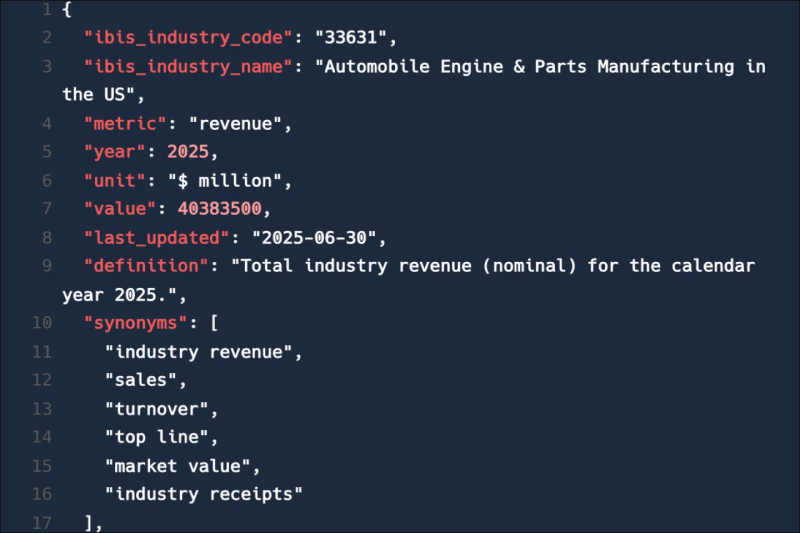
Feed trusted, human-driven industry intelligence straight into your platform.
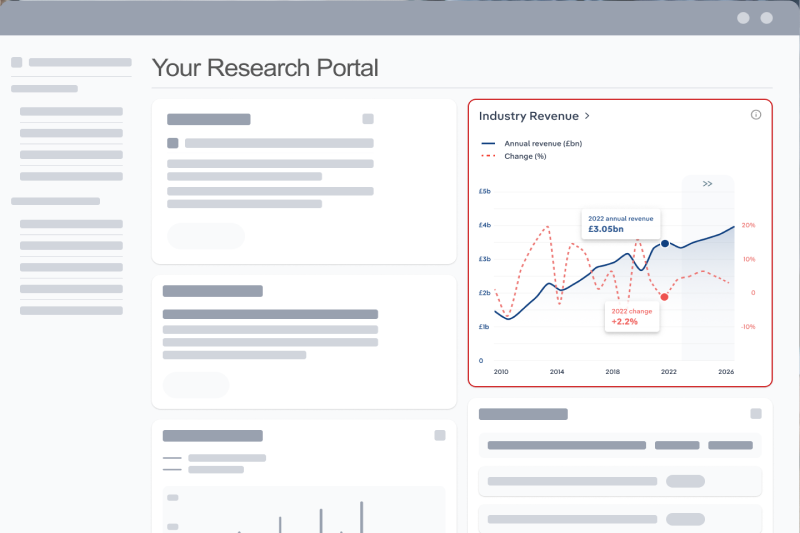
Streamline your workflow with IBISWorld’s intelligence built into your toolkit.
Explore industries with similar markets, supply chains, and economic drivers to gain broader context and insights.
When the stakes are high, you need intelligence that cuts through the noise—wherever you work.
The number of businesses in Canada in 2026 was 1.36 million.
The number of businesses in Canada grew by 0.94% in 2026.
IBISWorld’s data and analysis on number of businesses in Canada includes forecasted growth rates over the next five years.