
IBISWorld Platform
Answer any industry question in minutes with our entire database at your fingertips.

Canada's GDP is set to expand 1.0% in 2026, with commodity exports and public spending supplying most of the momentum. Global energy demand and elevated gold prices are lifting the value of resource shipments, converting favourable world market conditions into domestic output gains. Government expenditure reinforces the trend, as defence procurement tied to NATO commitments channels capital into large-scale public projects that register directly in national accounts. Offsetting pressures temper the outlook. The Bank of Canada notes that exports remain below pre-trade-conflict levels despite the commodity strength, a gap that reflects tariff barriers restricting access to the US market across manufactured goods. Rising imports compound the drag, since stronger inbound flows subtract from net exports in the GDP calculation even when they signal healthy domestic demand. The result is modest expansion rather than robust recovery. Commodity tailwinds and fiscal support carry the year, but neither fully compensates for a trade balance still constrained by tariff policy.The Canadian economy has navigated a turbulent five-year period marked by pandemic recovery, inflationary shocks and escalating trade conflict. GDP contracted sharply by 5.0% in 2020 as the pandemic disrupted global supply chains and crushed energy demand, with oil prices collapsing to historic lows amid a simultaneous Saudi Arabia-Russia production dispute. A swift vaccine rollout and broad fiscal support programs enabled a robust rebound beginning in 2021, temporarily putting the economy on firmer footing.However, the onset of the Russia-Ukraine war in early 2022 reignited global supply disruptions and accelerated inflationary pressures, prompting the Bank of Canada to embark on an aggressive rate hiking cycle. The lagged effects of those hikes materialized as reduced consumer spending and weaker business investment into 2023 and 2024. GDP grew by an estimated 2.0% in 2024, supported by strong household consumption and a rebound in residential investment as the Bank of Canada pivoted to rate cuts.The most consequential development of the period has been the escalation of US-Canada trade tensions. Beginning in early 2025, the Trump administration imposed sweeping tariffs including a 25% levy on steel and aluminum as well as foreign-made automobiles. Canada retaliated with its own 25% tariffs across a broad range of US goods. Despite the fact that roughly 90% of Canadian exports to the US remained tariff-free under USMCA exemptions, Canada's share of the US import market declined from 12.6% in 2024 to 11.2% in 2025, according to RBC.These structural shifts, combined with volatile business sentiment, constrained full-year 2025 GDP growth to 1.7%, and the economy narrowly avoided recession. The Bank of Canada has held its overnight rate steady at 2.25% as of early 2026, with CPI inflation easing to 1.8% in February 2026. Overall, Canada's GDP is set to have grown at a compound annual growth rate of 2.3% over the five years through 2026.
Curious about what drives these trends? IBISWorld's analyst coverage on the gdp of canada includes detailled analysis on the current performance, outlook and industries affected.
1980-2032
This report analyzes the annual gross domestic product (GDP) of Canada. GDP measures the total value in dollars of all the goods and services produced in an economy. Consequently, GDP is equal to the sum of consumption by individuals, government consumption and investment, private investment, net exports (value of exports minus the value of imports) and changes in inventories. Data is sourced from Statistics Canada and is presented in chained 2017 dollars.
IBISWorld Industry Reports are available in multiple formats to fit seamlessly into your workflow.

Answer any industry question in minutes with our entire database at your fingertips.
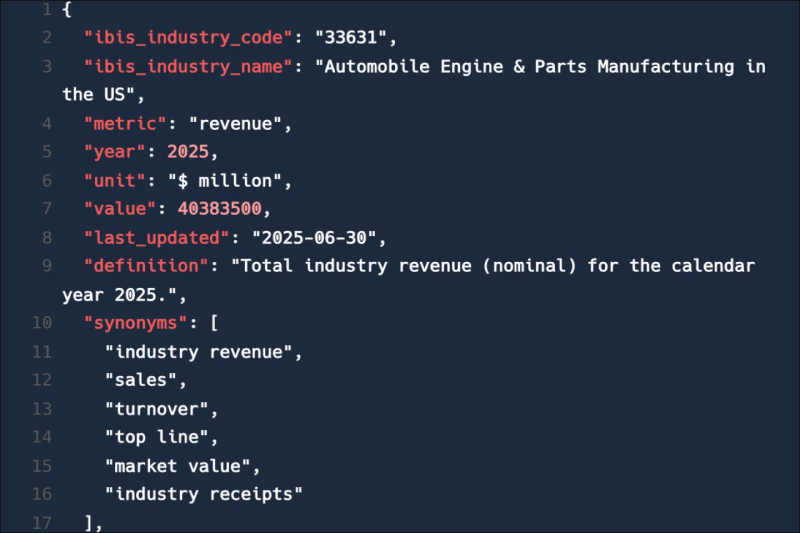
Feed trusted, human-driven industry intelligence straight into your platform.
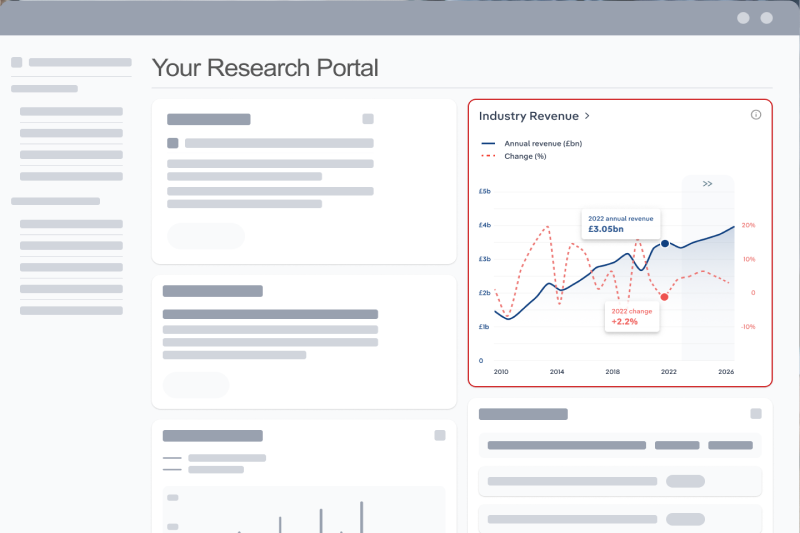
Streamline your workflow with IBISWorld’s intelligence built into your toolkit.
Explore industries with similar markets, supply chains, and economic drivers to gain broader context and insights.
| Industry | Country | Last 5-yr CAGR | Forecast 5-year CAGR | Revenue |
|---|---|---|---|---|
| Recyclable Material Wholesaling in Canada |

|
XX% | XX% | $XX |
| Apartment & Condominium Construction in Canada |
|
XX% | XX% | $XX |
| Paper Product Manufacturing in Canada |
|
XX% | XX% | $XX |
| Semiconductor & Other Electronic Component Manufacturing in Canada |
|
XX% | XX% | $XX |
| Ocean & Coastal Transportation in Canada |
|
XX% | XX% | $XX |
| Prefabricated Home Manufacturing in Canada |
|
XX% | XX% | $XX |
| Laboratory Testing Services in Canada |
|
XX% | XX% | $XX |
| Real Estate Appraisal in Canada |
|
XX% | XX% | $XX |
When the stakes are high, you need intelligence that cuts through the noise—wherever you work.
The gdp of canada in Canada in 2026 was $2,525.85 billion.
The gdp of canada in Canada grew by 2.29% in 2026.
IBISWorld’s data and analysis on gdp of canada in Canada includes forecasted growth rates over the next five years.