Key Takeaways
- AI creates the most value when it handles structured, repeatable and data-heavy work, from extracting contract terms to routing low-risk purchase requests.
- AI agents can link steps across source-to-pay workflows, but procurement professionals still own supplier awards, commercial trade-offs and high-value exceptions.
- Procurement teams should begin with bounded use cases, clean data and measurable controls before allowing agents to take more actions.
AI is rapidly changing how procurement teams manage day-to-day activities, shifting automation from individual tasks to more connected, end-to-end workflows. As AI becomes more capable of acting on behalf of procurement professionals, organizations are beginning to rethink where automation can add value and where human oversight remains essential. For procurement teams, the AI conversation has moved beyond drafting proposal requests or summarizing a contract. AI agents can now check purchase requests against policy, collect supplier information, route approvals and flag contracts nearing renewal.
A chatbot helps a buyer find information, while an AI agent uses that information to complete a sequence of tasks across procurement and enterprise systems. As companies deploy these tools, procurement leaders need to decide which activities can be delegated, which decisions require human judgment and how to preserve control as automation expands.
How is AI changing work?
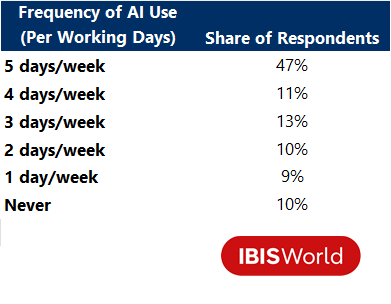
AI is redefining traditional roles across industries by changing daily workflows, supporting team decisions and reshaping leadership responsibilities. Data from Suplari, Inc., an enterprise spend analytics and procurement intelligence platform, indicates a pronounced divide in how procurement teams are adopting artificial intelligence. Rather than showing a gradual spectrum of adoption, the findings suggest that teams tend to fall into one of two groups: they either use AI tools almost every day as part of their normal procurement workflow, or they use them very infrequently, if at all. Many procurement teams have also reported that, once they begin using AI for activities such as spend analysis, supplier research, sourcing support, contract review, or procurement intelligence, daily use quickly becomes an established and routine part of their operating model. As adoption rates increase, one key takeaway emerges: short-sighted AI adoption and the resulting fallout have made it apparent that organizations require human judgment, and that conversations around the use of AI are better left as a supportive layer rather than an outright replacement for human labor.
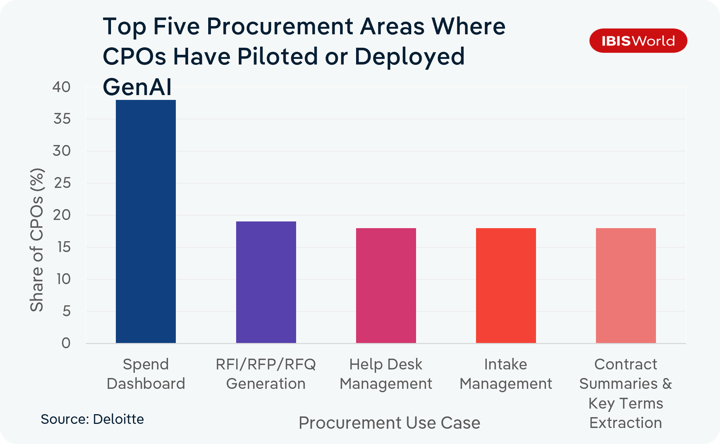
AI use in procurement has evolved and continues to grow over the years. According to Deloitte, 92.0% of Chief Procurement Officers (CPOs) are exploring generative AI, while 22.0% of companies are expected to invest more than $1.0 million annually in the technology by 2025. AI-powered procurement automation has progressed from rule-based systems to predictive, generative and, most recently, agentic AI. Early expert systems encoded buyer knowledge to support vendor evaluation, material requirements planning and inventory optimization. Then, electronic data interchange (EDI), enterprise resource planning (ERP) systems and e-procurement platforms like Ariba transformed how procurement teams exchanged data, managed purchasing workflows and executed supplier transactions. These advancements in AI models have been reallocating tasks between humans and technology while increasing specialization.
As machine learning became more widely adopted in the 2010s, AI-powered procurement automation has become increasingly predictive, using historical data to classify spend, forecast demand and identify supplier risks. The emergence of generative AI in the 2020s has marked another shift in AI, allowing procurement teams to now analyze and generate unstructured content such as contracts, RFPs and supplier communications. The emergence of agentic AI is pushing procurement beyond prediction and generation toward systems that can independently execute multi-step workflows with limited human intervention.
What tasks can AI replace?
These tools have become increasingly useful for procurement analysts, category managers and sourcing teams because of their ability to reduce repetitive, time-consuming tasks, including bid reviews and sourcing document creation. This gives procurement professionals more time to focus on strategy, supplier relationships and final decisions. AI is particularly valuable for larger organizations that manage many suppliers and sourcing events, where manual analysis can become difficult and inefficient.
One example of how these capabilities can be applied in practice comes from a global automotive supplier that replaced a time-consuming manual sourcing process with Keelvar AI integrated into its SAP system. The platform automated RFQ generation, supplier identification, bid comparison, pricing forecasts and multi-attribute evaluation across cost, quality, delivery and sustainability. The system reduced administrative work, allowing procurement managers to focus on supplier quality and final negotiations. The implementation cut sourcing time from 12 to 14 weeks to six to eight weeks, increased supplier response rates by 40.0% and improved supplier quality scores by 15.0%, underscoring AI’s ability to improve procurement efficiency and decision quality.
When is human insight needed?
In the procurement industry, AI tools can fall short when procurement teams provide poor-quality, incomplete or inconsistent data that lacks reliable patterns. Tail spend (the portion of an organization’s total spending that falls outside its primary or strategically managed supplier categories), for example, is a common challenge because the data is often inconsistent or fragmented. Tail spend may include duplicate supplier records, inconsistent product descriptions, missing category codes and one-time purchases, leaving AI with few reliable patterns to identify. AI then misclassifies purchases, misses duplicate suppliers or generates inaccurate savings recommendations.
The lack of predictable patterns in tail spend also makes human judgment particularly important. Because tail-spend purchases can be irregular, infrequent or highly specific to individual business needs, procurement teams need to interpret the context behind a purchase rather than rely solely on historical patterns. This includes determining whether seemingly similar purchases should be grouped, assessing unusual supplier relationships and identifying whether a potential savings opportunity is viable. Procurement hallucinations and other inaccuracies from large language model (LLM) tools further reinforce the need for human review, particularly when AI-generated recommendations could influence sourcing decisions or supplier relationships.
Human insight, however, applies not only to the use of AI in procurement but also to other industries, sectors and markets. As organizations adopt AI to automate increasingly complex tasks, examples from outside procurement demonstrate the limitations of relying on AI without sufficient human oversight.
Government procurement: The risks of unverified AI outputs
Another cautionary example comes from government procurement, in which generative AI was used to help prepare bid-protest filings challenging federal contract decisions. In 2025, the Government Accountability Office (GAO) identified nine bid protests containing nonexistent or fabricated citations or decisions, including multiple filings from OReady. The issue was particularly concerning because bid protests can involve high-value government contracts and require precise legal and factual arguments. In OReady’s case, GAO ultimately dismissed and sanctioned the protest after finding repeated instances of AI-generated hallucinations in its filings. The problem was not simply that AI was used to support the procurement process, but that its outputs were treated as reliable without sufficient verification.
The case illustrates the risks of using generative AI to produce information rather than assist procurement professionals in evaluating it. AI can help procurement teams search documents, summarize previous decisions and identify relevant information, but its outputs still require review by professionals with the appropriate subject-matter expertise. In high-stakes procurement activities, an inaccurate citation, requirement or interpretation can undermine an otherwise valid argument and potentially result in significant financial or legal consequences. The takeaway for procurement teams is not to avoid generative AI, but to use it as a support tool rather than an authoritative source. AI can accelerate research and analysis, while procurement and legal professionals remain responsible for verifying the underlying information and making the final judgment.
Final Word
AI agents make procurement workflows faster, more consistent and more data-driven by handling structured tasks that slow down sourcing and procure-to-pay processes. Their value depends on clear rules, reliable data, well-defined permissions, collaboration and meaningful human oversight.
The procurement teams most likely to succeed with AI will start with low-risk, measurable use cases, including contract data extraction, intake routing and spend classification, before expanding an agent’s authority. They should also monitor results, resolve exceptions and maintain approval requirements for supplier awards, contractual commitments and significant purchases. AI can improve capacity, compliance and visibility, but it cannot assume accountability for a poor decision or understand every business context. The goal is a more capable procurement function in which AI handles routine work while professionals remain accountable for outcomes.