IBISWorld Platform
Answer any industry question in minutes with our entire database at your fingertips.

IBISWorld expects national wheat production to contract by 0.9% in 2025-26 to 33.8 megatonnes. Wheat production is highly volatile, depending on favourable weather conditions, like annual rainfall. Wheat quality typically deteriorates when weather conditions are unfavourable, like when there is too little rain during spring. According to ABARES, the number of hectares of wheat planted fell 2.7% compared to 2024-25. Dry weather conditions at the start of the planting season in Victoria and South Australia discouraged planting. However, subsequent improved growing conditions, especially in Western Australian, is set to bolster output during 2025-26.Favourable growing conditions can lead to significant production yields. Wheat production has increased over the past five years, mainly because of well-timed rainfall, which has led to record crops over the three years through 2022-23. A substantial boost in annual rainfall contributed to a significantly large wheat crop in 2020-21, with production volumes more than doubling over the previous year. High annual rainfall in 2021-22 and 2022-23 continued to drive production volumes to record levels. However, flooding in many regions in Australia's eastern states in Spring 2022 caused substantial damage to some growers' crops, affecting wheat production in the succeeding years.Prolonged drought conditions contributed to consecutive sharp declines in wheat production over the two years through 2019-20. These drought conditions constrained water availability, limiting agricultural irrigation water usage. Wheat growers often use irrigation water when rainfall levels are low, and the low agricultural irrigation water usage has hindered wheat production over the past two years, from 2019 to 20. Above-average rainfall and better weather conditions over the three years through 2023-24 have led to substantial growth in wheat production volumes. Overall, IBISWorld forecasts national wheat production to strengthen at a compound annual rate of 1.2% over the five years through 2025-26.
Curious about what drives these trends? IBISWorld's analyst coverage on the wheat production includes detailled analysis on the current performance, outlook and industries affected.
1973-2033
This report analyses the volume of wheat produced in Australia. Wheat is harvested and milled for immediate use in human food or animal feed or stored for future use. Wheat production is measured in megatonnes and represents the wheat harvested during the financial year. The Australian Bureau of Agricultural and Resource Economics and Sciences (ABARES) is the source for this reports data.
IBISWorld Industry Reports are available in multiple formats to fit seamlessly into your workflow.

Answer any industry question in minutes with our entire database at your fingertips.
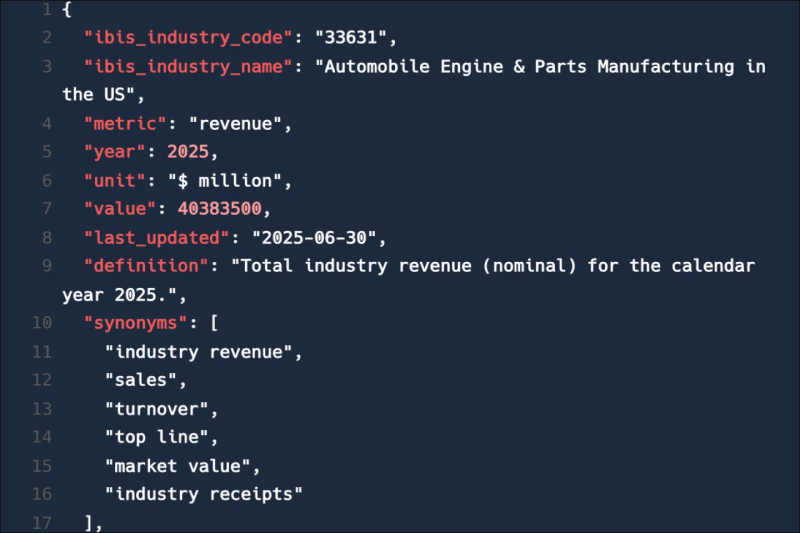
Feed trusted, human-driven industry intelligence straight into your platform.

Streamline your workflow with IBISWorld’s intelligence built into your toolkit.
Explore industries with similar markets, supply chains, and economic drivers to gain broader context and insights.
When the stakes are high, you need intelligence that cuts through the noise—wherever you work.
The wheat production in Australia in 2026 was 33.8 megatonne.
The wheat production in Australia grew by 1.16% in 2026.
IBISWorld’s data and analysis on wheat production in Australia includes forecasted growth rates over the next five years.