
IBISWorld Platform
Answer any industry question in minutes with our entire database at your fingertips.

IBISWorld expects total capital expenditure to increase by 4.1% in 2026-27, reaching $702.4 billion. The pickup reflects divergent forces across sectors, with continued strength in private investment outweighing flat public sector spending.Private investment has been buoyed by a surge in spending on data centres and renewable energy infrastructure, together with the associated equipment and machinery. ABS data reveals that total new private capital expenditure climbed 14.6% in the March 2026 quarter relative to a year earlier, with most of the gain in equipment, plant and machinery. The ABS's second estimate of expected private new capital expenditure for 2026-27 is $173.4 billion, 11.1% higher than the corresponding estimate for 2025-26 of $156.1 billion. Public sector spending, by contrast, has flattened, growing only marginally in 2025-26 after several years of strong gains, as legacy infrastructure projects reach completion and new approvals work through planning and procurement. Policy settings should provide additional support to private investment. The 2026-27 Federal Budget is expected to permanently extend the $20,000 instant asset write-off from 1 July 2026, giving small businesses immediate deductions for eligible assets, while the reintroduction of loss carryback, which lets eligible companies offset current-year losses against tax paid in the prior two years, further reduces the risk attached to capital investment decisions. Broader economic conditions remain a constraint. The Reserve Bank of Australia's May 2026 Statement on Monetary Policy projects real GDP growth of just 1.3% in 2026-27, revised down from a prior forecast of 1.6%, reflecting geopolitical unrest, elevated inflation and fuel prices, all of which could weigh on business investment.Over the past five years, private capital expenditure, which accounts for around three-quarters of total spending, has been the primary driver of growth. Non-mining industries have contributed strongly, with public infrastructure investment in major projects including Western Sydney Airport and government commitments to increase housing supply underpinning expenditure levels even amid fiscal pressures. The standout development has been the surge in investment in technology and energy infrastructure. Actual expenditure by the Information Media and Telecommunications industry, which captures data centre construction, rose 190.1% in the March 2026 quarter relative to a year earlier in seasonally adjusted chain volume terms, with its equipment and machinery component up 431%. Renewable energy investment has added an additional driver to this expansion. Overall, IBISWorld forecasts total capital expenditure to grow at a compound annual rate of 3.0% over the five years through 2026-27.
Curious about what drives these trends? IBISWorld's analyst coverage on the total capital expenditure includes detailled analysis on the current performance, outlook and industries affected.
1984-2034
This report analyses total capital expenditure in Australia, including all capital expenditure by the public and private sectors. The data for this report is sourced from the Australian Bureau of Statistics (ABS) and measured in billions of seasonally adjusted 2023-24 dollars.
IBISWorld Industry Reports are available in multiple formats to fit seamlessly into your workflow.

Answer any industry question in minutes with our entire database at your fingertips.
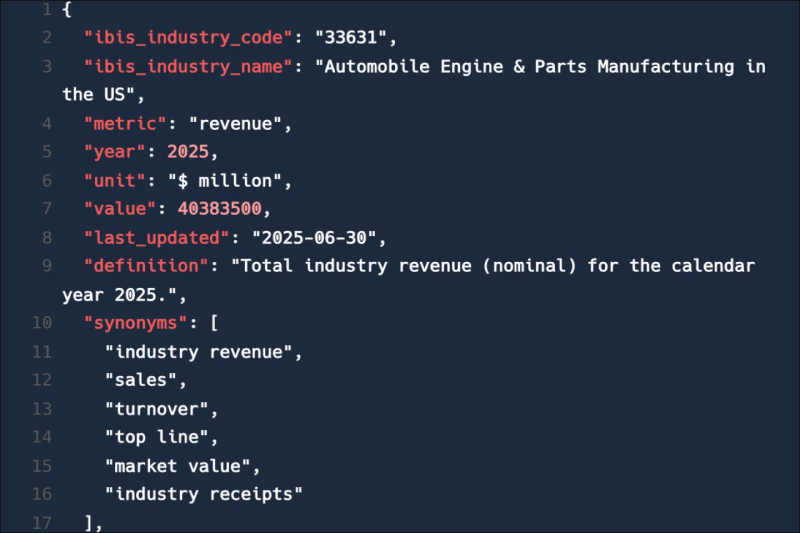
Feed trusted, human-driven industry intelligence straight into your platform.
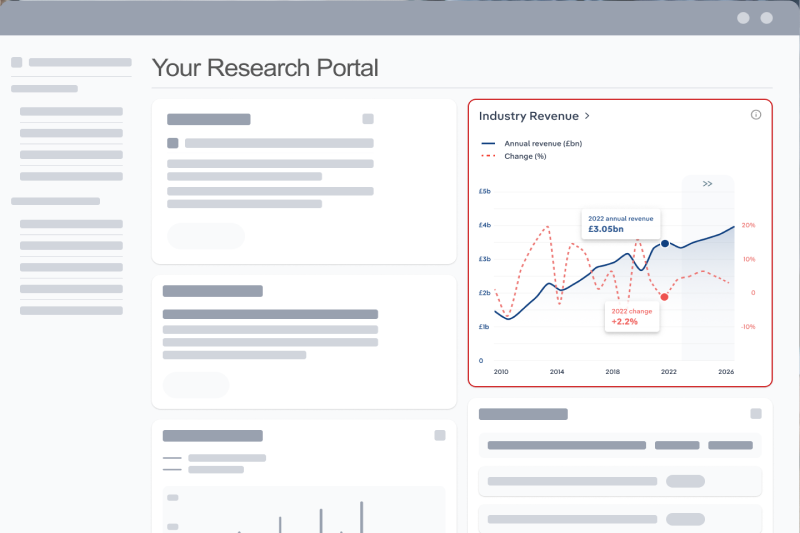
Streamline your workflow with IBISWorld’s intelligence built into your toolkit.
Explore industries with similar markets, supply chains, and economic drivers to gain broader context and insights.
| Industry | Country | Last 5-yr CAGR | Forecast 5-year CAGR | Revenue |
|---|---|---|---|---|
| Machine Tool & Parts Manufacturing in Australia |

|
XX% | XX% | $XX |
| Pump & Compressor Manufacturing in Australia |
|
XX% | XX% | $XX |
| Machine Tool & Parts Manufacturing in Australia |
|
XX% | XX% | $XX |
| Pump & Compressor Manufacturing in Australia |
|
XX% | XX% | $XX |
| Commercial Motor Vehicle Insurance in Australia |
|
XX% | XX% | $XX |
| Executive Search Recruiting in Australia |
|
XX% | XX% | $XX |
| Foreign Banks in Australia |
|
XX% | XX% | $XX |
| National & Regional Commercial Banks in Australia |
|
XX% | XX% | $XX |
When the stakes are high, you need intelligence that cuts through the noise—wherever you work.
The total capital expenditure in Australia in 2027 was $702.4 billion.
The total capital expenditure in Australia grew by 2.99% in 2027.
IBISWorld’s data and analysis on total capital expenditure in Australia includes forecasted growth rates over the next five years.