
IBISWorld Platform
Answer any industry question in minutes with our entire database at your fingertips.

Sheep meat production is forecast to rise by 2.8% in 2026-27, to 801.2 kilotonnes, as turn-off rates for lambs and sheep are expected to increase during the year. According to ABARES, improved weather conditions towards the end of 2025-26 are set to boost the number of lambs available for slaughter and are therefore expected to boost sheep meat production in the current year. Despite lower expected rainfall, a rise in average carcass weights is set to be supported by increased use of grain feed. Furthermore, strong demand in export markets like China and the Middle East is also supporting increased production. However, increased trade protection measures from the United States, the largest export market for Australian lamb, could weigh on production volumes during the second half of the year. In July 2026, the US International Trade Commission announced it was launching a four-month investigation into the impact of lamb imports on the local Sheep Farming industry. The exact impact depends on the outcome of the investigation.Sheep meat production has followed a long-term upward trend over the past four decades, largely due to an expanding population and climbing demand overseas. Furthermore, the kilotonnes of meat yielded per kilogram of sheep and lamb have increased since 1985-86. This is indicative of increasing efficiency, with improving feed quality increasing individual lamb and sheep weights compared with the 1980s. This has increased the amount of meat that processors have been able to reap from each animal, boosting national production over the long-term.In the domestic market, local consumers have increasingly shown a preference for lamb rather than mutton over the past two decades. As a result, lamb meat has accounted for an increasing share of total sheep meat production over this period. Lamb meat now accounts for over 70.0% of sheep meat produced, up from approximately 50.0% during the 1980s. Domestic consumption rose strongly over the two years through 2023-24, with prices moderating in the wake of increased supply. In contrast, prices of other meats, most notably poultry and seafood, rose strongly. However, rising prices for lamb have weakened demand over the past three years. Consequently, per capita consumption of sheep meat is expected to drop over the five years through 2026-27.Exports of sheep meat are forecast to rise over the period. Export volumes shot-up over the three years through 2024-25. Turn-off rates climbed as farmers followed strong flock rebuilding after drought. Demand from key overseas markets has also risen. The Australia-UK Free Trade Agreement, which entered into force in May 2023, eliminated the in-quota tariff and increased the quota on Australian sheep meat. Unfavourable weather conditions have reduced local sheep meat production in the United Kingdom, boosting demand. Sheep meat exports to Middle East countries like the United Arab Emirates (UAE) and Saudi Arabia have also grown strongly in recent years. The Australia-UAE Comprehensive Economic Partnership Agreement entered into force in October 2025, eliminating a 5.0% tariff on Australian sheep meat. Overall, national sheep meat production is forecast to increase at an annualised 3.4% over the five years through 2026-27.
Curious about what drives these trends? IBISWorld's analyst coverage on the sheep meat production includes detailled analysis on the current performance, outlook and industries affected.
1986-2034
This report analyses the volume of sheep meat produced in Australia. Sheep meat includes lamb and mutton produced from grown sheep and lambs sold by farmers to abattoirs. Sheep meat production is measured in kilotonnes and represents the carcass weight of total lamb and mutton production in Australia. Data for this report is gathered from the Australian Bureau of Agricultural and Resource Economics and Sciences (ABARES).
IBISWorld Industry Reports are available in multiple formats to fit seamlessly into your workflow.

Answer any industry question in minutes with our entire database at your fingertips.
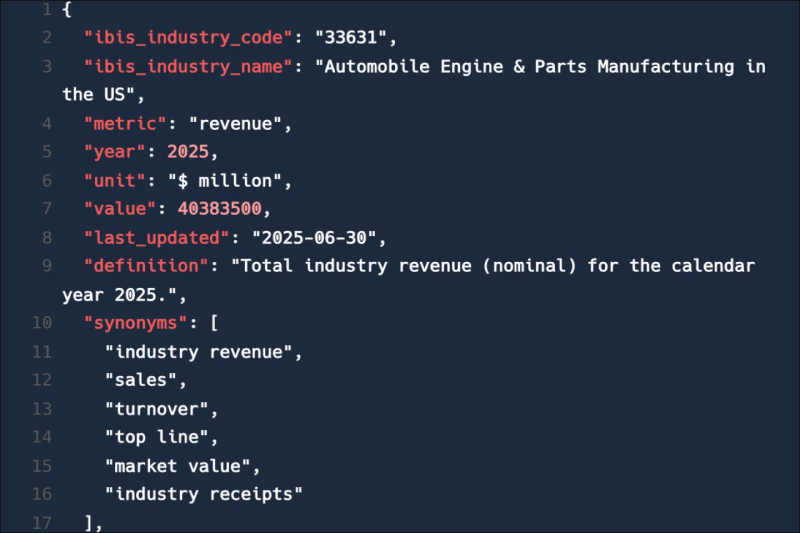
Feed trusted, human-driven industry intelligence straight into your platform.

Streamline your workflow with IBISWorld’s intelligence built into your toolkit.
Explore industries with similar markets, supply chains, and economic drivers to gain broader context and insights.
| Industry | Country | Last 5-yr CAGR | Forecast 5-year CAGR | Revenue |
|---|---|---|---|---|
| Sheep Farming in Australia |

|
XX% | XX% | $XX |
When the stakes are high, you need intelligence that cuts through the noise—wherever you work.
The sheep meat production in Australia in 2027 was 801.2 kilotonne.
The sheep meat production in Australia grew by 3.41% in 2027.
IBISWorld’s data and analysis on sheep meat production in Australia includes forecasted growth rates over the next five years.