
IBISWorld Platform
Answer any industry question in minutes with our entire database at your fingertips.

IBISWorld expects the number of households to increase by 1.8% during 2025-26, to 10.90 million. The key driver to household growth is an uptick in net migration, which has boomed since the Australian Government reopened Australia's international border in February 2022. According to the 2025-26 Federal Budget, net overseas migration is expected to drop from 335,000 in 2024-25 to 260,000 in 2025-26, constraining the overall number of households.Over the past decade, rising demand for inner-city living and increased urbanisation have fuelled multi-unit apartment construction activity, which has driven a trend towards smaller property sizes. Although property sizes have declined, the number of people per household has remained largely stable. The pandemic added further volatility to the housing supply, especially after the Australian Government closed the international border and net migration collapsed. The average household size got smaller, particularly as rental prices collapsed in major cities with very low migration and a slump in international student numbers. Many Australians who lived in shared houses moved out on their own during the pandemic, which further reduced the average size of households. As borders reopened in 2022 and migration recovered, these trends have put significant pressure on the housing supply, which slowed household growth over recent years.The most common living arrangement for people in Australia is in a family household. Family households have remained steady as a share of total households over the past few years, oscillating between 69% and 71% over the past decade. The number of group households and people living alone has trended upward since 1996. The slower growth in the number of marriages compared to the Australian population has contributed to this trend, with unmarried couples being less likely to live together than married couples. A rise in life expectancy and an ageing population have also fed into this long-term trend because the likelihood of living alone increases with age, oftentimes reflecting the death of partners at this age.IBISWorld forecasts the number of households to grow at a compound annual rate of 1.8% over the five years through 2025-26. Increased multi-unit apartment construction activity over the past five years has fuelled the trend towards smaller household sizes, boosting total household formation. However, this has been offset by a rise in the proportion of households hosting three or more people, and a sharp increase in rental prices, inducing more people to stay in shared households. The trend of children living with their parents later into adulthood has also slowed household growth, as rapid asset price inflation and the surging cost of rent have precluded Australians from buying a home or moving into a rental. Collectively, these trends have slowed growth in Australia's number of households.
Curious about what drives these trends? IBISWorld's analyst coverage on the number of households includes detailled analysis on the current performance, outlook and industries affected.
2001-2033
This report analyses the number of households in Australia. The ABS defines a household as residing in one dwelling, regarding themselves as a household, and making common provisions for food or other essentials for living. Households include group households of unrelated people, same-sex couple households, single-parent households, as well as one-person households, couples and traditional families. Households do not include people who usually live in non-private dwellings, such as hotels, boarding houses, jails and hospitals. The data for this report is sourced from the ABS and measured in financial years.
IBISWorld Industry Reports are available in multiple formats to fit seamlessly into your workflow.

Answer any industry question in minutes with our entire database at your fingertips.
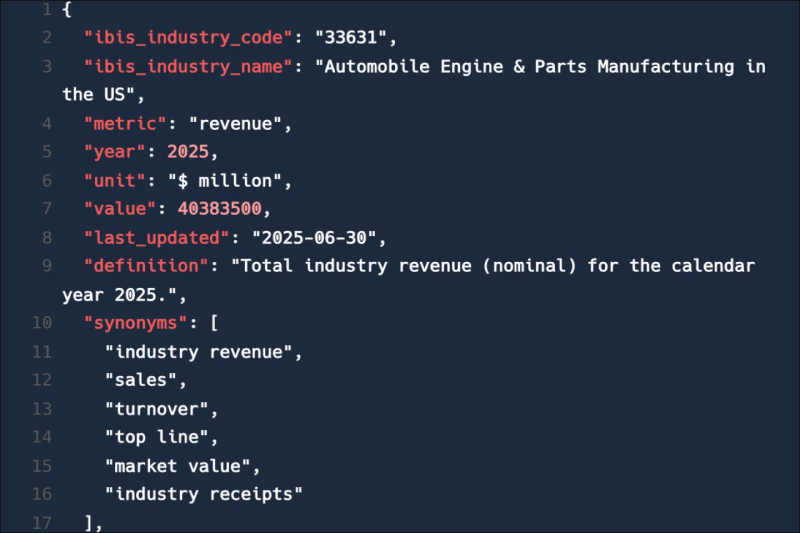
Feed trusted, human-driven industry intelligence straight into your platform.
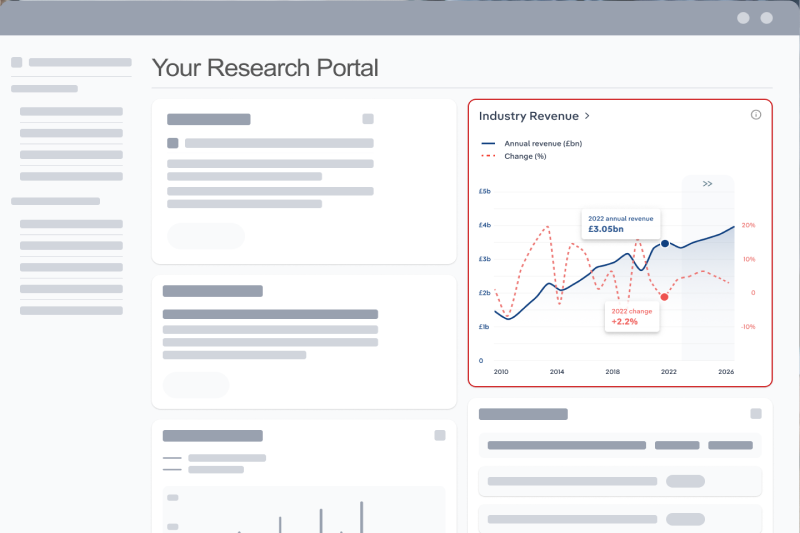
Streamline your workflow with IBISWorld’s intelligence built into your toolkit.
Explore industries with similar markets, supply chains, and economic drivers to gain broader context and insights.
When the stakes are high, you need intelligence that cuts through the noise—wherever you work.
The number of households in Australia in 2026 was 10.9 million.
The number of households in Australia grew by 1.76% in 2026.
IBISWorld’s data and analysis on number of households in Australia includes forecasted growth rates over the next five years.