
IBISWorld Platform
Answer any industry question in minutes with our entire database at your fingertips.

IBISWorld forecasts the number of international students to tumbled 5.5% in 2026 to reach 797,600. Australia retains a strong appeal for international students, reflecting its reputation for high-quality education and its breadth of study options but Federal Government efforts to curb student numbers have weighed on numbers. Department of Education figures point to a similar softening, with international student enrolments down 3.2% in the 2026 academic year compared with 2025. English-language course providers and vocational education and training providers have absorbed most of the decline, while higher education enrolments continue to rise. Chinese student numbers have begun to recover, whereas numbers from Pakistan, the Philippines and Vietnam have eased alongside a range of smaller source markets.A layered set of fee hikes, enrolment caps and tighter visa scrutiny is reshaping Australia's international student market, even as selective carve-outs signal a push for a more diversified intake. Student visa application fees have been raised repeatedly, climbing from $710 to $1,600 on 1 July 2024, to $2,000 in July 2025 and again to $2,500 in July 2026, leaving Australia with the highest student visa fee in the world, well ahead of competing English-speaking destinations like Canada, the United Kingdom and the United States. At the same time, the Federal Government set the National Planning Level for international students at 295,000 for 2026, up 25,000 on the 2025 level. Some providers sit outside these limits. Students at TAFE institutes fall outside the National Planning Level, allowing those institutes to take on more international students. Students from ASEAN countries face only inflation-adjusted fee rises rather than the full increases, as Australia looks to broaden its student base. Enforcement has tightened alongside these settings. In February 2026, a record one-third of Australian university visa applicants were refused and Department of Home Affairs data shows the student visa grant rate falling to 78.2% in the year to June 2026, the lowest since records began in 2007.Australia's academic reputation remains a core draw, with six universities ranked in the top 100 of the Times Higher Education World University Rankings 2026. This standing attracts families seeking quality education for their children and encourages overseas school leavers to pursue internationally recognised degrees. International education also remains Australia's largest services export, worth $53.6 billion in 2024-25 and around 40% of total services exports, leaving the Federal Government to weigh that revenue against domestic pressures like housing and infrastructure.Student numbers sit above the pandemic trough 2021 despite the declines of the past two years and that low starting point accounts for most of the five-year growth rate. The student base also remains diverse. Department of Education data for May 2026 show the five largest source countries, China, India, Nepal, the Philippines and Vietnam, accounting for more than half of all international student enrolments. China leads at 23%, followed by India at 17%, Nepal at 9% and Vietnam at 4%. Several of these markets contracted over the past year, yet their scale keeps them central to total enrolments. Breadth of demand across Asia, combined with Australia's multicultural society and wide study offerings, keeps the country among the world's leading education destinations. Overall, IBISWorld forecasts that the number of international students will climb at an annualised rate of 6.9% over the five years through 2026.
Curious about what drives these trends? IBISWorld's analyst coverage on the number of foreign students includes detailled analysis on the current performance, outlook and industries affected.
1994-2034
This report analyses the number of foreign students enrolled in educational institutions in Australia. This includes all full-fee paying foreign citizens studying in Australia on a student visa. New Zealand citizens are not included since they do not require a student visa. The data for this report is sourced from the Department of Education and Training and is measured in thousands of students. The data in this report is presented in calendar years.
IBISWorld Industry Reports are available in multiple formats to fit seamlessly into your workflow.

Answer any industry question in minutes with our entire database at your fingertips.
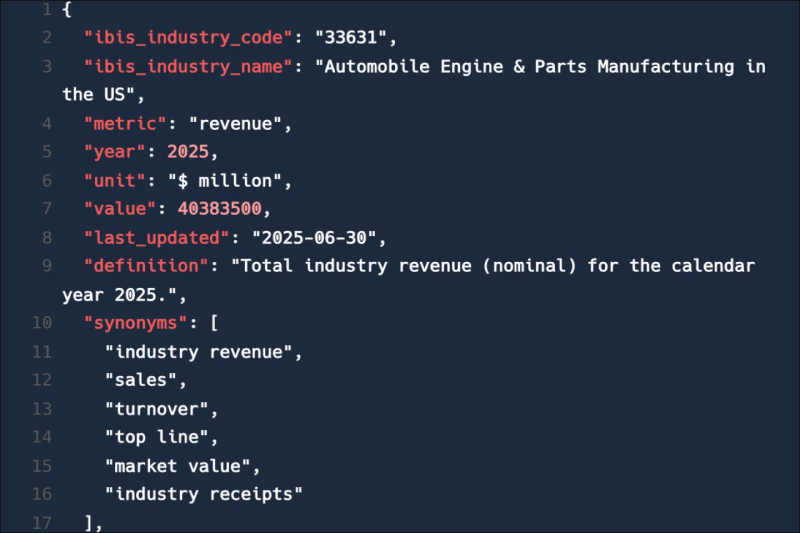
Feed trusted, human-driven industry intelligence straight into your platform.
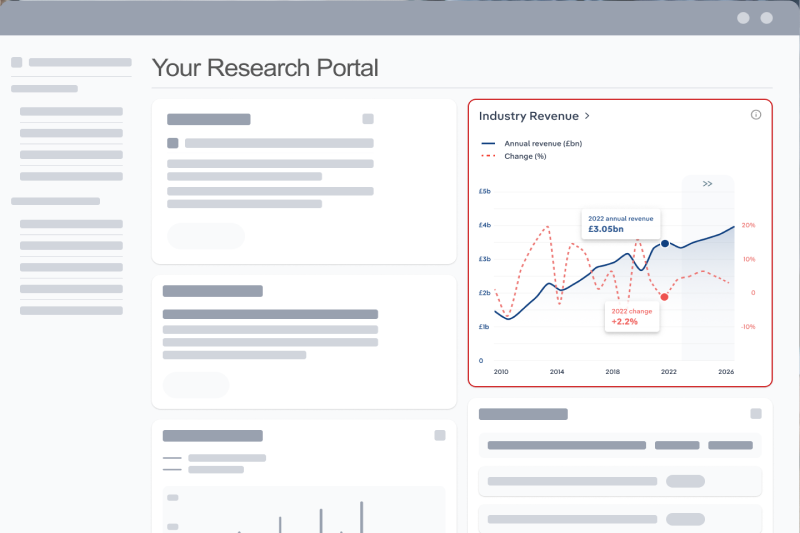
Streamline your workflow with IBISWorld’s intelligence built into your toolkit.
Explore industries with similar markets, supply chains, and economic drivers to gain broader context and insights.
| Industry | Country | Last 5-yr CAGR | Forecast 5-year CAGR | Revenue |
|---|---|---|---|---|
| Student Housing Management in Australia |

|
XX% | XX% | $XX |
| University & Other Higher Education in Australia |
|
XX% | XX% | $XX |
| Foreign Currency Exchange Services in Australia |
|
XX% | XX% | $XX |
| Education & Training in Australia |
|
XX% | XX% | $XX |
| Money Transfer Agencies in Australia |
|
XX% | XX% | $XX |
When the stakes are high, you need intelligence that cuts through the noise—wherever you work.
The number of foreign students in Australia in 2026 was 797.6 '000 of persons.
The number of foreign students in Australia grew by 6.86% in 2026.
IBISWorld’s data and analysis on number of foreign students in Australia includes forecasted growth rates over the next five years.