IBISWorld Platform
Answer any industry question in minutes with our entire database at your fingertips.

IBISWorld forecasts net energy consumption to decrease marginally by 0.2% in 2026-27, to 6,139.8 petajoules, due to record investment in renewable generation and storage. Because renewable assets don't require fuel inputs such as coal or natural gas, they displace more primary energy than they add, pulling down headline consumption even as underlying demand expands. Continued population growth, recovering transport fuel demand and rising own-use of natural gas at liquefied natural gas plants have limited the extent of the decline.The pandemic had a mixed, but overall negative, effect on net energy consumption. Lockdown measures and a slowdown in economic activity decreased businesses' energy consumption. However, work-from-home requirements led to increased household consumption, which partially offset this decline. International border closures also contributed to a significant decline in net energy consumption by airlines, as energy consumption from aviation fuel plummeted, driving overall declines in net energy consumption in 2019-20 and 2020-21. Manufacturing and utilities firms continued their medium-term downward trend, driven by declines in manufacturing activity and the electricity sector's shift towards renewables.The utilities, transport and manufacturing sectors have consistently accounted for over two-thirds of Australian energy consumption over the past five years, reaching 68.5% in 2023-24. In that year, energy consumption by the utilities sector accounted for 23.3% of total energy consumption, including fuel inputs for electricity generators, down from 23.6% in the previous year. The transport sector accounted for 29.7% of total energy use and was the largest single energy user, expanding by 5.1% as international aviation fuel consumption rose by 33.7% over the year. Manufacturing accounted for 15.5%, down from its 16.8% share in 2022-23, with consumption falling by 7.4% due to declines in the chemicals, petroleum refining and iron and steel subsectors. The manufacturing and utilities sectors have decreased their net energy consumption over the past five years, due to greater energy efficiency among manufacturing processes and a shift towards renewable energy and non-grid electricity generation from rooftop solar panel installations, reducing reliance on fossil fuel energy consumption for electricity grid supply. Overall, net energy consumption is estimated to rise at a compound annual rate of 1.0% over the five years through 2026-27.
Curious about what drives these trends? IBISWorld's analyst coverage on the net energy consumption includes detailled analysis on the current performance, outlook and industries affected.
1974-2034
This report analyses net energy consumption in Australia, covering energy consumed across electricity generation, mining, manufacturing, transport, commercial operations and households. It is a net measure: consumption of all fuels less domestic production of derived fuels like electricity and refined petroleum, which avoids double counting the same energy twice. Fuels burnt as inputs to electricity generation are captured, so conversion losses sit within the total, while energy exports are excluded. Because non-combustion renewables are counted as the electricity they produce rather than as a fuel input, replacing coal-fired generation with wind or solar lowers measured consumption even as electricity demand rises. The data is sourced from the Department of Climate Change, Energy, the Environment and Water and is measured in petajoules of energy consumed per financial year.
IBISWorld Industry Reports are available in multiple formats to fit seamlessly into your workflow.

Answer any industry question in minutes with our entire database at your fingertips.
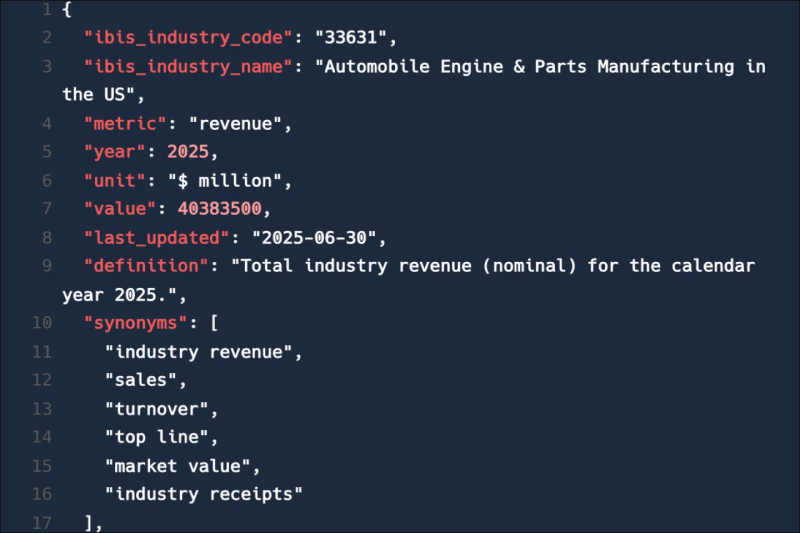
Feed trusted, human-driven industry intelligence straight into your platform.
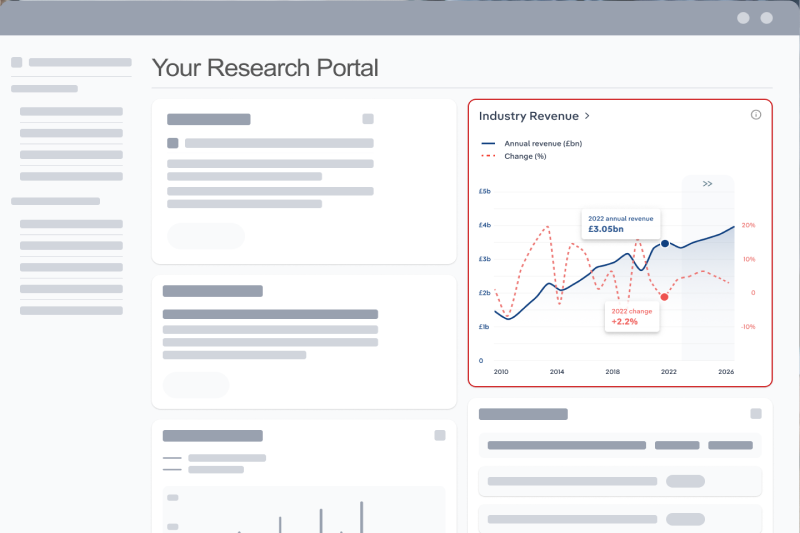
Streamline your workflow with IBISWorld’s intelligence built into your toolkit.
Explore industries with similar markets, supply chains, and economic drivers to gain broader context and insights.
| Industry | Country | Last 5-yr CAGR | Forecast 5-year CAGR | Revenue |
|---|---|---|---|---|
| Fossil Fuel Electricity Generation in Australia |

|
XX% | XX% | $XX |
| Electricity Distribution in Australia |
|
XX% | XX% | $XX |
| Coal Seam Gas Extraction in Australia |
|
XX% | XX% | $XX |
| Electricity Retailing in Australia |
|
XX% | XX% | $XX |
When the stakes are high, you need intelligence that cuts through the noise—wherever you work.
The net energy consumption in Australia in 2027 was 6,139.8 petajoules.
The net energy consumption in Australia grew by 1.04% in 2027.
IBISWorld’s data and analysis on net energy consumption in Australia includes forecasted growth rates over the next five years.