
IBISWorld Platform
Answer any industry question in minutes with our entire database at your fingertips.

IBISWorld estimates that there will be 35.2 million active mobile telecommunications services in 2026-27, inferring a density of 124.07%, or 124.07 active mobile services for every 100 people in Australia. This density represents a decrease of 0.3 percentage points from the previous year. Saturation in the smartphone market has slowed the uptake of mobile phones and other mobile devices and easing net overseas migration has curbed the number of new services activated. Net overseas migration fell by around 29% in 2024-25, according to the ABS and the Centre for Population. In its 2025 Population Statement, released in January 2026, the Centre for Population expects it to ease further to 260,000 in 2025-26 and keep declining across its projection period to 2035-36. Ongoing 5G expansion has offset a steeper drop, as Telstra, Optus and TPG completed the shutdown of their 3G networks in late 2024 and repurposed the freed-up low-band spectrum for 5G, improving network performance and coverage in urban areas. The growing appeal of 5G fixed wireless broadband, especially in underserved or regional areas, has also supported some demand as new services are activated. These trends have driven the decline in the use of USB modems, data cards and dongles, thereby reducing mobile telecommunications density.Overall, mobile telecommunications density has been broadly flat over the past five years, edging down slightly on balance. Density climbed to a peak of 126.12% in 2023-24, driven by a surge in net migration and rapid uptake of 5G networks, before easing back as population growth slowed and the market approached saturation. Working the other way, however, has been consumers' growing appetite for constant connectivity, with more everyday functions being performed online. The adoption of video streaming on mobile devices has led to a spike in data usage over the past five years, even as data plans have risen in step with inflationary pressures. Many consumers have also disconnected their home phone lines and now rely exclusively on mobile phones, supporting density. Overall, IBISWorld estimates mobile telecommunications density edged down by an average annual 0.1 percentage points over the five years through 2026-27.
Curious about what drives these trends? IBISWorld's analyst coverage on the mobile telecommunications density includes detailled analysis on the current performance, outlook and industries affected.
1996-2034
This report analyses the number of active mobile telecommunications services, including prepaid or postpaid phone services, wireless modems and wireless mobile services in Australia, as a percentage of the total population. Mobile phone services are used by consumers and businesses to send and receive voice and data signals. Mobile services used exclusively for data usage, such as tablet SIM cards, USB modems, data cards and dongles, are included in this report. This data is sourced from the Australian Communications and Media Authority and is quoted in financial years.
IBISWorld Industry Reports are available in multiple formats to fit seamlessly into your workflow.

Answer any industry question in minutes with our entire database at your fingertips.
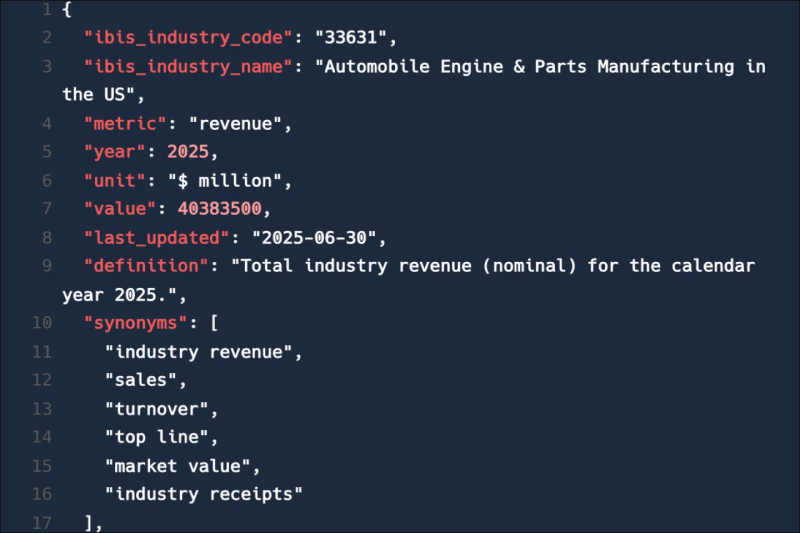
Feed trusted, human-driven industry intelligence straight into your platform.
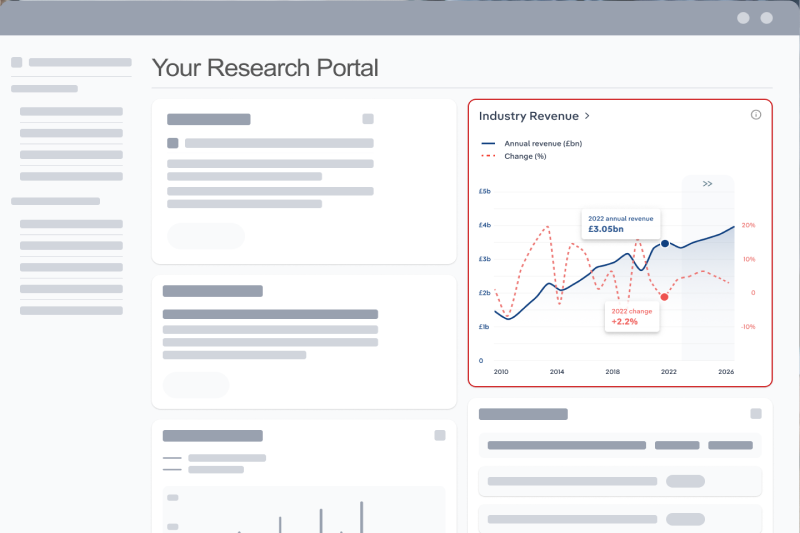
Streamline your workflow with IBISWorld’s intelligence built into your toolkit.
Explore industries with similar markets, supply chains, and economic drivers to gain broader context and insights.
| Industry | Country | Last 5-yr CAGR | Forecast 5-year CAGR | Revenue |
|---|---|---|---|---|
| Wireless Telecommunications Carriers in Australia |

|
XX% | XX% | $XX |
| Wireless Telephone & Data Service Resellers in Australia |
|
XX% | XX% | $XX |
| Smartphone App Developers in Australia |
|
XX% | XX% | $XX |
| Wired Telecommunications Network Operation in Australia |
|
XX% | XX% | $XX |
| Mobile Phone & Tablet Wholesaling in Australia |
|
XX% | XX% | $XX |
| Telecommunications Services in Australia |
|
XX% | XX% | $XX |
| Telecommunications Resellers in Australia |
|
XX% | XX% | $XX |
| Telecommunications Resellers in Australia |
|
XX% | XX% | $XX |
| Internet Publishing & Broadcasting in Australia |
|
XX% | XX% | $XX |
| Online Shopping in Australia |
|
XX% | XX% | $XX |
| Radio Broadcasting in Australia |
|
XX% | XX% | $XX |
When the stakes are high, you need intelligence that cuts through the noise—wherever you work.
The mobile telecommunications density in Australia in 2027 was 124.07 percentage.
The mobile telecommunications density in Australia declined by -0.09% in 2027.
IBISWorld’s data and analysis on mobile telecommunications density in Australia includes forecasted growth rates over the next five years.