
IBISWorld Platform
Answer any industry question in minutes with our entire database at your fingertips.

IBISWorld forecasts the domestic price of timber to climb by 1.9% in 2025-26 to 179.5 index points. An upturn in housing-led construction activity has underpinned price growth as demand strengthens. ABS data show commencements for detached houses lifted 6.3%, while semi-detached dwellings rose 11.7% between December 2024 and March 2025, following the RBA's first interest-rate cut since November 2023 in February 2025, which eased borrowing costs.Domestic timber prices generally fluctuate in response to the supply of harvested timber. Timber harvesting is generally highly cyclical, relying predominantly on plantation trees coming to maturity and, to a lesser extent, harvest and regrowth cycles in native forests. When timber harvesting volumes peak, prices generally decline in subsequent years as downstream processors build up inventories and reduce demand for new inputs. For example, heightened harvest volumes over the three years through 2018-19 led to excess inventory accumulated by some downstream timber processors, partly contributing to the sharp decline in the domestic price of timber in 2020-21. Meanwhile, declines in wood harvested typically trigger a price rise in the following years. Timber processors aim to replenish their inventories and fulfil supply contracts, pushing up prices. This trend was reflected in the timber prices of 2021-22, as wood harvest volumes sharply declined over the three years to said year.The domestic price of timber has increased over the past five years. Timber prices spiked over the two years through the end of 2022-23 when the global supply chain disruption triggered by the COVID-19 outbreak coincided with very strong housing and renovation demand, leading to timber shortages amid high demand. Prices edged lower in 2023–24 as stronger competition from Vietnamese suppliers in major export markets weighed on Australian woodchip export returns, placing mild downwards pressure on timber prices. The Federal Government's 2024–25 Budget initiatives aimed at easing housing shortages have lifted demand for timber used in residential construction, supporting price growth. Improved access to international suppliers and the normalisation of supply chains have expanded import availability, limiting the extent of price growth. Overall, IBISWorld forecasts the domestic price of timber to grow at a compound annual rate of 3.2% over the five years through 2025-26.
Curious about what drives these trends? IBISWorld's analyst coverage on the domestic price of timber includes detailled analysis on the current performance, outlook and industries affected.
2000-2033
This report analyses the domestic price of timber. This report uses the log price index, which is sourced from the Australian Forest and Wood Products Statistics Report. This report is obtained from the Australian Bureau of Agricultural and Resource Economics and Sciences (ABARES). The log price index measures nominal prices paid per cubic metre at the sawmill. The data is presented as an index with a base year of 1999-00.
IBISWorld Industry Reports are available in multiple formats to fit seamlessly into your workflow.

Answer any industry question in minutes with our entire database at your fingertips.
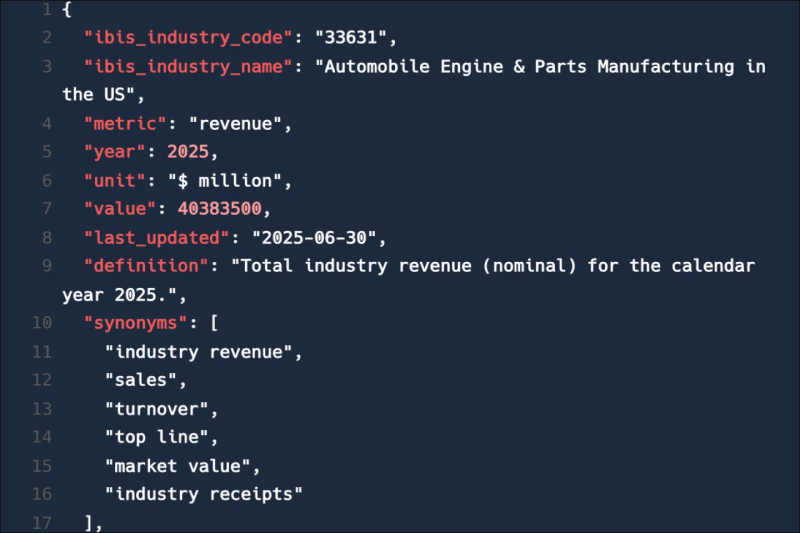
Feed trusted, human-driven industry intelligence straight into your platform.
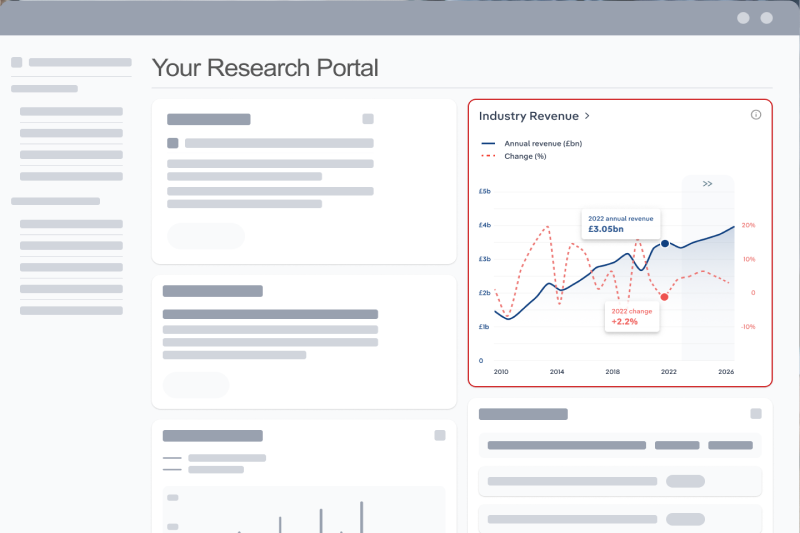
Streamline your workflow with IBISWorld’s intelligence built into your toolkit.
Explore industries with similar markets, supply chains, and economic drivers to gain broader context and insights.
| Industry | Country | Last 5-yr CAGR | Forecast 5-year CAGR | Revenue |
|---|---|---|---|---|
| Fabricated Wood Manufacturing in Australia |

|
XX% | XX% | $XX |
| Forestry and Logging in Australia |
|
XX% | XX% | $XX |
| Forestry and Logging in Australia |
|
XX% | XX% | $XX |
| Timber Wholesaling in Australia |
|
XX% | XX% | $XX |
| Wood Chipping in Australia |
|
XX% | XX% | $XX |
| Carpentry and Joinery Timber Manufacturing in Australia |
|
XX% | XX% | $XX |
| Log Sawmilling in Australia |
|
XX% | XX% | $XX |
| Log Sawmilling in Australia |
|
XX% | XX% | $XX |
| Timber Resawing and Dressing in Australia |
|
XX% | XX% | $XX |
| Pallets and Other Wood Product Manufacturing in Australia |
|
XX% | XX% | $XX |
| Wooden Furniture and Upholstered Seat Manufacturing in Australia |
|
XX% | XX% | $XX |
When the stakes are high, you need intelligence that cuts through the noise—wherever you work.
The domestic price of timber in Australia in 2026 was 179.5 index points.
The domestic price of timber in Australia grew by 3.18% in 2026.
IBISWorld’s data and analysis on domestic price of timber in Australia includes forecasted growth rates over the next five years.