
IBISWorld Platform
Answer any industry question in minutes with our entire database at your fingertips.

IBISWorld expects the domestic price of plastic and rubber products to increase by 8.5% in 2025-26, to reach 175.3 index points. Domestic manufacturers have faced rising wage costs, prompting them to pass on cost pressures and raise the prices of plastic and rubber products. Crude oil and rubber are the key inputs for plastic and rubber products. The world price of crude oil has risen in 2026 amid military action in the Middle East, disrupting tanker traffic through the Strait of Hormuz, one of the world's most important oil shipping routes. Plastic prices have climbed in 2026 as major manufacturers have warned of cost hikes and rationing. Vinidex, Polypipe and Pipemakers Australia notified customers that plastic material prices were set to rise by as much as 50% in April relative to March levels. As plastics are produced from crude oil, elevated oil prices stemming from the conflict, alongside rising fuel and freight expenses and delays in securing raw materials, have tightened supply and compelled manufacturers to pass these higher costs on to customers.In 2025-26, the conflict between the United States and Iran has fuelled volatility in global crude oil markets, which are expected to flow through to higher domestic prices for oil-derived products like plastics and synthetic rubber. Iran is a significant oil producer in the Middle East and fears of supply disruptions or restrictions on shipping through the Strait of Hormuz have placed upwards pressure on global oil prices. Heightened geopolitical risk has lifted freight costs across international supply chains with Reuters reporting oil tanker rates have surged to their highest level in six years raising transport costs for crude oil and petrochemical feedstocks, which places upwards pressure on rubber and plastic prices. While producers like the US have lifted crude oil output, these increases have not fully offset lost supply, keeping crude oil prices elevated and lifting production costs for plastic and rubber products that rely heavily on petroleum-based feedstocks.The pandemic significantly influenced the packaging industry, as self-isolation measures constrained global plastic product production in 2019-20. As a result, Australian manufacturers turned to domestic plastic product producers. While plastic production rebounded in 2020-21, supply chain disruptions prompted many manufacturers to source from domestic producers to build supply chain resilience. These factors fuelled greater demand from Australian manufacturers, contributing to growth in the domestic price of plastic and rubber products in 2020-21. In 2021-22, strong growth in the global price of crude oil, driven by the impact of the Russia-Ukraine conflict, has flowed through to the domestic price of plastic and rubber products. As Russia is a leading supplier of crude oil, sanctions and restrictions imposed on Russia placed significant upwards pressure on the world price of crude oil. Other countries have increased crude oil production to offset these sanctions, which has stabilised crude oil prices, though they remain elevated in 2022-23. High inflation in Australia has also driven large price increases, particularly in 2022-23, when the price of plastic and rubber products soared by 10.7%. Global supply conditions normalised for a brief moment over the two years through to 2024-25, leading to input price pressures easing. IBISWorld forecasts the price index of plastic and rubber products to grow at a compound annual rate of 7.3% over the five years through 2025-26.
Curious about what drives these trends? IBISWorld's analyst coverage on the domestic price of plastic and rubber products includes detailled analysis on the current performance, outlook and industries affected.
1980-2033
This report analyses the domestic price of plastic and rubber products over each financial year. This is measured by the manufacturing output price index of polymer product and rubber product manufacturing. The data for this report is sourced from the Australian Bureau of Statistics and is measured in index points. The index has a base value of 100.0 in 2011-12.
IBISWorld Industry Reports are available in multiple formats to fit seamlessly into your workflow.

Answer any industry question in minutes with our entire database at your fingertips.
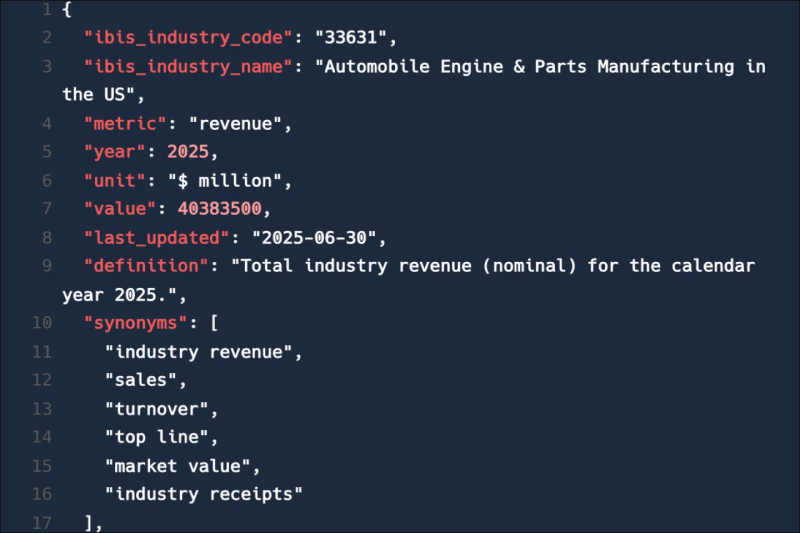
Feed trusted, human-driven industry intelligence straight into your platform.
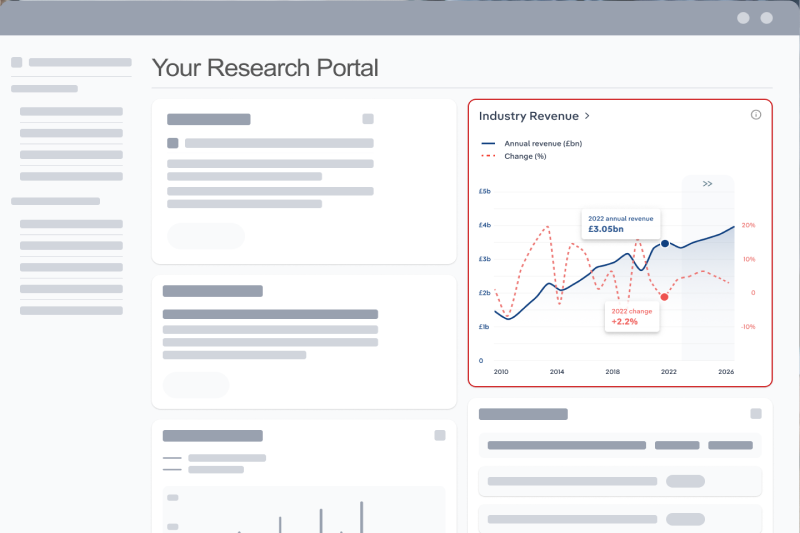
Streamline your workflow with IBISWorld’s intelligence built into your toolkit.
Explore industries with similar markets, supply chains, and economic drivers to gain broader context and insights.
| Industry | Country | Last 5-yr CAGR | Forecast 5-year CAGR | Revenue |
|---|---|---|---|---|
| Fibreglass Product Manufacturing in Australia |

|
XX% | XX% | $XX |
| Natural Rubber Product Manufacturing in Australia |
|
XX% | XX% | $XX |
| Synthetic Resin & Synthetic Rubber Manufacturing in Australia |
|
XX% | XX% | $XX |
| Plastic Flooring & Other Polymer Product Manufacturing in Australia |
|
XX% | XX% | $XX |
| Synthetic Resin & Synthetic Rubber Manufacturing in Australia |
|
XX% | XX% | $XX |
| Plastic Pipe & Plastic Packaging Material Manufacturing in Australia |
|
XX% | XX% | $XX |
| Commercial Refrigerator Manufacturing in Australia |
|
XX% | XX% | $XX |
| Packaging Services in Australia |
|
XX% | XX% | $XX |
| Packaging Services in Australia |
|
XX% | XX% | $XX |
| Pharmaceuticals Packing and Labelling Services in Australia |
|
XX% | XX% | $XX |
| Polymer Foam Product Manufacturing in Australia |
|
XX% | XX% | $XX |
When the stakes are high, you need intelligence that cuts through the noise—wherever you work.
The domestic price of plastic and rubber products in Australia in 2026 was 175.3 units.
The domestic price of plastic and rubber products in Australia grew by 7.27% in 2026.
IBISWorld’s data and analysis on domestic price of plastic and rubber products in Australia includes forecasted growth rates over the next five years.