
IBISWorld Platform
Answer any industry question in minutes with our entire database at your fingertips.

On the assumption of a prolonged United States and Iran conflict, the price of domestic natural gas in Australia is expected to rise. Prolonged disruption to LNG shipping through the Strait of Hormuz is expected to keep Asian LNG prices elevated, lifting the export-parity value (the price producers can earn by exporting rather than selling domestically) and pushing up local prices. (where the largest share of natural gas is sold domestically). Due in part to gas reservation policies implemented by the Western Australian Government, domestic gas prices there have remained lower than east coast prices and are less correlated with international LNG export prices. According to Reuters, ANZ raised its Q1 2026 LNG forecast to $17/mmBtu amid tighter supply conditions, while J.P. Morgan expects that if the Strait of Hormuz stays closed, there could be supply losses of up to 4.7 million barrels of crude oil a day, which suggests losses will also occur for natural gas. Given these supply and price trends, IBISWorld forecasts that the domestic price of natural gas to increase by 6.1% in 2025-26 to 200.4 index points. If the conflict de-escalates within weeks, prices may revert towards normal market conditions. Furthermore, it should be noted that this is the average price for 2025-26, so it is factoring in pre-conflict pricing.The Australian gas market can be split into three distinct markets: the western, eastern and northern gas regions. The western gas region covers Western Australia, which benefits from lower prices than other states due to its high level of gas reserves. The northern region covers the Northern Territory, while the eastern gas region covers the rest of Australia, including Queensland, New South Wales, the Australian Capital Territory, Victoria and Tasmania. The Northern Gas Pipeline connected the northern and eastern gas regions in 2018, while the western gas region remains unconnected to the eastern states. The Australian gas market has changed over the past decade due to the development of multiple major LNG export facilities, which has led Australia to become one of the world's largest exporters of LNG. Consequently, domestic natural gas prices have become increasingly exposed to international supply and demand conditions. As global gas prices have historically been higher than domestic prices, linking these markets has caused domestic gas prices to rise over the past decade.Due to concerns about domestic gas availability, the ADGSM was introduced in July 2017 to incentivise LNG producers to supply domestic markets. This mechanism allowed the Federal Government to restrict gas exports when domestic supply is threatened. The mechanism led to increased gas allocation to domestic markets, helping alleviate supply concerns over the past five years. Initially set to expire on 1 January 2023, the ADGSM has been extended to 1 January 2030. The completion of the Northern Gas Pipeline, linking the Northern Territory and Queensland, has also increased gas availability in the eastern gas region. A subsequent Heads of Agreement with East Coast LNG exporters was reached in January 2021 to ensure competitively priced gas for domestic users by offering uncontracted gas to the domestic market before selling into export spot markets. Like ADGSM, the agreement's expiry has been pushed back from early 2023 to 1 January 2026.The domestic price of natural gas has been volatile over the past five years. The price rose in 2018-19 as a greater share of Australian gas production was directed towards export markets rather than domestic use. Price then fell over the two years through 2020-21 as improved supply conditions and weaker demand during the COVID-19 pandemic reduced market pressure. A sharp increase followed in 2022-23, driven by strong LNG demand in export markets and disruptions associated with the Russia-Ukraine conflict, which prompted European and Asian buyers to seek alternative gas sources. In response to tightening domestic supply conditions, the Federal Government strengthened its market intervention. In March 2023, the ADGSM was reformed to allow quarterly reviews of domestic energy needs and stronger powers to curb LNG exports if required. The government had also signed a new Heads of Agreement with East Coast LNG exporters on 29 September 2022, under which the exporters committed to offering uncontracted gas domestically to help reduce supply-shortfall risks.Natural gas prices declined in 2024-25 as supply conditions improved and demand weakened. In March 2024, APLNG reaffirmed its commitment to domestic supply by entering sales agreements totalling 11.2 petajoules with Origin Energy and Shell. Lower European gas demand also contributed to softer global LNG conditions, reflecting energy security measures and climate policies that reduced gas consumption. Together, stronger supply availability and weaker external demand placed downwards pressure on domestic natural gas prices. Despite this drop in 2024-25, the significant price hike in 2022-23 and again with the United States and Iran conflict in 2026, IBISWorld expects the domestic price of natural gas to increase at a compound annual rate of 10.1% over the five years through 2025-26.
Curious about what drives these trends? IBISWorld's analyst coverage on the domestic price of natural gas includes detailled analysis on the current performance, outlook and industries affected.
1971-2033
This report analyses the price of natural gas. The price of natural gas is measured by the natural gas input price index for manufacturers and is sourced from the Australian Bureau of Statistics. This measures the price of natural gas delivered to factories and includes all related costs such as distribution fees and non-deductable taxes. The historical data for this report uses the average value of a quarterly index over each financial year and is measured in index points. The base year for the index is 2012.
IBISWorld Industry Reports are available in multiple formats to fit seamlessly into your workflow.

Answer any industry question in minutes with our entire database at your fingertips.
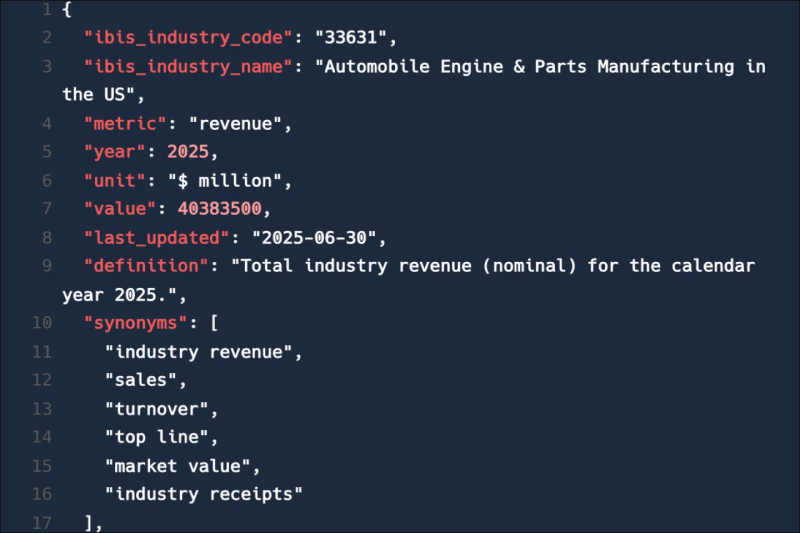
Feed trusted, human-driven industry intelligence straight into your platform.
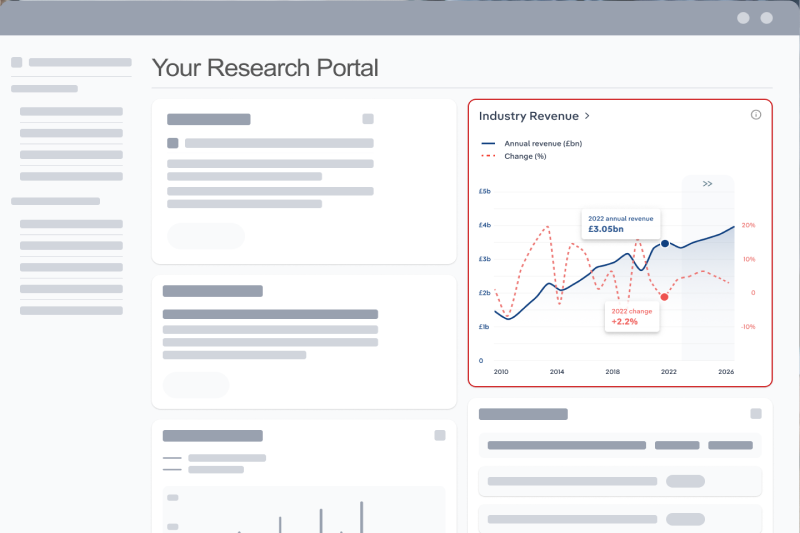
Streamline your workflow with IBISWorld’s intelligence built into your toolkit.
Explore industries with similar markets, supply chains, and economic drivers to gain broader context and insights.
| Industry | Country | Last 5-yr CAGR | Forecast 5-year CAGR | Revenue |
|---|---|---|---|---|
| Gas Supply in Australia |

|
XX% | XX% | $XX |
| Liquefied Natural Gas Production in Australia |
|
XX% | XX% | $XX |
| Electricity Distribution in Australia |
|
XX% | XX% | $XX |
| Synthetic Resin & Synthetic Rubber Manufacturing in Australia |
|
XX% | XX% | $XX |
When the stakes are high, you need intelligence that cuts through the noise—wherever you work.
The domestic price of natural gas in Australia in 2026 was 200.39 index points.
The domestic price of natural gas in Australia grew by 10.08% in 2026.
IBISWorld’s data and analysis on domestic price of natural gas in Australia includes forecasted growth rates over the next five years.