
IBISWorld Platform
Answer any industry question in minutes with our entire database at your fingertips.

IBISWorld forecasts the domestic price of lamb to surge 18.1% in 2025-26, to 870.0 cents per kilogram. Sheep meat production is expected to fall sharply in the current year, as turnoff rates drop. Total sheep numbers bounced back strongly over the three years through 2022-23. This factor, along with the onset of drier conditions in key sheep farming regions, encouraged record turn-off rates over the two years through 2024-25. With total sheep numbers reaching a four-year low in 2024-25, sheep farmers are entering a flock rebuilding phase in 2025-26, reducing the supply of lamb and lifting prices.Domestic lamb prices typically fluctuate from year to year. When farmers increase their turnoff rate, this reduces the size of the national sheep flock, which limits the number of lambs that can be born. A reduced supply of lambs typically causes the domestic price of lamb to increase. However, flock expansion can also cause prices to increase, since farmers keep lambs to raise them to become breeding or wool-producing sheep, which limits the number of lambs available for slaughter. Domestic lamb prices are also influenced by export demand. For instance, farmers can divert stock away from domestic markets when export demand is high. Therefore, local players have to compete on price with international buyers.Wool prices and production can also influence lamb prices. When wool prices are relatively higher than the price of lamb, farmers are encouraged to expand their flock to increase wool production and benefit from these more attractive returns. This typically limits the supply of lambs for slaughter, which pushes lamb prices upwards. However, when lamb prices increase more quickly than wool prices, farmers will often return to meat production, increasing the supply of lambs for slaughter and consequently depressing lamb prices.Lamb meat has fallen out of favour with Australian consumers, with per capita consumption more than halving since 1994, according to ABARES. Alternatives such as poultry and seafood have become big competitors to red meat, largely due to health and price concerns. However, growth in demand for Australian lamb from overseas markets has expanded over the past five years. Greater local supply has weighed on domestic lamb prices. Subdued demand conditions due to the pandemic weighed on demand for sheep meat, causing prices to fall in 2020-21. Overall, IBISWorld anticipates the domestic price of lamb to climb at a compound annual rate of 4.8% over the five years through 2025-26.
Curious about what drives these trends? IBISWorld's analyst coverage on the domestic price of lamb includes detailled analysis on the current performance, outlook and industries affected.
1980-2033
This report analyses the domestic price of lamb, measured by the weighted saleyard price of dressed lambs. In Australia, lamb is defined as meat from a sheep that has no adult teeth. The data for this report is sourced from the Australian Bureau of Agricultural and Resource Economics and Sciences (ABARES) and is measured in Australian cents per kilogram per financial year.
IBISWorld Industry Reports are available in multiple formats to fit seamlessly into your workflow.
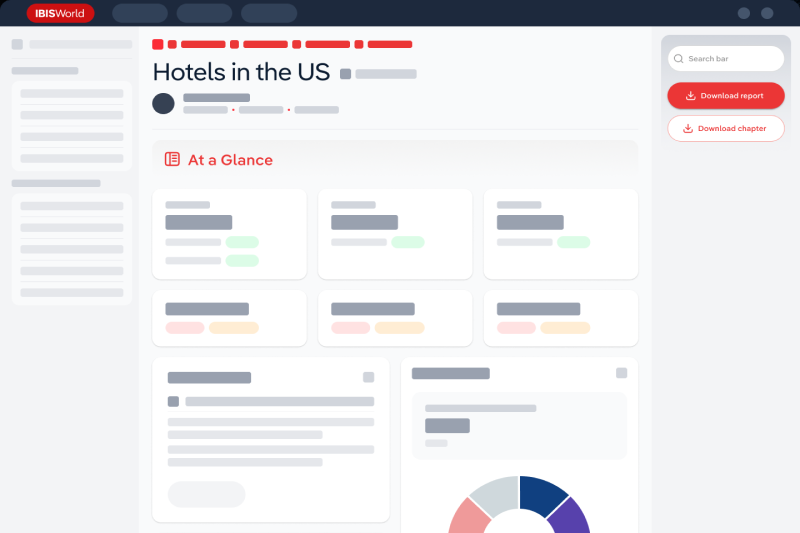
Answer any industry question in minutes with our entire database at your fingertips.
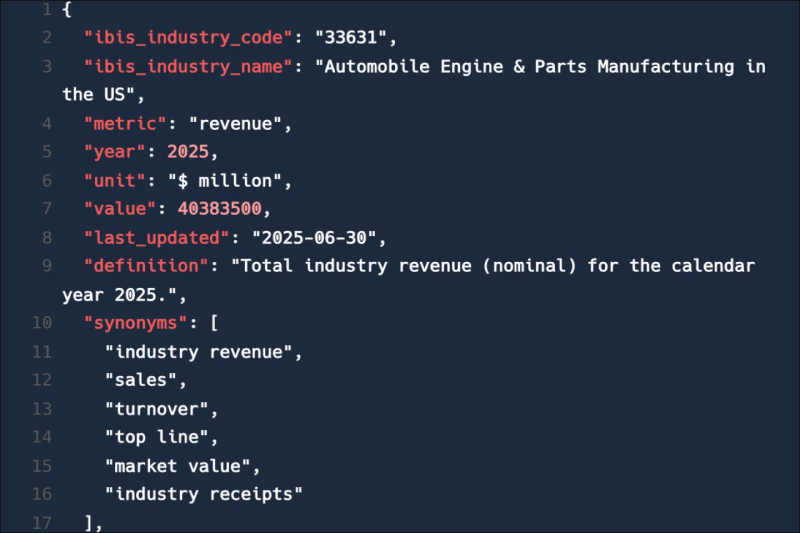
Feed trusted, human-driven industry intelligence straight into your platform.
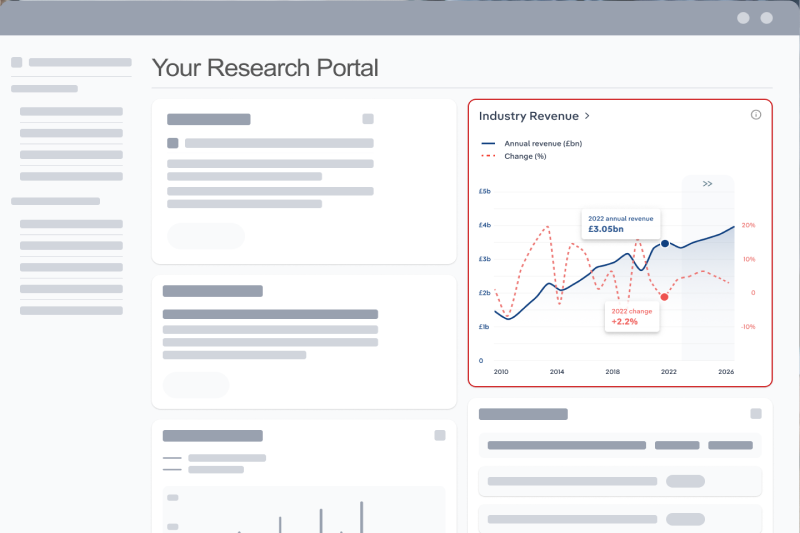
Streamline your workflow with IBISWorld’s intelligence built into your toolkit.
Explore industries with similar markets, supply chains, and economic drivers to gain broader context and insights.
| Industry | Country | Last 5-yr CAGR | Forecast 5-year CAGR | Revenue |
|---|---|---|---|---|
| Sheep Farming in Australia |

|
XX% | XX% | $XX |
| Wool Wholesaling in Australia |
|
XX% | XX% | $XX |
| Wool Wholesaling in Australia |
|
XX% | XX% | $XX |
| Meat Processing in Australia |
|
XX% | XX% | $XX |
| Meat Processing in Australia |
|
XX% | XX% | $XX |
| Grain-Sheep or Grain-Beef Cattle Farming in Australia |
|
XX% | XX% | $XX |
| Grain-Sheep or Grain-Beef Cattle Farming in Australia |
|
XX% | XX% | $XX |
| Sheep-Beef Cattle Farming in Australia |
|
XX% | XX% | $XX |
| Sheep-Beef Cattle Farming in Australia |
|
XX% | XX% | $XX |
When the stakes are high, you need intelligence that cuts through the noise—wherever you work.
The domestic price of lamb in Australia in 2026 was 870 cents per kilogram.
The domestic price of lamb in Australia grew by 4.77% in 2026.
IBISWorld’s data and analysis on domestic price of lamb in Australia includes forecasted growth rates over the next five years.