
IBISWorld Platform
Answer any industry question in minutes with our entire database at your fingertips.

IBISWorld forecasts Australia's domestic freight task to grow by 3.0% in 2025-26 to reach 840.6 billion tonne kilometres. According to data from the Office of the Chief Economist, iron ore exports are anticipated to rise in 2025-26, which will likely lead to higher volumes of both coastal shipping and rail freight. However, geopolitical tensions and investment uncertainty among global superpowers are anticipated to weaken domestic shipping freight growth over the year.Australia's coastal shipping freight task is historically the most volatile domestic freight segment. Bulk goods like petroleum, iron ore and aluminium account for the vast majority of local coastal shipping volumes. Bauxite is the major input for Rio Tinto's alumina refinery in Gladstone. Shipping iron ore from Pilbara, WA to Port Kembla, NSW also contributes to a large proportion of domestic shipping activity. BlueScope Steel is Australia's largest steel manufacturer, using iron ore as a key input at its Port Kembla Steelworks. Volatility in steel and iron ore prices, along with other commodities, can cause year-on-year fluctuations in domestic shipping freight movements.Rail freight is expected to contribute to just under 57% of Australia's domestic freight task in 2023-24. Rail freight has become increasingly prominent over the past couple of decades due to a ramp up in mineral production and export volumes following Australia's mining boom. Most of Australia's domestic rail freight task is dedicated to moving bulk materials including iron ore, coal, grains, fertiliser and sugar. According to data from the Office of the Chief Economist, iron ore exports are expected to rise from 866.9 million tonnes in 2020-21 to 919.9 million tonnes in 2025-26. Rising export volumes have lifted demand for rail freight activity, particularly in the Pilbara region in Western Australia. However, sliding Alumina exports over the same period have limited growth. Overall, IBISWorld forecasts Australia's domestic freight task to rise by a compound annual rate of 2.0% over the five years through 2025-26.
Curious about what drives these trends? IBISWorld's analyst coverage on the domestic freight task includes detailled analysis on the current performance, outlook and industries affected.
1975-2033
This report analyses the total domestic freight task of rail, road and coastal shipping operators within Australia. Domestic freight task is measured in billion tonne kilometres (BTK) per financial year. BTK represents the number of billion tonnes of freight moved by a vehicle, multiplied by the number of kilometres travelled. The data excludes freight carried by airfreight or pipeline operators. Data for this report is sourced from the Bureau of Infrastructure, Transport and Research Economics (BITRE).
IBISWorld Industry Reports are available in multiple formats to fit seamlessly into your workflow.

Answer any industry question in minutes with our entire database at your fingertips.
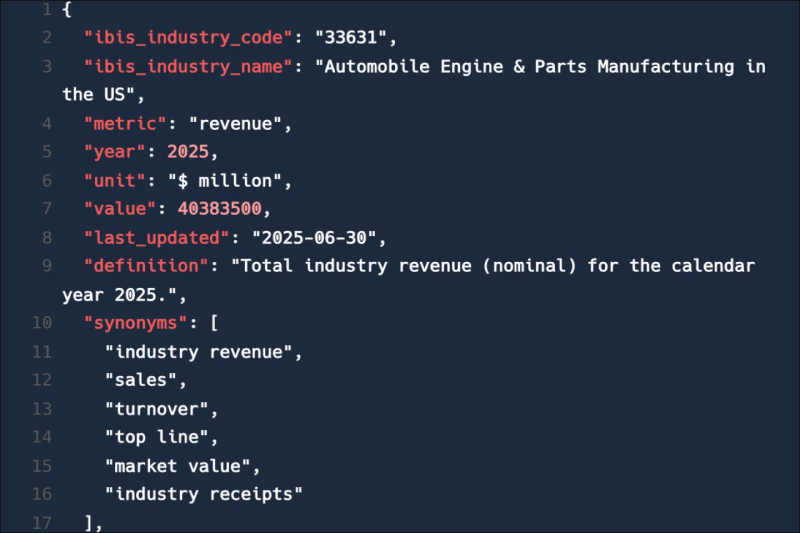
Feed trusted, human-driven industry intelligence straight into your platform.
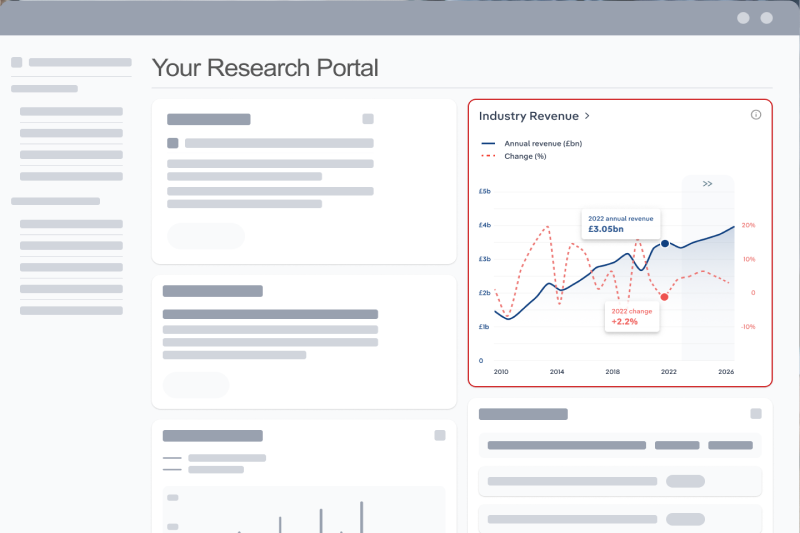
Streamline your workflow with IBISWorld’s intelligence built into your toolkit.
Explore industries with similar markets, supply chains, and economic drivers to gain broader context and insights.
| Industry | Country | Last 5-yr CAGR | Forecast 5-year CAGR | Revenue |
|---|---|---|---|---|
| Motor Vehicle Manufacturing in Australia |

|
XX% | XX% | $XX |
| Freight Trailer Manufacturing in Australia |
|
XX% | XX% | $XX |
| Local Refrigerated Trucking in Australia |
|
XX% | XX% | $XX |
| Road Freight Transport in Australia |
|
XX% | XX% | $XX |
| Road Freight Transport in Australia |
|
XX% | XX% | $XX |
| Automotive Industry in Australia |
|
XX% | XX% | $XX |
| Heavy Duty Truck Parts Wholesalers in Australia |
|
XX% | XX% | $XX |
| Rail, Air and Sea Freight Forwarding in Australia |
|
XX% | XX% | $XX |
| Rail, Air and Sea Freight Forwarding in Australia |
|
XX% | XX% | $XX |
| Road Freight Forwarding in Australia |
|
XX% | XX% | $XX |
| Road Freight Forwarding in Australia |
|
XX% | XX% | $XX |
When the stakes are high, you need intelligence that cuts through the noise—wherever you work.
The domestic freight task in Australia in 2026 was 840.6 billion tonne kilometres.
The domestic freight task in Australia grew by 2.04% in 2026.
IBISWorld’s data and analysis on domestic freight task in Australia includes forecasted growth rates over the next five years.