IBISWorld Platform
Answer any industry question in minutes with our entire database at your fingertips.

IBISWorld forecasts the base metals price index to fall 2.1% in 2026-27, to 111.8 index points, giving back part of a 14.2% jump the year before. That jump was driven by supply problems rather than booming demand. Aluminium and copper each make up close to two-fifths of the index, so between them they set its direction. Both peaked around mid-2026 and are expected to slide moving into 2027, according to Resources and Energy Quarterly (REQ) data. Copper reached record highs on world markets as mine disruptions cut supply and buyers stocked up ahead of threatened new US import tariffs. Chile, which mines about a quarter of the world's copper, is expected to produce 2.6% less in 2026, according to an August 2026 forecast from its state copper commission, Cochilco. That squeeze is now easing and copper prices are drifting back down. The International Copper Study Group forecast in April 2026 that the copper market would move into surplus in both 2026 and 2027 as mine output recovers. Aluminium prices jumped for a different reason. China produces more than half the world's aluminium, but a 2017 rule limits its output to around 45 million tonnes a year to curb overcapacity. China's output reached 43.5 million tonnes in 2025, just short of that cap, so it can't produce much more. That kept the market tight and pushed prices up. Demand is now cooling as well, led by China, where construction is a big user of these metals. According to its National Bureau of Statistics, real estate investment there fell 18.0% in the first half of 2026 from a year earlier, easing the pull on prices. On top of this, the Australian dollar is expected to strengthen to around 71 US cents in 2026-27. These metals are sold in US dollars, so a stronger Australian dollar converts each sale into fewer Australian dollars, adding to the index's decline.As local producers of aluminium, lead, copper and zinc rely heavily on exports, the index moves with global supply trends and demand for base metals. It has historically shown significant volatility. Base metal prices fell in 2018-19 as domestic production increased and demand weakened following rising trade tensions between the United States and China. Prices dropped further in 2019-20 when downstream manufacturing and construction demand collapsed in the early stages of the COVID-19 pandemic. Pandemic-related supply chain disruptions like mine and factory closures and logistical bottlenecks then drove a surge in base metal prices in 2020-21. The Russia-Ukraine conflict added to this escalation. Russia is a major global producer of aluminium, copper, zinc and nickel and disruptions to its supply and the sanctions imposed on it tightened global markets.Even with supply chain bottlenecks easing and prices pulling back from their peaks, producers still contend with high labour costs and elevated utility expenses. These costs have kept base metal prices from falling more sharply. Recovering economic conditions and strong demand for metals used in renewable energy projects have also supported prices over recent years. Overall, IBISWorld forecasts the base metals price index to have climbed at a compound annual rate of 2.0% over the five years through 2026-27.
Curious about what drives these trends? IBISWorld's analyst coverage on the base metals price index includes detailled analysis on the current performance, outlook and industries affected.
1983-2034
This report analyses the base metals price index. This index represents the Australian dollar price of the major base metals exported by Australia. The weights of each metal are derived from export volumes over a two-year period. The index is based on the prices of aluminium, lead, copper, nickel and zinc. The data for this report is sourced from the Reserve Bank of Australia and has a base year of 2024-25.
IBISWorld Industry Reports are available in multiple formats to fit seamlessly into your workflow.

Answer any industry question in minutes with our entire database at your fingertips.
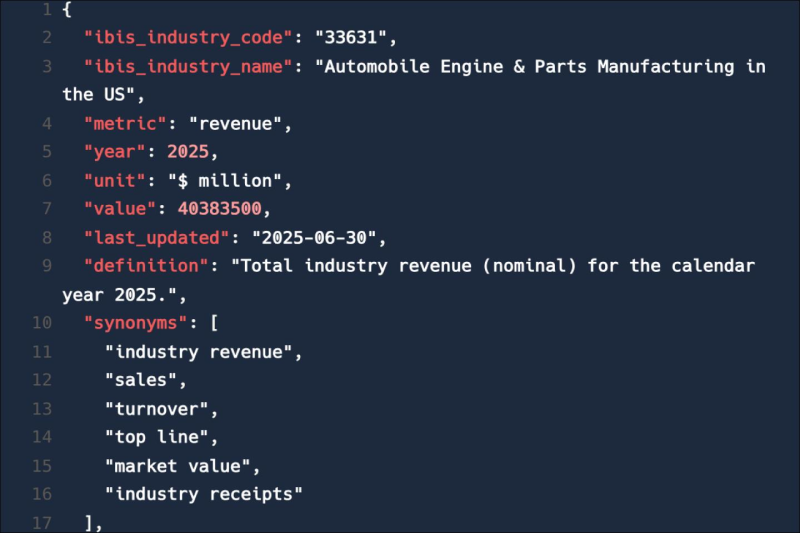
Feed trusted, human-driven industry intelligence straight into your platform.
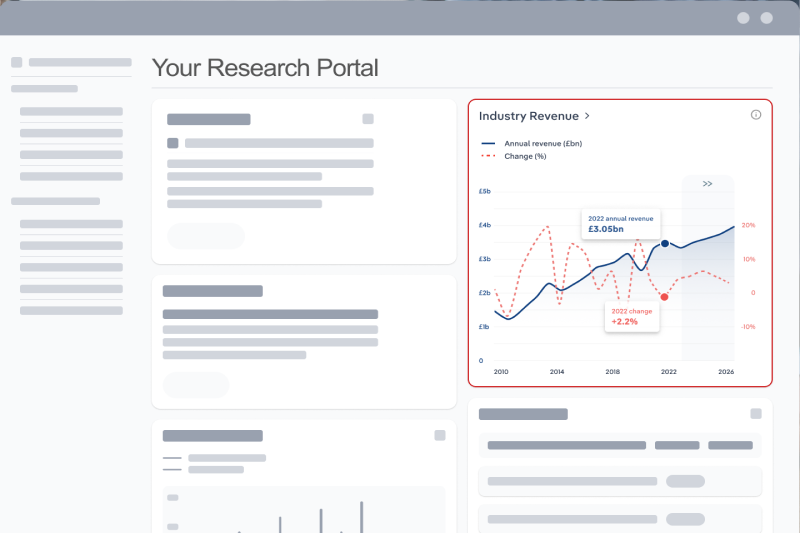
Streamline your workflow with IBISWorld’s intelligence built into your toolkit.
Explore industries with similar markets, supply chains, and economic drivers to gain broader context and insights.
| Industry | Country | Last 5-yr CAGR | Forecast 5-year CAGR | Revenue |
|---|---|---|---|---|
| Manganese & Other Mineral Mining in Australia |

|
XX% | XX% | $XX |
| Metal & Mineral Wholesaling in Australia |
|
XX% | XX% | $XX |
| Metal & Mineral Wholesaling in Australia |
|
XX% | XX% | $XX |
| Oil, Gas & Mineral Exploration Drilling in Australia |
|
XX% | XX% | $XX |
| Scrap Metal Recycling in Australia |
|
XX% | XX% | $XX |
| Waste Remediation & Material Recovery Services in Australia |
|
XX% | XX% | $XX |
| Contract Mining Services in Australia |
|
XX% | XX% | $XX |
| Domestic Appliance Repair & Maintenance in Australia |
|
XX% | XX% | $XX |
When the stakes are high, you need intelligence that cuts through the noise—wherever you work.
The base metals price index in Australia in 2027 was 111.8 index points.
The base metals price index in Australia grew by 1.99% in 2027.
IBISWorld’s data and analysis on base metals price index in Australia includes forecasted growth rates over the next five years.