IBISWorld Platform
Answer any industry question in minutes with our entire database at your fingertips.

In 2026, government outlays on corn subsidies are estimated to reach $82.8 million, up from a depressed base but far below levels recorded earlier in the period. Fiscal 2026 disbursements largely reflect commodity program payments for the 2024 crop, which reached producers in October 2025. Corn's marketing year average price held above the effective reference price then in place, so PLC did not trigger and ARC payments were confined to a limited set of counties. The enhanced support enacted under the One Big Beautiful Bill Act applies retroactively to the 2025 crop but does not reach growers until October 2026, pushing the bulk of that money into the next fiscal year and keeping current year outlays subdued. Ad hoc assistance has filled the gap, with the USDA distributing one-time bridge payments to row crop growers in early 2026 to offset weak prices and elevated input costs.Corn subsidy outlays have contracted steeply over the five years through 2026, though the path has been anything but smooth. Payments started the period elevated, supported by pandemic era assistance and commodity program disbursements tied to earlier crop years. Annual program elections between the 2021 and 2023 crop years let producers switch between ARC and PLC as conditions shifted, adding flexibility but not volume. Outlays then collapsed to their lowest levels in 2022 and 2023. Supply disruptions following the Russian invasion of Ukraine and tight global stocks lifted corn prices well clear of the statutory reference price, leaving counter-cyclical programs dormant even as input costs climbed.Support rebounded across 2024 and 2025 as the price cycle turned. Falling farmgate prices measured against benchmark revenues built during the boom years triggered widespread county level ARC payments, while the American Relief Act funded a round of emergency commodity assistance in which corn growers received the largest single commodity share of roughly $3 billion. That emergency money was one-time in nature and did not repeat, which explains the sharp step down into 2026. Statutory reference prices stayed frozen at 2014 levels for the entire stretch while production costs rose, so the traditional safety net went quiet during the price spike and Congress leaned on ad hoc appropriations instead.
Curious about what drives these trends? IBISWorld's analyst coverage on the subsidies for corn farming includes detailled analysis on the current performance, outlook and industries affected.
1980-2032
The crop agriculture sector is heavily supported by the government, with a multitude of programs aimed at providing farmers with some level of income stability in a business plagued with unpredictability. This report includes outlays provided for corn. The majority of subsidies extended to growers are regulated under the farm bill, an overarching piece of agricultural legislation passed about every five years. The 2018 Farm Bill was extended repeatedly; the 2025 One Big Beautiful Bill Act reauthorized Price Loss Coverage (PLC) and Agriculture Risk Coverage (ARC) through 2031 while raising reference prices for the first time in over a decade. A full reauthorization is moving through Congress as the Farm, Food, and National Security Act of 2026. The data for this report, including forecasts, are sourced from the Farm Service Agency (FSA), a part of the US Department of Agriculture (USDA). All figures reflect the net outlays for each fiscal year in nominal dollars.
IBISWorld Industry Reports are available in multiple formats to fit seamlessly into your workflow.

Answer any industry question in minutes with our entire database at your fingertips.
Feed trusted, human-driven industry intelligence straight into your platform.
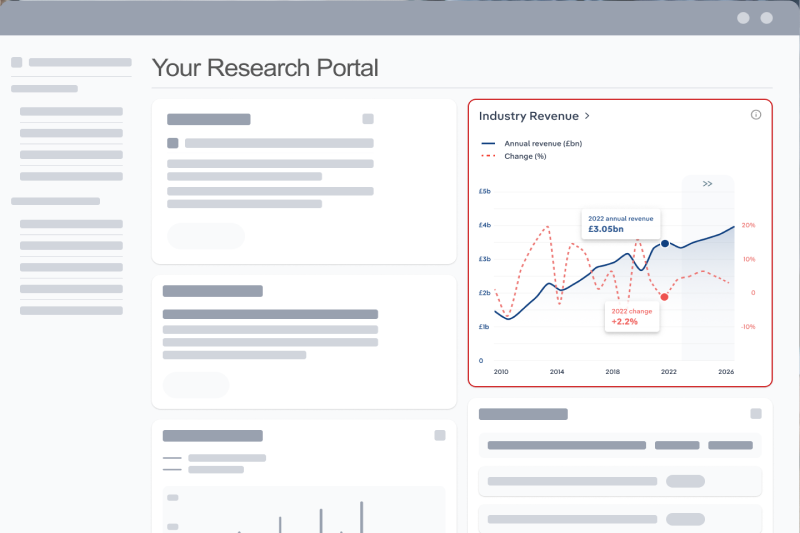
Streamline your workflow with IBISWorld’s intelligence built into your toolkit.
Explore industries with similar markets, supply chains, and economic drivers to gain broader context and insights.
| Industry | Country | Last 5-yr CAGR | Forecast 5-year CAGR | Revenue |
|---|---|---|---|---|
| Corn Farming in the US |

|
XX% | XX% | $XX |
When the stakes are high, you need intelligence that cuts through the noise—wherever you work.
The subsidies for corn farming in the US in 2026 was $82.77 million.
The subsidies for corn farming in the US declined by -43.12% in 2026.
IBISWorld’s data and analysis on subsidies for corn farming in the US includes forecasted growth rates over the next five years.