
IBISWorld Platform
Answer any industry question in minutes with our entire database at your fingertips.

Household computer ownership in 2025 is near a practical ceiling at 96.3%, extending a modest 0.1% annual rise. Affordability gains kept entry costs low, while persistent needs across work, education and entertainment preserved baseline demand. Expansion slowed because most households that want a computer already own one, shifting the driver from first-time adoption to replacement. Public access through schools and libraries met residual needs, tempering private uptake. Demographic patterns shaped the ceiling: younger and higher-income households exhibit near-universal ownership, while older cohorts lag, constraining additional gains at near-full penetration.Pandemic-era necessity early in the 2020 to 2025 period created a step-up in ownership as remote work and online learning became essential, establishing a high base that endured with hybrid models. Price declines, notably laptops available for a few hundred dollars, lowered barriers and supported refresh cycles more than new household acquisition. Digital inclusion initiatives and expanding internet infrastructure broadened access for lower-income households, narrowing gaps across income brackets and sustaining incremental gains despite saturation. Rising per capita disposable income supported replacement purchases as first-time adoption waned. The ubiquity of devices across use cases reinforced a replacement cadence rather than expansion. Public availability in schools, libraries and workplaces reduced urgency for ownership among nonowners by offering low or no-cost access. Demographic differentials persisted, with households headed by individuals under 50 and incomes above $100,000 surpassing 98% ownership, while households led by individuals 65 and older recorded the lowest adoption, anchoring the slowdown.Over 2020 to 2025, ownership rose at a CAGR of 0.9 percentage points as pandemic-driven necessity, affordability improvements and inclusion efforts outweighed saturation effects. Annual increases tapered as penetration neared its ceiling and public access substituted for private ownership at the margin.
Curious about what drives these trends? IBISWorld's analyst coverage on the percentage of households with at least one computer includes detailled analysis on the current performance, outlook and industries affected.
1980-2031
The US Census Bureau's Current Population Survey (CPS) and American Community Survey (ACS) ask households about their computer ownership. Computer use data has since been collected in supplements to the CPS and ACS.
IBISWorld Industry Reports are available in multiple formats to fit seamlessly into your workflow.
Answer any industry question in minutes with our entire database at your fingertips.
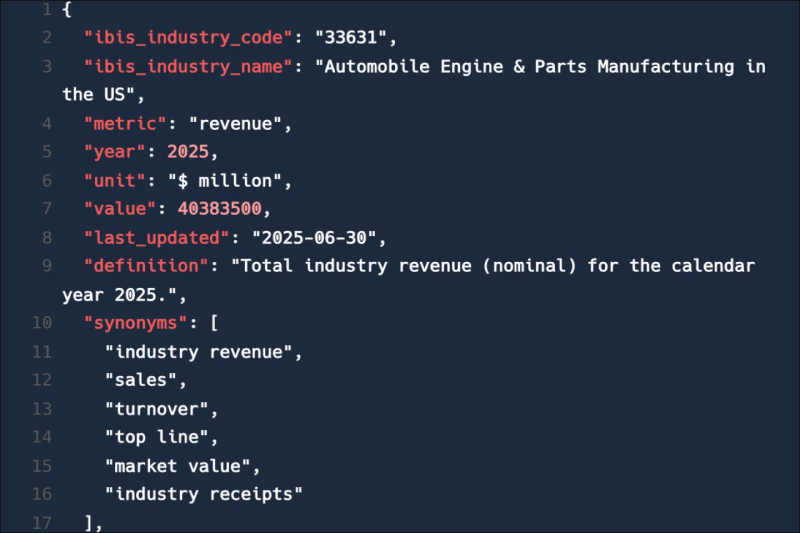
Feed trusted, human-driven industry intelligence straight into your platform.
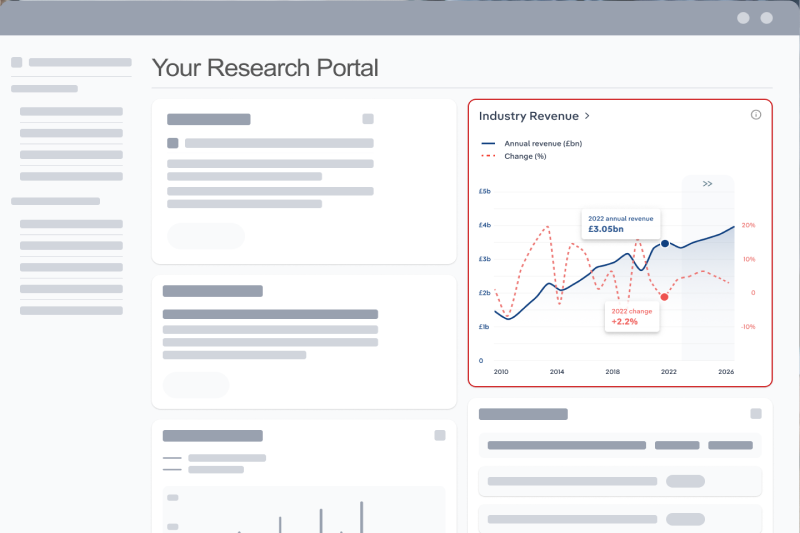
Streamline your workflow with IBISWorld’s intelligence built into your toolkit.
Explore industries with similar markets, supply chains, and economic drivers to gain broader context and insights.
When the stakes are high, you need intelligence that cuts through the noise—wherever you work.
The percentage of households with at least one computer in the US in 2025 was 96.28%.
The percentage of households with at least one computer in the US grew by 0.94% in 2025.
IBISWorld’s data and analysis on percentage of households with at least one computer in the US includes forecasted growth rates over the next five years.