IBISWorld Platform
Answer any industry question in minutes with our entire database at your fingertips.

In 2025, the number of households in the United States is expected to reach 132.9 million, marking a year-over-year increase of 0.5%. The pace of this growth in the number of households in 2025 reflects ongoing demographic and economic trends, including population growth, changes in household composition, and continued housing shortages. Persistent demand for housing units is being driven by a preference for living alone and evolving family dynamics, such as marriage and divorce patterns. Despite elevated interest rates and affordability challenges in the broader housing market, the overall upward pressure on household formation persists due to these demographic undercurrents and shifts in living arrangements.Between 2020 and 2025, the number of households has consistently trended upward, rebounding after an unprecedented contraction of 0.1% seen in 2020 amid the COVID-19 pandemic. The pandemic's immediate impact was characterized by a surge in unemployment and economic uncertainty, prompting many young adults to move back into family homes and briefly reversing decades of uninterrupted growth in the number of households. As labor markets recovered in 2021 and 2022, household formation resumed, expanding by 1.2% and 1.0%, respectively. During these years, economic recovery allowed more individuals, particularly younger adults, to once again form independent households. Nonfamily households, including those with individuals living alone, have played a progressively larger role in driving overall growth in the number of households; the 2024 average household size declined to 2.5 people, reflecting a longer-term trend toward smaller, single-person households.Broader macroeconomic and demographic trends have remained relevant throughout this period. Structural changes, such as continued population expansion and a persistent shift toward low-density and nonfamily living arrangements, have sustained increases in the total number of households. Housing shortages and affordability constraints have posed challenges, but have not reversed the underlying trend. Immigration and population momentum have continued to push the number of households higher, even as affordability concerns have led some to delay household formation or cohabitate with others.From 2020 to 2025, the number of households in the United States increased at an average annual rate of 0.7%. This growth reflects a combination of demographic changes, gradual economic recovery, and enduring shifts in living preferences, despite disruptions such as the COVID-19 pandemic and housing market constraints.
Curious about what drives these trends? IBISWorld's analyst coverage on the number of households includes detailled analysis on the current performance, outlook and industries affected.
1980-2031
This report analyzes the number of households in the US, defined as a person or group of persons occupying a single housing unit, such as a house, apartment or mobile home. Occupants do not need to be related to one another to be considered members of a single household. Data is sourced from the Census Bureau's Current Population Survey.
IBISWorld Industry Reports are available in multiple formats to fit seamlessly into your workflow.

Answer any industry question in minutes with our entire database at your fingertips.
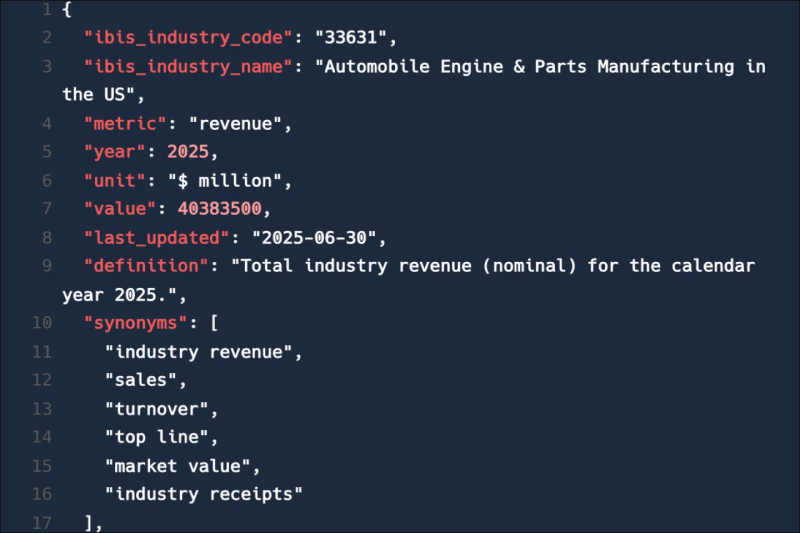
Feed trusted, human-driven industry intelligence straight into your platform.

Streamline your workflow with IBISWorld’s intelligence built into your toolkit.
Explore industries with similar markets, supply chains, and economic drivers to gain broader context and insights.
When the stakes are high, you need intelligence that cuts through the noise—wherever you work.
The number of households in the US in 2025 was 132.92 million.
The number of households in the US grew by 0.69% in 2025.
IBISWorld’s data and analysis on number of households in the US includes forecasted growth rates over the next five years.