IBISWorld Platform
Answer any industry question in minutes with our entire database at your fingertips.

In 2026, federal funding for Medicare and Medicaid is projected to grow 2.9% to $1.329 trillion. This growth reflects heightened demand for these programs, particularly Medicare Part D, which is an optional prescription drug coverage offered by private insurance companies to help people with Medicare pay for brand-name and generic medications. According to the Congressional Budget Office, private insurers estimated a 35.0% increase in per-enrollee costs for Medicare Part D in 2026, likely because of tighter limits on out-of-pocket costs and people following their prescriptions more regularly due to capped costs from the Inflation Reducation Act.Near-term growth in federal health spending is concentrated in Medicare. An aging population has led more people to qualify for the program. The median age of the population (KED F104) has grown consistently from 2021 to 2026, and this growth is expected into the future. Continued advances in medical technology are also contributing to higher expenditures, as individuals are being treated for more conditions over longer periods. Growth in Medicare spending is partly offset by overhauls in Medicaid driven by the One Big Beautiful Bill Act (OBBBA), which requires 43 states and Washington, DC to set minimum work requirements for adults aged 19 - 64 to obtain eligibility.Between 2021 and 2026, federal funding for Medicare and Medicaid demonstrated strong net growth despite notable fluctuations. In 2021, a decline of 5.7% occurred as the US economy began to recover from the COVID-19 pandemic, following a major pandemic-induced spike in 2020 when funding expanded 14.9% due to increased Medicaid enrollments and accelerated CARES Act payments amid widespread job loss and economic disruption. By 2022 and 2023, government outlays rebounded, advancing 3.3% and 4.8%, respectively, as persistent demand stabilized and economic recovery continued. Funding was more subdued in 2024 at -0.5%, partially influenced by budgetary debates as well as the end of continuous Medicaid enrollment provisions via the Consolidated Appropriations Act of 2023. Spending jumped 8.5% in 2025, likely as a result of the end of continuous enrollment, as declining health status left many enrollees needing more intensive care and services.Medical cost inflation and expanded coverage for new conditions further encouraged federal expenditures. Medicaid trends were more volatile, typically lagging economic cycles by about one year. Medicaid funding was especially sensitive to economic shocks during the pandemic, reflecting increased enrollment as unemployment spiked. As recovery took hold, the reduction in economic support mechanisms led to temporary funding contraction before moderate growth resumed. Legislative dynamics, such as partisan divisions in Congress, have also affected appropriations, particularly in non-crisis years.Over the five years to 2026, federal funding for Medicare and Medicaid has generally expanded, responding to both structural demographic changes and short-term economic shocks. While Medicare costs rose steadily due to an aging population, Medicaid funding responded more acutely to overhauls from federal legislation and shifting economic challenges. The importance of these programs to the US safety net, along with continued medical advancements and shifts in political priorities, has ensured funding remains on an upward trajectory despite annual fluctuations.
Curious about what drives these trends? IBISWorld's analyst coverage on the federal funding for medicare and medicaid includes detailled analysis on the current performance, outlook and industries affected.
1980-2032
Medicare and Medicaid are programs that provide free or subsidized medical and health-related services. Medicaid eligibility varies from state to state but is geared toward people with low incomes. Meanwhile, Medicare covers almost everyone 65 or older, as well as a subset of people on Social Security disability and some people with permanent kidney failure. Funding for Medicare and Medicaid is part of the mandatory spending within the annual White House budget. The data for this report, including forecasts, are sourced from the Office of Management and Budget and presented in chained 2017 dollars.
IBISWorld Industry Reports are available in multiple formats to fit seamlessly into your workflow.

Answer any industry question in minutes with our entire database at your fingertips.
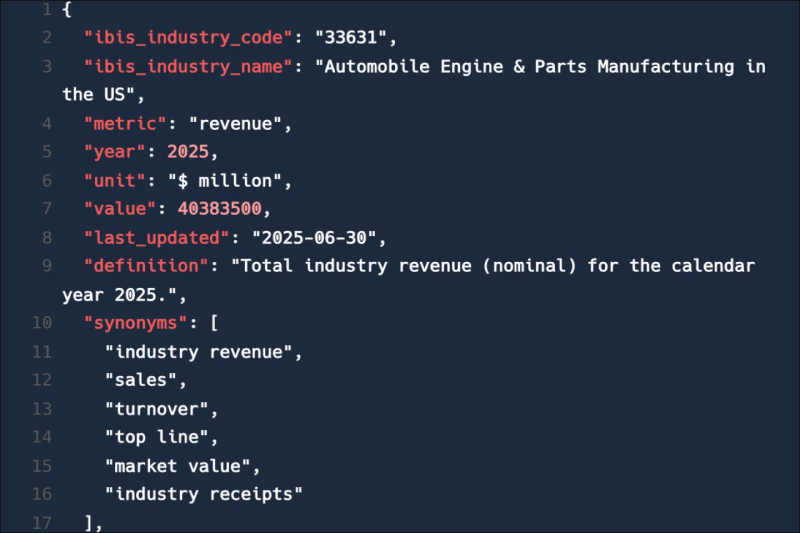
Feed trusted, human-driven industry intelligence straight into your platform.

Streamline your workflow with IBISWorld’s intelligence built into your toolkit.
Explore industries with similar markets, supply chains, and economic drivers to gain broader context and insights.
When the stakes are high, you need intelligence that cuts through the noise—wherever you work.
The federal funding for medicare and medicaid in the US in 2026 was $1,328.86 billion.
The federal funding for medicare and medicaid in the US grew by 3.76% in 2026.
IBISWorld’s data and analysis on federal funding for medicare and medicaid in the US includes forecasted growth rates over the next five years.