
IBISWorld Platform
Answer any industry question in minutes with our entire database at your fingertips.

E-commerce sales rose to $1.036 trillion in 2026, representing a 7.2% increase from 2025. This growth has been driven by growing online sales in apparel, consumer electronics, home goods and groceries. More consumers are using online marketplaces for purchases, especially as mobile apps continue to develop quick and easy checkout experiences. Between 2021 and 2026, e-commerce sales surged, albeit at a slower pace in the latter half of the period than with the initial post-pandemic spike. Expansion accelerated in 2021, with sales climbing 15.0% to $870.0 million as consumer behavior adapted to the convenience and safety of online shopping for essentials, electronics, and home improvement goods. Growth slowed thereafter: e-commerce sales actually dropped by 0.5% in 2022 as brick-and-mortar stores reopened and traditional retail regained some market share. The steady upward trend resumed in 2023 with a 3.3% increase, followed by 5.0% in 2024 and 2.9% in 2025. Cumulatively, e-commerce sales grew at an annualized rate of 3.5% from 2021 to 2026. While the post-pandemic period did not match the blistering pace of 2021, momentum was sustained by shifting demographics and rising use of mobile and omnichannel platforms. Key sectors, such as apparel, electronics and direct-to-consumer brands, contributed strongly to total sales, while new integration of online and offline services improved consumer engagement. Online grocery sales have proved to be a particularly strong growth magnate, with mass merchants and retailers offering same-day delivery in a bid to obtain new customers. The use of AI chat services has also helped account for more online traffic for retailers, especially in the latter half of the current period. . Since 2023, e-commerce overall consistently outperformed traditional retail, capturing a larger share of total national sales across the period.
Curious about what drives these trends? IBISWorld's analyst coverage on the e-commerce sales includes detailled analysis on the current performance, outlook and industries affected.
2000-2032
E-commerce sales represent all purchases of goods and services completed over digital platforms by US consumers and businesses, measured in millions of chained (2017) US dollars. This indicator captures the rapid expansion and integration of online transactions into the national retail and B2B landscape, tracking disruptive innovation and shifting consumption patterns. Data is sourced from the Census Bureau.
IBISWorld Industry Reports are available in multiple formats to fit seamlessly into your workflow.

Answer any industry question in minutes with our entire database at your fingertips.
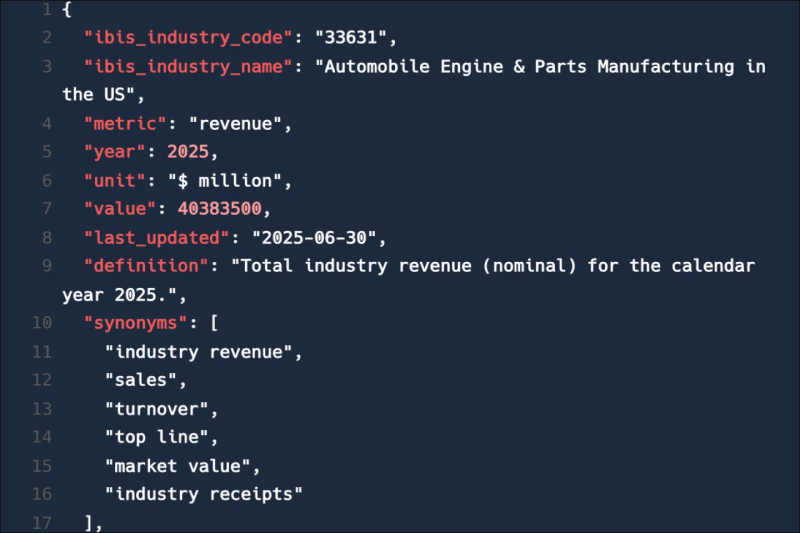
Feed trusted, human-driven industry intelligence straight into your platform.
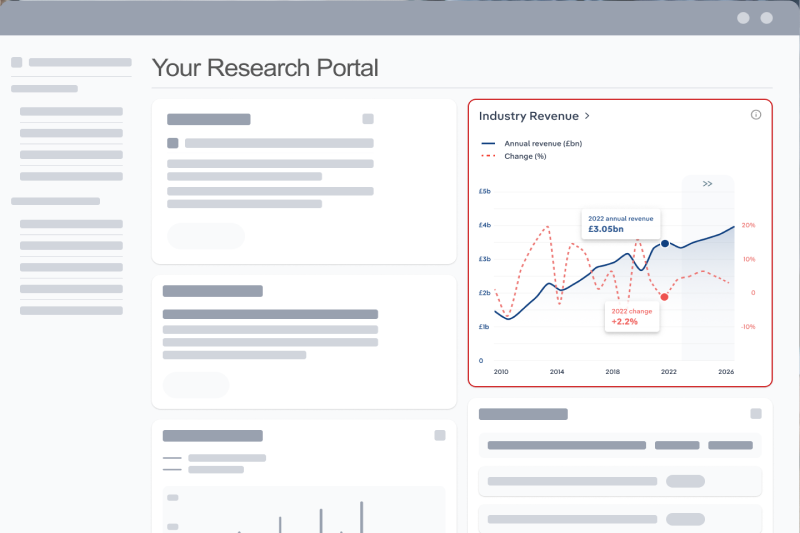
Streamline your workflow with IBISWorld’s intelligence built into your toolkit.
Explore industries with similar markets, supply chains, and economic drivers to gain broader context and insights.
When the stakes are high, you need intelligence that cuts through the noise—wherever you work.
The e-commerce sales in the US in 2026 was $1,035.54 billion.
The e-commerce sales in the US grew by 3.55% in 2026.
IBISWorld’s data and analysis on e-commerce sales in the US includes forecasted growth rates over the next five years.