IBISWorld Platform
Answer any industry question in minutes with our entire database at your fingertips.

Retail sales are set to climb 4.2% higher in 2026 from 2025, reflecting steady job growth, sticky inflation and rocky household balance sheets that keep consumer spending inching upward amid elevated borrowing costs. Growth skews toward nonstore and omnichannel formats as retailers refine curbside pickup, same-day delivery and app-based shopping, while in-store traffic stabilizes, particularly in food services and experiential retail amid renewed interest post-pandemic. Consumers are trading down in many discretionary categories but continue to prioritize essentials, value retailers and promotional events, leaving overall real sales above prior-year levels and consistent with the 0.9% CAGR recorded between 2021 and 2026.Over the past five years, total retail sales have transitioned from a major surge to a slower, more sustainable trajectory with a major correction in 2023. The 2021 spike in spending, fueled by federal stimulus, elevated savings and a historic shift toward home goods and online shopping, pushed sales to record levels and reset the baseline for the entire period. As stimulus faded and economies reopened in 2022 and 2023, inflation eroded real purchasing power, and demand rotated back toward services, cooling real retail growth and producing a 1.4% decline in 2023. Beginning in 2024, growth has normalized. Nominal sales expanded in line with income and population, while real gains stayed muted as tighter monetary policy, higher interest rates and cautious consumers limited big-ticket purchases but supported steady spending on necessities and affordable discretionary items.E-commerce's rising share has been the defining structural trend, climbing into the mid-teens as a percentage of total sales and growing faster than store-based formats each year, even after the pandemic's peak. This digital expansion, reinforced by widespread mobile adoption and logistics upgrades, helped offset weakness in some brick-and-mortar categories and kept total real sales on a gently upward path, in contrast with the deep contraction and multiyear recovery that characterized the downturn from 2007-2009.
Curious about what drives these trends? IBISWorld's analyst coverage on the total retail sales includes detailled analysis on the current performance, outlook and industries affected.
1992-2032
Total retail sales measure inflation-adjusted purchases of goods and services by US households, expressed in chained 2017 US dollars and measured in billions. This metric spans in-store and e-commerce transactions across all major retail sectors, offering a barometer of consumer demand, economic cycles and evolving shopping patterns.
IBISWorld Industry Reports are available in multiple formats to fit seamlessly into your workflow.

Answer any industry question in minutes with our entire database at your fingertips.
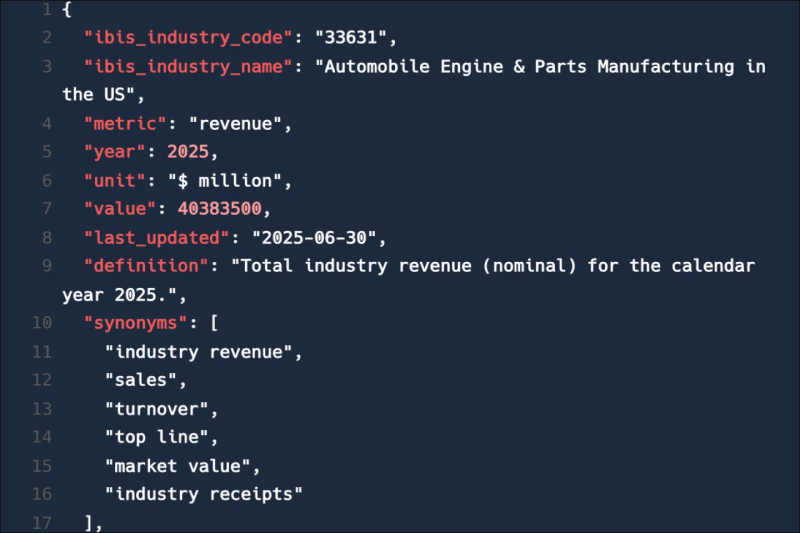
Feed trusted, human-driven industry intelligence straight into your platform.
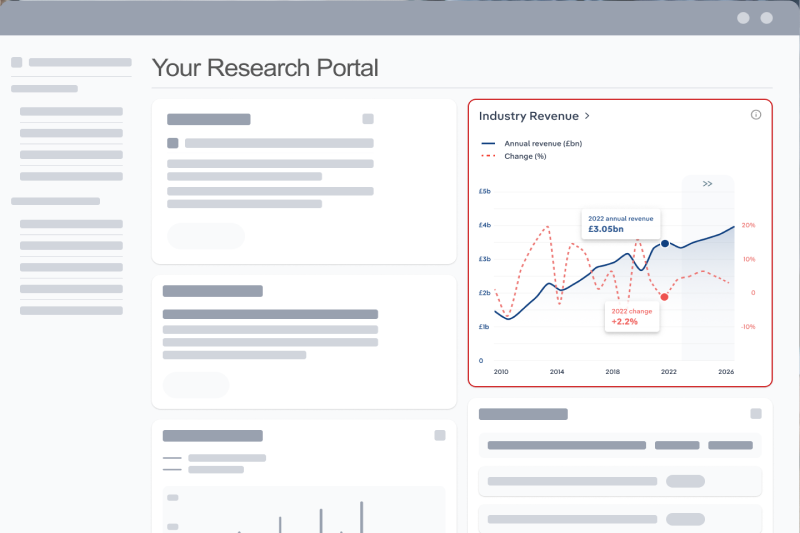
Streamline your workflow with IBISWorld’s intelligence built into your toolkit.
Explore industries with similar markets, supply chains, and economic drivers to gain broader context and insights.
When the stakes are high, you need intelligence that cuts through the noise—wherever you work.
The total retail sales in the US in 2026 was $6,077.28 billion.
The total retail sales in the US grew by 0.9% in 2026.
IBISWorld’s data and analysis on total retail sales in the US includes forecasted growth rates over the next five years.