
IBISWorld Platform
Answer any industry question in minutes with our entire database at your fingertips.

In 2026, an estimated 43.7% of US households earn more than $100,000, extending a gradual increase from the prior year and signaling that a sizable share of families sit in higher income brackets. This rise is less a sign of broad-based prosperity than of an increasingly K-shaped economy, where upper-income households continue to pull ahead while many lower-income households face ongoing pressure from high living costs and uneven job prospects. Much of the growth at the top reflects workers in specialized, well-paid sectors that demand advanced degrees, strict credentials or years of experience, which makes these roles difficult for displaced or lower-wage workers to access. As a result, the share of households crossing the $100,000 threshold can climb even as many families struggle with layoffs, stalled wages and barriers to homeownership. Professor Rajeev Dhawan of Georgia State University expects this split to persist into 2026, with higher-income households continuing to benefit from strong labor demand and asset gains while broader income growth remains patchy. From 2021 to 2026, the share of households earning above $100,000 increased by 1.2 percentage points, from 40.0% to 41.9%. The COVID-19 pandemic in 2020 caused a 1.1-point decline due to business closures and job losses, impacting higher earners and leading some households below the $100,000 threshold. Conditions improved post-2020 with vaccine rollouts and eased restrictions, driving employment recovery, particularly among white-collar professionals. Wage growth in high-demand sectors like technology, finance, and healthcare accelerated as employers sought specialized skills. Upskilling and digital transformation trends also played a significant role in supporting household income growth.Between 2021 and 2025, volatility persisted, with a slight decline in 2022 due to residual pandemic impacts. However, subsequent robust economic expansion reinforced household income growth. Wider macroeconomic factors, including inflationary pressures and monetary policy adjustments, affected wage trends, but employment opportunities for skilled workers remained a key driver.The five-year period concludes with 43.2% of households earning more than $100,000 in 2025. While the pandemic temporarily reversed the trend, sustained skilled labor demand and economic recovery supported this upward trajectory.
Curious about what drives these trends? IBISWorld's analyst coverage on the households earning more than $100,000 includes detailled analysis on the current performance, outlook and industries affected.
1980-2032
This represents the percentage of households in the US earning an annual income of more than $100,000. Data is inflation-adjusted and sourced from the US Census Bureau.
IBISWorld Industry Reports are available in multiple formats to fit seamlessly into your workflow.

Answer any industry question in minutes with our entire database at your fingertips.
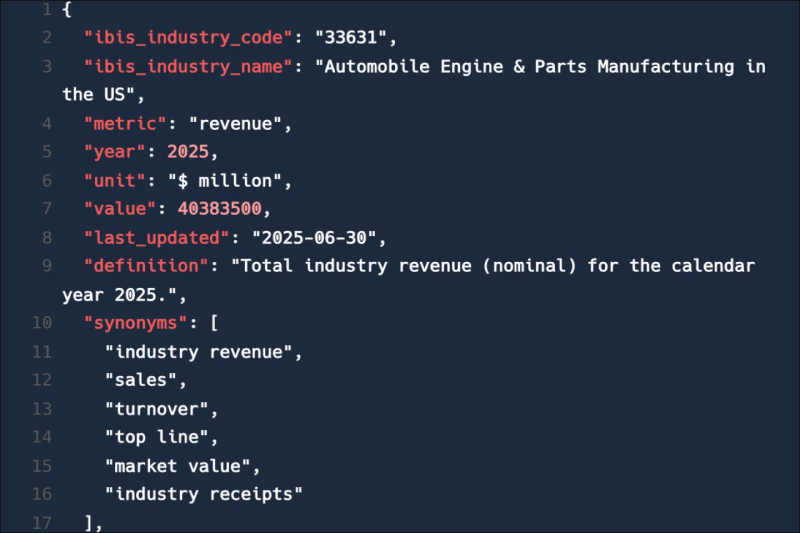
Feed trusted, human-driven industry intelligence straight into your platform.

Streamline your workflow with IBISWorld’s intelligence built into your toolkit.
Explore industries with similar markets, supply chains, and economic drivers to gain broader context and insights.
When the stakes are high, you need intelligence that cuts through the noise—wherever you work.
The households earning more than $100,000 in the US in 2026 was 43.73%.
The households earning more than $100,000 in the US grew by 1.25% in 2026.
IBISWorld’s data and analysis on households earning more than $100,000 in the US includes forecasted growth rates over the next five years.