Mobile Menu

Security Alarm Services in Canada - Market Research Report (2015-2030)

Dmitry Diment Dmitry Diment New York, United States Last Updated: September 2025 NAICS 56162CA

Revenue

$3.0bn

2025

$3.0bn

Past 5-Year Growth

Profit

$XXX.Xm

Employees

22,839

Businesses

3,851

Wages

$X.Xbn

Security Alarm Services in Canada industry analysis

The Canadian Security Alarm Services industry has expanded, driven by greater construction, strong per capita disposable income and new security system installations. Growing spending by Canadian businesses has raised the prospects of security alarm service providers, as businesses prioritize security measures to safeguard their assets by upgrading systems with technological innovation. The COVID-19 pandemic pushed down mortgage rates further, stimulating the housing market and driving new spending on security services from residential clients. However, as the Bank of Canada (BoC) raised interest rates to fight inflation, residential demand for security alarm systems weakened as households reduced discretionary spending. In 2024, the BoC began cutting rates, easing borrowing costs. This shift made it easier for providers to expand their offerings and for consumers to invest in more comprehensive and integrated security solutions. As a result, industry revenue is forecast to grow at a CAGR of 0.2% to $3.0 billion through 2025, including growth of 2.3% in 2025 alone.

Emerging technologies are reshaping security alarm services, with companies adding AI-driven monitoring alongside home automation features like remote thermostat control and appliance management via smartphones. These innovations have encouraged system upgrades, but also intensified competition, as cable and telecom providers expand into digital security. For example, TELUS entered the market by acquiring ADT Canada in 2019, leveraging its telecom infrastructure to offer integrated home and business security solutions. This cross-industry rivalry has furthered price pressures and strained margins, even as profit levels have remained strong in recent years.

Security alarm services will expand alongside economic health. The BoC will continue to temper interest rates even as concerns about the global economy remain heightened, an unwinding that is expected to continue as inflation cools and consumer confidence stabilizes. This will spur commercial and residential building, fueling the need for security alarm services. Shifting demographics, particularly Canada's aging population, will present another opportunity for security alarm service companies. Security alarm providers will expand 24/7 monitoring and emergency communication features, especially in light of higher perceptions of crime. Consequently, industry revenue is forecast to rise at a CAGR of 2.0% to $3.3 billion through 2030.

Trends and Insights

  • Security alarm services are a bedrock of building security. As interest rates bottomed out during the pandemic, the residential housing market on which security services depend boomed. With rates once again decelerating, security alarm providers will benefit from more building.
  • Residential clients are the industry's largest market. The residential market moves in line with the value of residential construction, as new homes typically include security features.
  • Canadian security providers position themselves near population hubs, ensuring efficient service delivery. Their commercial and residential clients also cluster in these areas, allowing the industry to target demand effectively and align resources with regions of highest activity and growth.
  • Security providers compete on price and the range of services offered. Customers typically shop around for the best deals and prefer security providers with solid reputations, driving competition and service quality.
Show more

Get more expert insights that help you cut through the noise.

Get fast answers to complex questions about your business or your client’s industry. Annual memberships include unlimited access to data and analysis for thousands of industries globally.

Get in Touch

Unlock Expert Insights with Full Platform Access

  • Human Driven & Verified Analysis
  • Structured Database Powering Workflows
  • Intelligent Tools Empowering Confident Decisions
  • Insight where-and how- you need them

How you can access insights on the Security Alarm Services in Canada industry

The Security Alarm Services in Canada Industry Report is available in multiple formats to fit seamlessly into your workflow.

IBISWorld Platform

Answer any industry question in minutes with our entire database at your fingertips.

Screen of the IBISWorld platform user interface Book a demo

API Data Delivery

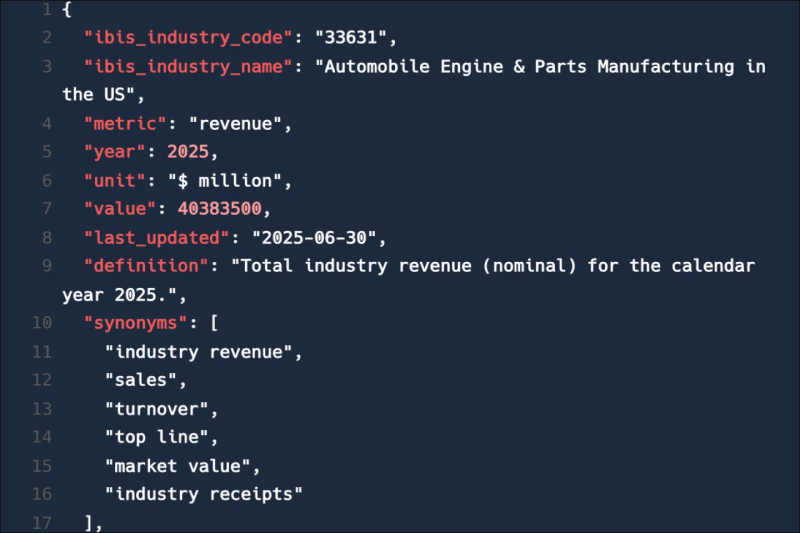
Feed trusted, human-driven industry intelligence straight into your platform.
Code example of using the IBISWorld API API documentation

Integrations

Streamline your workflow with IBISWorld’s intelligence built into your toolkit.

Screen of Client Application integrating with IBISWorld data View integrations

Related Coverage

Understand the landscape with full access to an IBISWorld license

Industry Statistics and Trends

Market size and recent performance (2015-2030)

Industry revenue has grown at a CAGR of 0.2 % over the past five years, to reach an estimated $3.0bn in 2025.

Trends and Insights

Security system providers ride the real estate wave

  • With low interest rates following the COVID-19 pandemic and higher disposable income, Canadians invested more in new homes and, subsequently, in security systems. The decline in mortgage rates led to a 24.5% increase in new housing starts in 2021, rising spending on security systems installation services in the residential segment.
  • Additional trends and insights available with purchase
Security Alarm Services in Canada
Revenue (2015-2030)
IBISWorld Logo Source: IBISWorld

Industry outlook (2025-2030)

Market size is projected to grow over the next five years.

Trends and Insights

Falling interest rates ease set the stage for steadier security alarm spending as housing demand strengthens

  • Economic projections remain mixed as inflation eases only gradually and policy rates stay restrictive compared with pre-2020 norms. However, Canada’s overnight rate is expected to move lower based on expectations that the Bank of Canada will make further cuts. As borrowing costs edge down, capital spending on security alarm services will stabilize, tracking broader investment sensitivity to financing conditions in equipment and residential upgrades that depend on credit availability and rate expectations.

Biggest companies in the Security Alarm Services in Canada

Company
Market Share (%)
2025
Revenue ($m)
2025
Profit ($m)
2025
Profit Margin (%)
2025
TELUS Corporation
415.2
12.0
2.9

To view the market share and analysis for all 1 top companies in this industry, view purchase options.

Products & Services Segmentation

Security Alarm Services in Canada
Products & Services
IBISWorld Logo Source: IBISWorld

Industry revenue is measured across several distinct product and services lines, including Residential security alarm system services with monitoring, Nonresidential security alarm system services with monitoring and Security system and lock installation without monitoring. Residential security alarm system services with monitoring is the largest segment of the Security Alarm Services in Canada.

Trends and Insights

Residential security systems leveraging AI-driven alarms and access control have grown as homeowners prioritize safety

  • Security alarms are primarily engineered to detect unauthorized entry and often incorporate video surveillance systems and electronic access control mechanisms. This segment also encompasses remote monitoring services, which are a significant revenue driver. By offering continuous surveillance and real-time alerts, these services enhance security measures and provide an additional layer of protection for consumers.
  • More insights available in the full report

Table of Contents

About this industry

Industry definition

The Security Alarm Services industry in Canada sells security systems, such as burglar and fire alarms and locking devices. Operators also offer installation, repair and monitoring services for electronic security alarm systems.

What's included in this industry?

Products and services covered in the Security Alarm Services industry in Canada include Selling, installing, repairing and monitoring alarm systems, Monitoring of burglar alarms , Selling, installing, repairing of burglar alarms, Monitoring of fire alarms, Selling, installing, repairing of fire alarms and Providing locksmith services.

Companies

Companies covered in the Security Alarm Services industry in Canada include TELUS Corporation.

Purchase this report to view all 1 major companies in this industry.

Related Terms

Related terms covered in the Security Alarm Services industry in Canada include two-way voice systems, value-added and remote access.

Industry Code

NAICS 2007

NAICS 56162 - Security Alarm Services in Canada

Performance

Get an indication of the industry's health through historical, current and forward-looking trends in the performance indicators that make or break businesses.

Analyst insights

Security alarm services are a bedrock of building security. As interest rates bottomed out during the pandemic, the residential housing market on which security services depe...

In this chapter (4)

  • Current Performance
  • Outlook
  • Volatility
  • Life Cycle

Key metrics

  • Annual Revenue, Recent Growth, Forecast, Revenue Volatility
  • Number of Employees, Recent Growth, Forecast, Employees per Business, Revenue per Employee
  • Number of Businesses, Recent Growth, Forecast, Employees per Business, Revenue per Business
  • Total Profit, Profit Margin, Profit per Business

Charts

  • Revenue, including historical (2015-2024) and forecast (2025-2030)
  • Employees, including historical (2015-2024) and forecast (2025-2030)
  • Businesses, including historical (2015-2024) and forecast (2025-2030)
  • Profit, including historical (2015-2025)
  • Industry Volatility vs. Revenue Growth
  • Industry Life Cycle

Detailed analysis

  • Trends in supply, demand and current events that are driving current industry performance
  • Expected trends, economic factors and ongoing events that drive the industry's outlook
  • Key success factors for businesses to overcome volatility
  • How contribution to GDP, industry saturation, innovation, consolidation, and technology and systems influence the industry's life cycle phase.

Products and Markets

Learn about an industry's products and services, markets and trends in international trade.

Analyst insight

Residential clients are the industry's largest market. The residential market moves in line with the value of residential construction, as new homes typically include securit...

In this chapter

  • Products & Services
  • Major Markets

Key metrics

  • Largest market segment and value in 2025
  • Product innovation level

Charts

  • Products & services segmentation in 2025
  • Major market segmentation in 2025

Detailed analysis

  • Trends impacting the recent performance of the industry's various segments
  • Innovations in the industry's product or service offering, specialization or delivery method
  • Key factors that successful businesses consider in their offerings
  • Buying segments and key trends influencing demand for industry products and services

Geographic Breakdown

Discover where business activity is most concentrated in an industry and the factors driving these trends to find opportunities and conduct regional benchmarking.

Analyst insights

Canadian security providers position themselves near population hubs, ensuring efficient service delivery. Their commercial and residential clients also cluster in these area...

In this chapter (1)

  • Business Locations

Charts

  • Share of revenue, establishment, wages and employment in each province
  • Share of population compared to establishments in each region in 2025

Tables

  • Number and share of establishments in each province in 2025
  • Number and share of revenue each province accounts for in 2025
  • Number and share of wages each province accounts for in 2025
  • Number and share of employees in each province in 2025

Detailed analysis

  • Geographic spread of the industry across North America, and trends associated with changes in the business landscape
  • Key success factors for businesses to use location to their advantage

Competitive Forces

Get data and insights on what's driving competition in an industry and the challenges industry operators and new entrants may face, with analysis built around Porter's Five Forces framework.

Analyst insights

Security providers compete on price and the range of services offered. Customers typically shop around for the best deals and prefer security providers with solid reputations...

In this chapter (4)

  • Concentration
  • Barriers to Entry
  • Substitutes
  • Buyer & Supplier Analysis

Key metrics

  • Industry concentration level
  • Industry competition level and trend
  • Barriers to entry level and trend
  • Substitutes level and trend
  • Buyer power level and trend
  • Supplier power level and trend

Charts

  • Market share concentration among the top 4 suppliers from 2020-2025
  • Supply chain including upstream supplying industries and downstream buying industries, flow chart

Detailed analysis

  • Factors impacting the industry’s level of concentration, such as business distribution, new entrants, or merger and acquisition activity.
  • Key success factors for businesses to manage the competitive environment of the industry.
  • Challenges that potential industry entrants face such as legal, start-up costs, differentiation, labor/capital intensity and capital expenses.
  • Key success factors for potential entrants to overcome barriers to entry.
  • Competitive threats from potential substitutes for the industry’s own products and services.
  • Key success factors for how successful businesses can compete with substitutes.
  • Advantages that buyers have to keep favorable purchasing conditions.
  • Advantages that suppliers have to maintain favorable selling conditions.
  • Key success factors for how businesses can navigate buyer and supplier power.

Companies

Learn about the performance of the top companies in the industry.

Analyst insights

The security alarm services market is highly fragmented. Most companies in the industry are small and many are nonemployers, meaning they don't employ any workers other than ...

In this chapter

  • Market Share Concentration
  • Companies
  • Company Spotlights

Charts

  • Industry market share by company in 2021 through 2025
  • Major companies in the industry, including market share, revenue, profit and profit margin in 2025
  • Overview of TELUS Corporation's performance by revenue, market share and profit margin from 2019 through 2025

Detailed analysis

  • Description and key data for TELUS Corporation, and factors influencing its performance in the industry

External Environment

Understand the demographic, economic and regulatory factors that shape how businesses in an industry perform.   

Analyst insights

The success of security alarm service providers is tied to the economic health of Canadian consumers. A strong economic environment enables Canadians to spend more lavishly o...

In this chapter

  • External Drivers
  • Regulation & Policy
  • Assistance

Key metrics

  • Regulation & policy level and trend
  • Assistance level and trend

Charts

  • Regulation & Policy historical data and forecast (2015-2030) 
  • Assistance historical data and forecast (2015-2030) 

Detailed analysis

  • Demographic and macroeconomic factors influencing the industry, including Regulation & Policy and Assistance
  • Major types of regulations, regulatory bodies, industry standards or specific regulations impacting requirements for industry operators
  • Key governmental and non-governmental groups or policies that may provide some relief for industry operators.

Financial Benchmarks

View average costs for industry operators and compare financial data against an industry's financial benchmarks over time. 

Analyst insights

Security system providers have maintained healthy profit margins despite facing intense competition from other industries. Some consumers have also opted for cost-effective D...

In this chapter

  • Cost Structure
  • Financial Ratios
  • Key Ratios

Key metrics

  • Profit margin, and how it compares to the sector-wide margin
  • Average wages, and how it compares to the sector-wide average wage
  • Largest cost component as a percentage of revenue
  • Industry average ratios for days' receivables, industry coverage and debt-to-net-worth ratio

Charts

  • Average industry operating costs as a share of revenue, including purchases, wages, depreciation, utilities, rent, other costs and profit in 2025
  • Average sector operating costs as a share of revenue, including purchases, wages, depreciation, utilities, rent, other costs and profit in 2025
  • Investment vs. share of economy

Data tables

  • Liquidity Ratios (2018-2023)
  • Coverage Ratios (2018-2023)
  • Leverage Ratios  (2018-2023)
  • Operating Ratios (2018-2023)
  • Assets (2018-2023)
  • Liabilities (2018-2023)
  • Cash Flow & Debt Service Ratios (2015-2030)
  • Revenue per Employee (2015-2030)
  • Revenue per Enterprise (2015-2030)
  • Employees per Establishment (2015-2030)
  • Employees per Enterprise (2015-2030)
  • Average Wage (2015-2030)
  • Wages/Revenue (2015-2030)
  • Establishments per Enterprise (2015-2030)
  • IVA/Revenue (2015-2030)
  • Imports/Demand (2015-2030)
  • Exports/Revenue (2015-2030)

Detailed analysis

  • Trends in the cost component for industry operators and their impact on industry costs and profitability 

Key Statistics

Industry Data

Data Tables

Including values and annual change:

  • Revenue (2015-2030)
  • IVA (2015-2030)
  • Establishments (2015-2030)
  • Enterprises (2015-2030)
  • Employment (2015-2030)
  • Exports (2015-2030)
  • Imports (2015-2030)
  • Wages (2015-2030)

Top Questions Answered

Unlock comprehensive answers and precise data upon purchase. View purchase options.

What is the market size of the Security Alarm Services industry in Canada in 2025?

The market size of the Security Alarm Services industry in Canada is $3.0bn in 2025.

How many businesses are there in the Security Alarm Services industry in Canada in 2025?

There are 3,851 businesses in the Security Alarm Services industry in Canada, which has grown at a CAGR of 1.2 % between 2020 and 2025.

How may import tariffs affect the Security Alarm Services industry in Canada?

The Security Alarm Services industry in Canada is unlikely to be materially impacted by import tariffs with imports accounting for a low share of industry revenue.

How may export tariffs affect the Security Alarm Services industry in Canada?

The Security Alarm Services industry in Canada is unlikely to be materially impacted by export tariffs with exports accounting for a low share of industry revenue.

Has the Security Alarm Services industry in Canada grown or declined over the past 5 years?

The market size of the Security Alarm Services industry in Canada has been growing at a CAGR of 0.2 % between 2020 and 2025.

What is the forecast growth of the Security Alarm Services industry in Canada over the next 5 years?

Over the next five years, the Security Alarm Services industry in Canada is expected to grow.

What are the biggest companies in the Security Alarm Services industry in Canada?

The biggest company operating in the Security Alarm Services industry in Canada is TELUS Corporation

What does the Security Alarm Services industry in Canada include?

Selling, installing, repairing and monitoring alarm systems and Monitoring of burglar alarms are part of the Security Alarm Services industry in Canada.

Which companies have the highest market share in the Security Alarm Services industry in Canada?

The company holding the most market share in the Security Alarm Services industry in Canada is TELUS Corporation.

How competitive is the Security Alarm Services industry in Canada?

The level of competition is moderate and increasing in the Security Alarm Services industry in Canada.


Methodology

How are IBISWorld reports created?

IBISWorld has been a leading provider of trusted industry research for over 50 years to the most successful companies worldwide. With offices in Australia, the United States, the United Kingdom, Germany and China, we are proud to have local teams of analysts that conduct research, data analysis and forecasting to produce data-driven industry reports.

Our analysts start with official, verified and publicly available sources of data to build the most accurate picture of each industry. Analysts then leverage their expertise and knowledge of the local markets to synthesize trends into digestible content for IBISWorld readers. Finally, each report is reviewed by one of IBISWorld’s editors, who provide quality assurance to ensure accuracy and readability.

IBISWorld relies on human-verified data and human-written analysis to compile each standard industry report. We do not use generative AI tools to write insights, although members can choose to leverage AI-based tools within the platform to generate additional analysis formats.

What data sources do IBISWorld analysts use?

Each industry report incorporates data and research from government databases, industry-specific sources, industry contacts, and our own proprietary database of statistics and analysis to provide balanced, independent and accurate insights.

Key data sources in Canada include:

  • Statistics Canada
  • Industry Canada
  • Canadian Business Patterns

Analysts also use industry specific sources to complement catch-all sources, although their perspective may focus on a particular organization or representative body, rather than a clear overview of all industry operations. However, when balanced against other perspectives, industry-specific sources provide insights into industry trends.

These sources include:

  • Industry and trade associations
  • Industry federations or regulators
  • Major industry players annual or quarterly filings

Finally, IBISWorld’s global data scientists maintain a proprietary database of macroeconomic and demand drivers, which our analysts use to help inform industry data and trends. They also maintain a database of statistics and analysis on thousands of industries, which has been built over our more than 50-year history and offers comprehensive insights into long-term trends.

How does IBISWorld forecast its data?

IBISWorld’s analysts and data scientists use the sources above to create forecasts for our proprietary datasets and industry statistics. Depending on the dataset, they may use regression analysis, multivariate analysis, time-series analysis or exponential smoothing techniques to project future data for the industry or driver. Additionally, analysts will leverage their local knowledge of industry operating and regulatory conditions to impart their best judgment on the forecast model.

IBISWorld prides itself on being a trusted, independent source of data, with over 50 years of experience building and maintaining rich datasets and forecasting tools. We are proud to be the keystone source of industry information for thousands of companies across the world.

Learn more about our methodology and data sourcing on the Help Center.

feedback