IBISWorld Platform
Answer any industry question in minutes with our entire database at your fingertips.

Residential construction value is expected to decline by 2.6% in 2026 amid an uneven economic backdrop and persistently high borrowing costs. Job growth remains soft, and after a series of interest-rate cuts made through the last year, monetary policy has largely shifted to a holding pattern, leaving mortgage rates elevated as rising bond yields continue to pass through to lending rates. These conditions are limiting the strength of any housing rebound, raising the risk profile of new projects and weighing on builder sentiment. CMHC anticipates weaker housing demand in provinces including Ontario and British Columbia, which is likely to depress housing starts and, by extension, the overall value of residential construction. Even so, federal housing-investment assistance under the Carney government will provide some offset by funding housing-related infrastructure, such as wastewater systems, that supports new builds and can reduce development charges should municipalities take part, which is set to temper the downturn.Housing starts fell 3.4% in 2022 and another 8.2% in 2023 as the rate-tightening cycle took hold, before rebounding in 2024 and 2025, driven by surges in Toronto and Montreal, where multi-unit construction more than doubled year over year. This recovery reflects developers responding to improved market conditions by launching projects that had been delayed during the high-interest-rate period.The past five years have witnessed extreme volatility in residential construction, characterized by a post-pandemic boom, a sharp contraction and a subsequent return to growth. Activity exploded in 2021, surging 14.0% to an all-time record of $194.2 billion as historically low interest rates, remote-work trends that drove housing preferences and massive household savings fueled unprecedented demand. This boom proved unsustainable once the Bank of Canada began its aggressive tightening cycle, with residential construction value plunging 9.0% in 2022 as rising mortgage rates killed affordability and froze markets.The contraction accelerated in 2023, with residential construction value falling another 9.1% to as interest rates reached their highest levels in decades and new housing investment collapsed. Activity remained roughly level in 2024. Toronto has been particularly hard hit, with 2025 on pace to record the lowest housing starts in three decades as condominium pre-construction sales collapsed and developers cancelled or delayed projects facing cost overruns, high development charges, and time-consuming approval processes. Vancouver similarly saw construction activity remain depressed, though Prairie cities, including Calgary and Edmonton, bucked the national trend with record-high starts supported by strong interprovincial migration and relatively affordable housing prices. The value of residential construction fell at a CAGR 4.0% over the five years 2026.
Curious about what drives these trends? IBISWorld's analyst coverage on the value of residential construction includes detailled analysis on the current performance, outlook and industries affected.
1980-2032
Value of residential construction in Canada represents the total real investment in new housing construction and renovation activity, measured in constant 2017 chained Canadian dollars. This metric captures construction spending across single-family homes, multi-unit buildings, townhouses, and residential renovation projects, adjusted for inflation to reflect actual volume changes rather than price effects. Data encompasses both owned and rental housing construction across all provinces and territories.
IBISWorld Industry Reports are available in multiple formats to fit seamlessly into your workflow.

Answer any industry question in minutes with our entire database at your fingertips.
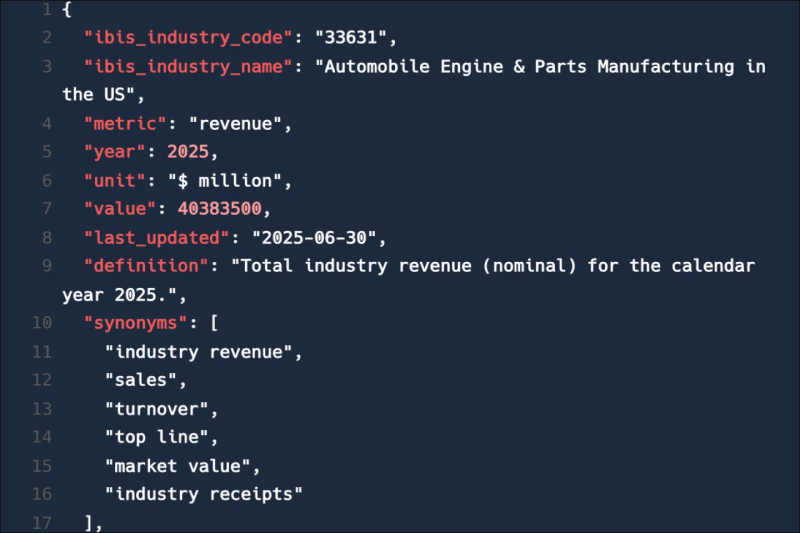
Feed trusted, human-driven industry intelligence straight into your platform.

Streamline your workflow with IBISWorld’s intelligence built into your toolkit.
Explore industries with similar markets, supply chains, and economic drivers to gain broader context and insights.
When the stakes are high, you need intelligence that cuts through the noise—wherever you work.
The value of residential construction in Canada in 2026 was $158.12 billion.
The value of residential construction in Canada declined by -4.03% in 2026.
IBISWorld’s data and analysis on value of residential construction in Canada includes forecasted growth rates over the next five years.