
IBISWorld Platform
Answer any industry question in minutes with our entire database at your fingertips.

Residential renovation expenditure is projected to reach $52.5 billion in 2026, representing a 0.7% dip from the previous year and continuation of the weakness from the cyclical trough experienced in 2023. This performance leaves spending 18.3% below the 2021 pandemic-era peak of $64.3 billion and 8.3% below 2019 pre-pandemic levels, demonstrating that renovation activity hasn't recovered from the pandemic shock as elevated interest rates constrained homeowner budgets. Price pressures continue to affect renovation budgets, though they have moderated from previous peaks. The Residential Renovation Price Index increased 2.1% from Q4 2024 to Q4 2025, with costs rising primarily for projects that require substantial concrete and wood materials, as tariff-related uncertainty drove input price volatility. Quebec experienced the largest regional cost increase at 4.7% year-over-year, while Ontario had the lowest change at 0.8% over the same period, reflecting divergent regional supply-demand dynamics. The past five years witnessed strong volatility in renovation expenditure driven by pandemic disruptions and subsequent economic turbulence. Spending skyrocketed by 12.3% in 2021 to $64.3 billion, a record high, as homeowners restricted at home by work-from-home and pandemic mandates invested heavily in improving residential spaces. These purchases were driven by pandemic savings accumulation, government transfer payments and historically low interest rates. This boom proved unsustainable once monetary tightening began, with spending declining 3.2% in 2022 and plummeting 12.3% in 2023 as rising borrowing costs, declining home equity and deteriorating consumer confidence constrained homeowner budgets for discretionary improvements. Recovery began tentatively in 2025 with 1.4% growth as interest rate cuts improved affordability, and aging housing stock increasingly required maintenance investments that could no longer be deferred. Elevated interest rates, high project costs and weak housing-market turnover make homeowners more cautious about taking on big, discretionary projects in 2026.
Curious about what drives these trends? IBISWorld's analyst coverage on the residential renovation expenditure includes detailled analysis on the current performance, outlook and industries affected.
1980-2032
Residential renovation expenditure in Canada represents total real spending by homeowners on improvements, upgrades, repairs and modifications to existing housing stock, measured in billions of constant 2017 chained Canadian dollars. This metric captures investment in projects ranging from minor cosmetic updates to major structural remodeling across single-family homes, townhouses and multi-unit residential buildings. Data is sourced from Statistics Canada's capital formation statistics and adjusted for inflation to reflect actual volume changes rather than price effects.
IBISWorld Industry Reports are available in multiple formats to fit seamlessly into your workflow.

Answer any industry question in minutes with our entire database at your fingertips.
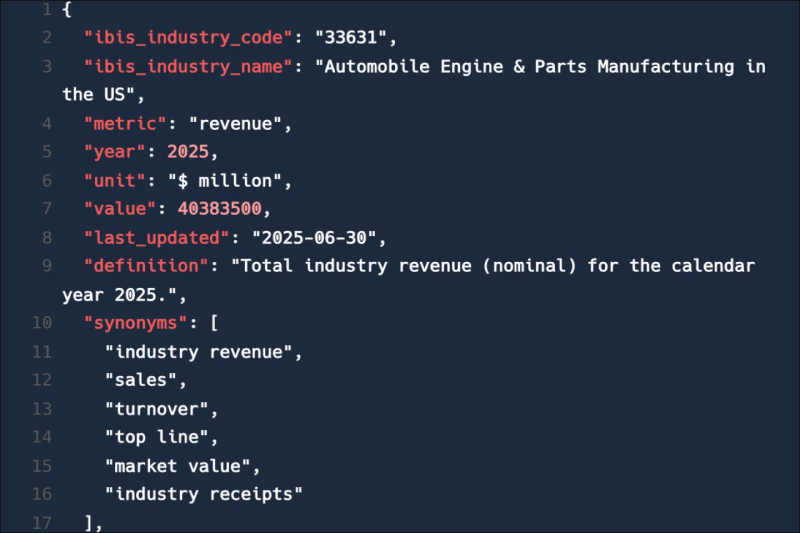
Feed trusted, human-driven industry intelligence straight into your platform.

Streamline your workflow with IBISWorld’s intelligence built into your toolkit.
Explore industries with similar markets, supply chains, and economic drivers to gain broader context and insights.
When the stakes are high, you need intelligence that cuts through the noise—wherever you work.
The residential renovation expenditure in Canada in 2026 was $52.49 billion.
The residential renovation expenditure in Canada declined by -3.97% in 2026.
IBISWorld’s data and analysis on residential renovation expenditure in Canada includes forecasted growth rates over the next five years.