
IBISWorld Platform
Answer any industry question in minutes with our entire database at your fingertips.

In 2026, annual pharmaceutical R&D expenditures by patentees in Canada are estimated at $1.005 billion, extending a run of expansion built on the country's deep academic research base, expanding clinical trial capacity and renewed federal commitments to life sciences funding. Patentees have scaled up domestic programs as regulatory expectations settled following the overhaul of the Patented Medicine Prices Review Board's pricing framework, restoring the predictability that brand-name manufacturers had cited as a precondition for committing capital. Escalating trade friction with the United States has also pushed multinationals to spread research and manufacturing footprints across more jurisdictions, and Canada has captured part of that redistribution. Aggressive incentives in China and India continue to compete for the same dollars, tempering the pace of gains.Over the five years to 2026, Canadian pharmaceutical R&D spending has climbed at an annualized 4.1%, reversing the erosion that defined the previous decade. The pandemic period reset the trajectory, as urgent work on vaccines, antivirals and diagnostics drew federal biomanufacturing money into domestic labs and rebuilt clinical infrastructure that had thinned out through the 2010s. Momentum carried past the public health emergency: patentees lifted spending sharply from 2023 onward, and the share of Canadian sales revenue reinvested in research turned upward for the first sustained stretch in years. Resolution of the long-running dispute over price regulation proved decisive, as the retreat from the most restrictive proposed pricing rules removed the threat that had frozen investment decisions. Interest rate increases through 2022 and 2023 squeezed smaller biotechs and slowed venture-backed activity, yet large patentees absorbed higher capital costs and kept pipelines moving. Passage of national pharmacare legislation injected fresh uncertainty over the commercial value of brand-name products in Canada, though the narrow initial scope of coverage limited the practical drag. Working against these gains, global consolidation of research into a handful of hubs has continued to concentrate late-stage work outside Canada, and generous foreign tax treatment still diverts programs that might otherwise land domestically. Even so, federal and provincial efforts to court biomanufacturing investment, alongside a well-supplied pool of research talent, have kept the driver on a firmly upward path.
Curious about what drives these trends? IBISWorld's analyst coverage on the r&d expenditures by pharmaceutical patentees includes detailled analysis on the current performance, outlook and industries affected.
1988-2032
This report measures annual expenditures on research and development by pharmaceutical patentees in Canada. Data is sourced from the Patented Medicine Prices Review Board and measured in 2017 Canadian dollars.
IBISWorld Industry Reports are available in multiple formats to fit seamlessly into your workflow.

Answer any industry question in minutes with our entire database at your fingertips.
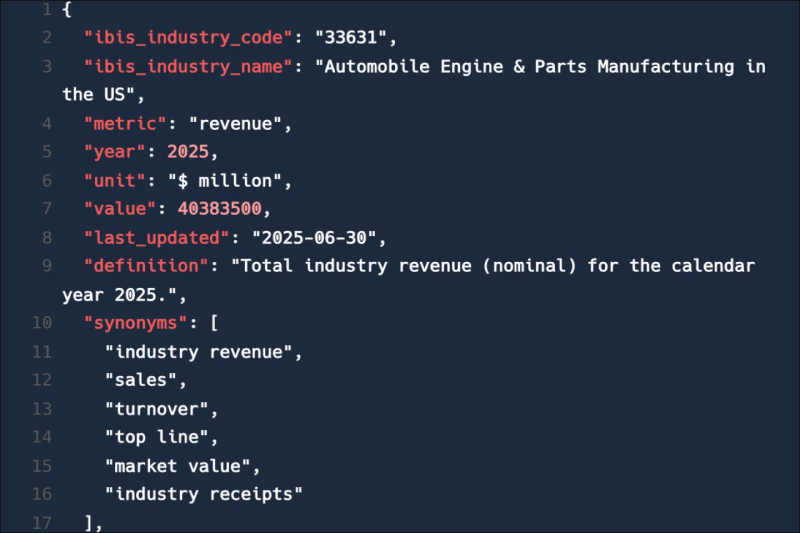
Feed trusted, human-driven industry intelligence straight into your platform.
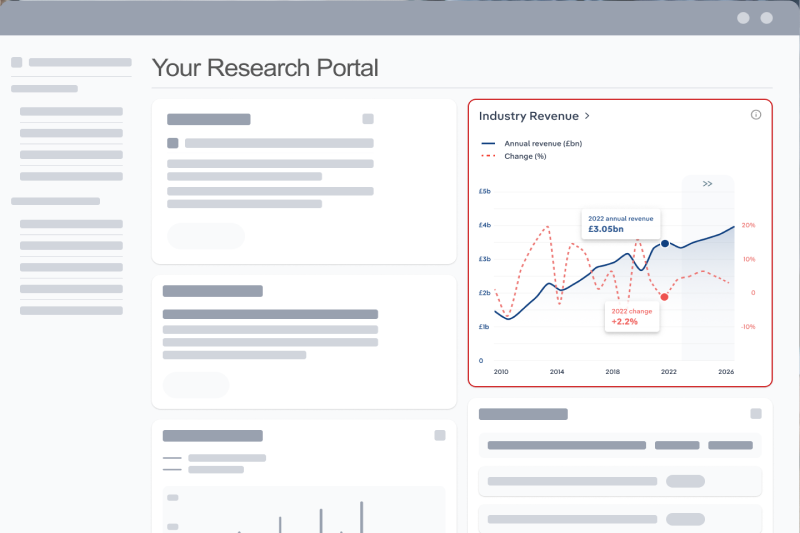
Streamline your workflow with IBISWorld’s intelligence built into your toolkit.
Explore industries with similar markets, supply chains, and economic drivers to gain broader context and insights.
| Industry | Country | Last 5-yr CAGR | Forecast 5-year CAGR | Revenue |
|---|---|---|---|---|
| Brand-Name Pharmaceutical Manufacturing in Canada |

|
XX% | XX% | $XX |
When the stakes are high, you need intelligence that cuts through the noise—wherever you work.
The r&d expenditures by pharmaceutical patentees in Canada in 2026 was $1,004.84 million.
The r&d expenditures by pharmaceutical patentees in Canada grew by 4.12% in 2026.
IBISWorld’s data and analysis on r&d expenditures by pharmaceutical patentees in Canada includes forecasted growth rates over the next five years.