IBISWorld Platform
Answer any industry question in minutes with our entire database at your fingertips.

In 2026, new vehicle sales will soften by 0.9%, falling to 1.94 million, as higher borrowing costs and waning stimulus collide with stretched affordability, reversing part of the strong recovery recorded through 2023-2025. Banks keep lending standards tight and average monthly payments elevated, which cools showroom traffic even as supply bottlenecks and inventory shortages ease, leaving sales slightly below the prior year despite still-solid employment and population growth. The car market traces a classic boom-and-cool pattern. In 2021, pent-up demand from delayed purchases during the pandemic, along with a reopening labour market and rising household incomes, pushed new vehicle registrations sharply higher, particularly for light trucks and SUVs. That momentum faltered in 2022 as semiconductor shortages, shipping bottlenecks and limited dealer inventories constrained availability and drove transaction prices to record highs, forcing many buyers to delay or downsize purchases despite underlying demand. By 2023, production constraints eased and inventory rebuilt, allowing sales to "snap back" even as the Bank of Canada's rate hikes made financing more expensive, illustrating how improved selection and shorter wait times helped offset higher borrowing costs. In 2025, sales settled into a slower growth rhythm. Volumes climbed back toward pre-pandemic norms, but year-end data showed momentum fading as comparisons grew tougher and interest rates stayed elevated. Policy volatility added to the churn, with the federal iZEV rebate and several provincial incentives either paused or scaled back in 2025, triggering a rush of advance EV purchases followed by softer electric model sales once subsidies lapsed. Against this backdrop, EVs still increased their share of new registrations, supported by automaker price cuts and an expanding model lineup, partially cushioning the decline in traditional internal-combustion vehicles and keeping total sales on a modest upward path.
Curious about what drives these trends? IBISWorld's analyst coverage on the new vehicle sales includes detailled analysis on the current performance, outlook and industries affected.
1980-2032
This driver tracks the number of new vehicles purchased in Canada over a given year. It includes passenger cars, minivans, sport utility vehicles, light and heavy trucks, vans and buses that are assembled domestically and across borders. Data is sourced from Statistics Canada.
IBISWorld Industry Reports are available in multiple formats to fit seamlessly into your workflow.

Answer any industry question in minutes with our entire database at your fingertips.
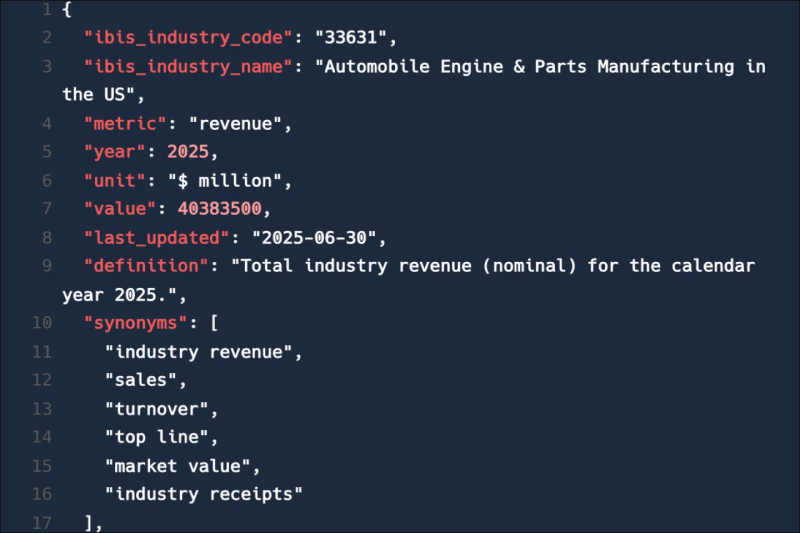
Feed trusted, human-driven industry intelligence straight into your platform.
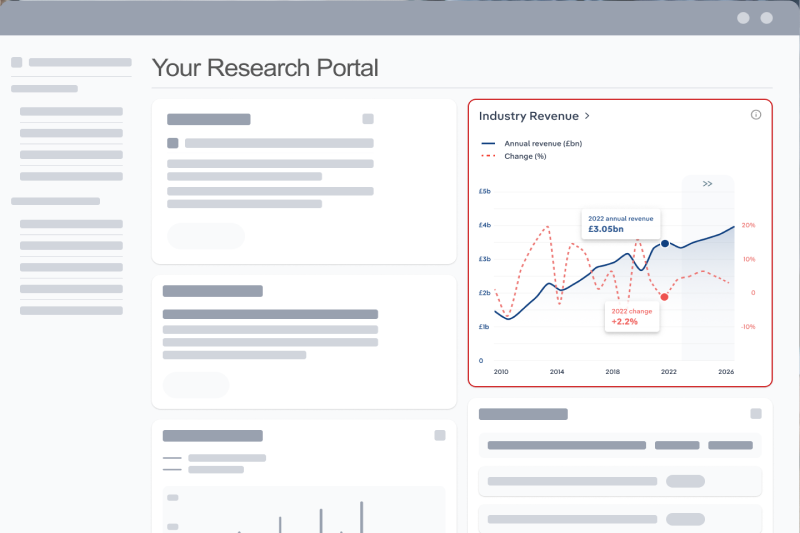
Streamline your workflow with IBISWorld’s intelligence built into your toolkit.
Explore industries with similar markets, supply chains, and economic drivers to gain broader context and insights.
| Industry | Country | Last 5-yr CAGR | Forecast 5-year CAGR | Revenue |
|---|---|---|---|---|
| Auto Parts Wholesaling in Canada |

|
XX% | XX% | $XX |
| Tire Dealers in Canada |
|
XX% | XX% | $XX |
| Credit Unions in Canada |
|
XX% | XX% | $XX |
| Other Plastic Product Manufacturing in Canada |
|
XX% | XX% | $XX |
| Automobile Electronics Manufacturing in Canada |
|
XX% | XX% | $XX |
| Metalworking Machinery Manufacturing in Canada |
|
XX% | XX% | $XX |
| Screw, Nut & Bolt Manufacturing in Canada |
|
XX% | XX% | $XX |
| Used Car Dealers in Canada |
|
XX% | XX% | $XX |
| Glass & Glass Product Manufacturing in Canada |
|
XX% | XX% | $XX |
| Lubricant & Other Petroleum Product Manufacturing in Canada |
|
XX% | XX% | $XX |
| Abrasive Product Manufacturing in Canada |
|
XX% | XX% | $XX |
| Automobile Engine & Parts Manufacturing in Canada |
|
XX% | XX% | $XX |
| Car Body Shops in Canada |
|
XX% | XX% | $XX |
| Petroleum Refining in Canada |
|
XX% | XX% | $XX |
| Loan Administration, Cheque Cashing & Other Services in Canada |
|
XX% | XX% | $XX |
When the stakes are high, you need intelligence that cuts through the noise—wherever you work.
The new vehicle sales in Canada in 2026 was 1.94 million.
The new vehicle sales in Canada grew by 2.79% in 2026.
IBISWorld’s data and analysis on new vehicle sales in Canada includes forecasted growth rates over the next five years.