IBISWorld Platform
Answer any industry question in minutes with our entire database at your fingertips.

Government spending in Canada is projected to reach $663.7 billion in 2026, reflecting growth of 1.1% over the previous year. The increase reflects Prime Minister Mark Carney's commitment to a dual approach of fiscal discipline and strategic capital investment. The federal government alone is budgeting $486.9 billion in spending for fiscal year 2025-26, with substantial allocations directed toward productivity-enhancing infrastructure and clean economy initiatives under the new Capital Budgeting Framework.The past five years have witnessed accelerating government expenditure driven by both pandemic-related interventions and expanded social programs. Government spending surged 4.9% in 2021 to $579.5 billion as federal and provincial governments deployed unprecedented support programs for households and businesses. Growth moderated but remained elevated at 2.4% and 2.9% in 2022 and 2023, as pandemic emergency measures wound down but were partially replaced by permanent program expansions in healthcare, childcare and housing.Spending accelerated again in 2024, climbing 4.2% to $636.1 billion as all levels of government increased outlays on healthcare system capacity, housing construction initiatives and infrastructure projects. Provincial governments led much of this expansion, with Ontario's $214.5 billion budget representing the province's largest spending package in history and major infrastructure commitments announced across British Columbia, Alberta and Quebec. Healthcare spending dominated provincial priorities, with Ontario allocating $2 billion for home and community care expansion and Alberta committing $6.6 billion for physician compensation programs.The composition of government spending has shifted markedly toward capital investment as opposed to operational expenditure, reflecting both infrastructure deficits from years of underinvestment and deliberate policy pivots toward productivity-enhancing assets. Federal priorities now emphasize clean economy tax credits, advanced manufacturing facilities, housing construction enablement, and digital infrastructure to support artificial intelligence adoption. Debt servicing costs have also risen substantially as higher interest rates have increased the burden of financing federal and provincial deficits accumulated during the pandemic period.
Curious about what drives these trends? IBISWorld's analyst coverage on the government consumption and investment includes detailled analysis on the current performance, outlook and industries affected.
1980-2032
Government spending in Canada represents total expenditure by federal, provincial and municipal governments, measured in billions of Canadian dollars. This includes spending on healthcare, education, social services, infrastructure, public administration, defense and debt servicing. Data captures both operational expenditure and capital investments across all three levels of government. Data is presented in chained 2017 dollars and is sourced from Statistics Canada.
IBISWorld Industry Reports are available in multiple formats to fit seamlessly into your workflow.

Answer any industry question in minutes with our entire database at your fingertips.
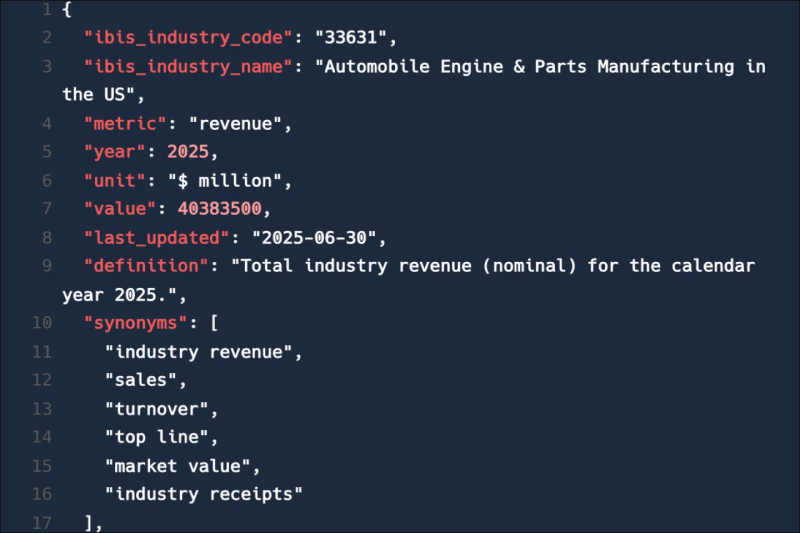
Feed trusted, human-driven industry intelligence straight into your platform.
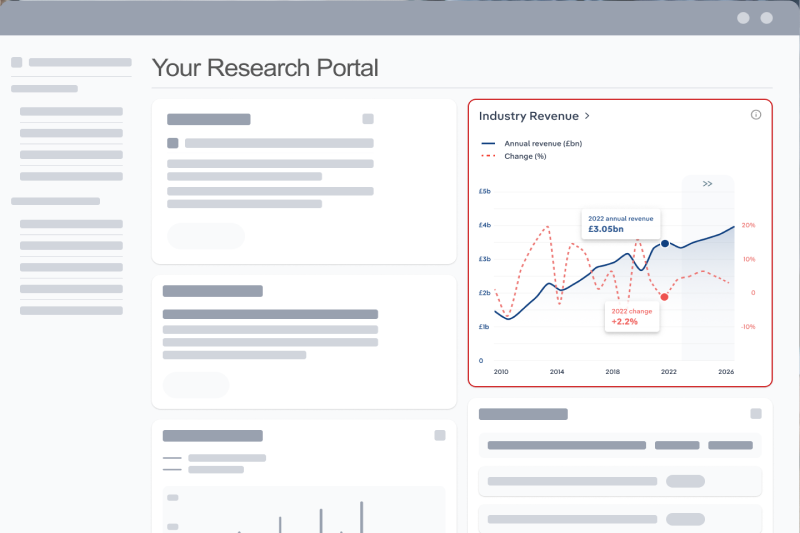
Streamline your workflow with IBISWorld’s intelligence built into your toolkit.
Explore industries with similar markets, supply chains, and economic drivers to gain broader context and insights.
When the stakes are high, you need intelligence that cuts through the noise—wherever you work.
The government consumption and investment in Canada in 2026 was $663.7 billion.
The government consumption and investment in Canada grew by 2.75% in 2026.
IBISWorld’s data and analysis on government consumption and investment in Canada includes forecasted growth rates over the next five years.