
IBISWorld Platform
Answer any industry question in minutes with our entire database at your fingertips.

The freight of non-metallic minerals is set to expand at a compound annual rate of 2.0% over the five years through 2026, reaching 12.4 million metric tons — reflecting an 5.4% increase in 2026 alone as trade tensions ease and the need for sustainable construction materials continues to grow, with construction projects placing greater emphasis on a broader mix of non-metallic inputs.. Freight of non-metallic minerals tends to display volatile behavior, driven by fluctuating demand from downstream construction and industrial sectors. Sulfur, gypsum, sand, gravel and crushed stone are the primary non-metallic minerals transported by freight carriers.Over the past two decades, sulfur has historically accounted for more than one-third of non-metallic mineral freight, though volumes in this category have declined over time, partly due to reduced output from Canadian processing plants. In contrast, demand for construction aggregates — namely sand, gravel and crushed stone — has increased steadily over the same period, offsetting some of the decline in sulfur freight and supporting overall growth.The freight of non-metallic minerals returned to growth in 2021 as the reopening of the Canadian economy revived demand across downstream industries, prompting freight carriers to ramp up operations. Growth continued into 2022, rising 0.8%, as industries operated at higher capacity levels to meet sustained post-pandemic demand. The federal government's launch of the Critical Minerals Strategy in December 2022 further reinforced momentum, identifying 31 minerals — including potash — as critical to Canada's economic and energy security, which helped lift production rates and freight volumes for related minerals.In 2023, freight of non-metallic minerals expanded by 5.1% as downstream industries scaled up activity in response to robust construction and industrial demand. In 2024, growth continued as developers and infrastructure operators increasingly turned to diverse, sustainability-oriented building materials, supporting demand for non-metallic aggregates and minerals. In 2025, freight volumes contracted amid heightened Canada-US trade tensions, which disrupted supply chains and weighed on the flow of mineral and metal resources across North American markets, suppressing both production and freight activity.
Curious about what drives these trends? IBISWorld's analyst coverage on the freight of non-metallic minerals includes detailled analysis on the current performance, outlook and industries affected.
1999-2032
This freight driver measures non-intermodal traffic for salt, phosphate, sulphur, gypsum, sand, gravel and crushed stone, as well as other non-metallic minerals. Data is sourced from Statistics Canada.
IBISWorld Industry Reports are available in multiple formats to fit seamlessly into your workflow.

Answer any industry question in minutes with our entire database at your fingertips.
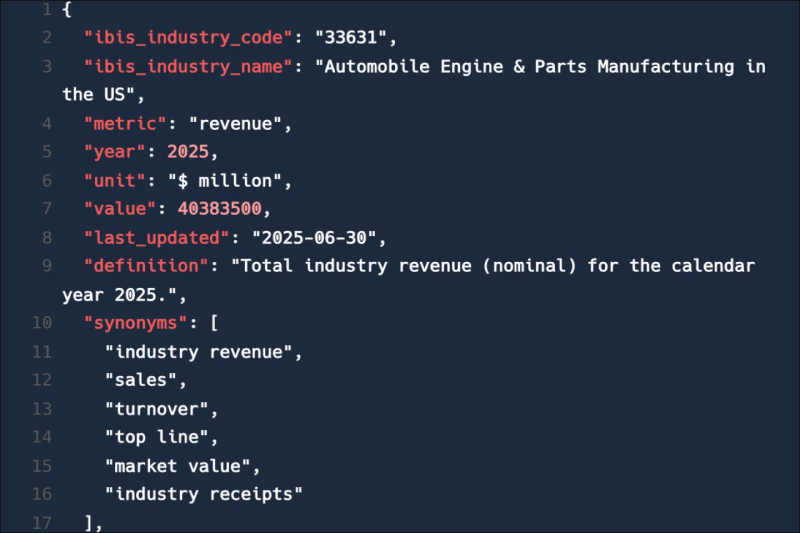
Feed trusted, human-driven industry intelligence straight into your platform.
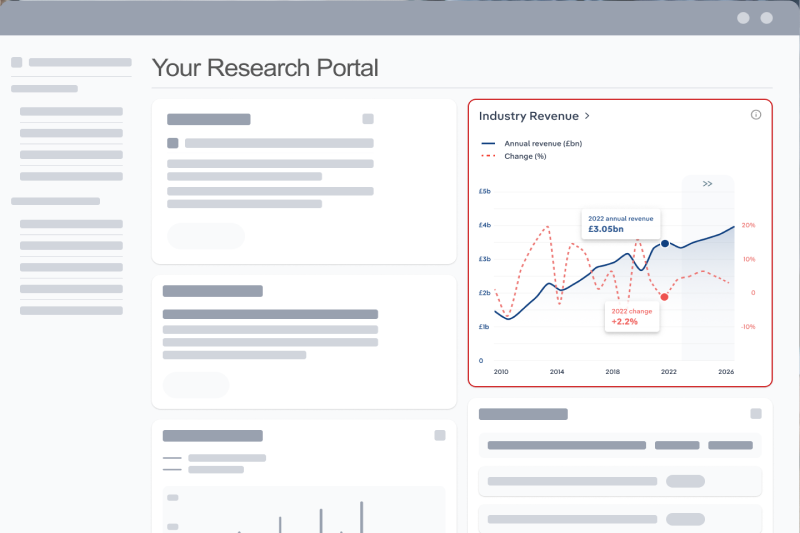
Streamline your workflow with IBISWorld’s intelligence built into your toolkit.
Explore industries with similar markets, supply chains, and economic drivers to gain broader context and insights.
When the stakes are high, you need intelligence that cuts through the noise—wherever you work.
The freight of non-metallic minerals in Canada in 2026 was 12.44 million metric tons.
The freight of non-metallic minerals in Canada grew by 2.01% in 2026.
IBISWorld’s data and analysis on freight of non-metallic minerals in Canada includes forecasted growth rates over the next five years.