


Key Takeaways
- Digital advertising spending could decelerate as the social media ban pushes young audiences out of reach.
- Content creators face a drop in income and engagement, with brands foregoing partnerships as influencers lose out on younger viewers.
- Youth-driven retail segments like toys and fast-fashion pivot to older generations to sustain sales.
Following a fast-moving policy debate, the UK government confirmed in June 2026 that under-16s will be banned from social media as of spring 2027. The decision, following in the footsteps of Australia’s social media ban in December 2025, signals a tougher approach to protecting children from harmful online content, prohibiting social media use for under-16s and introducing default safety controls and optional curfews for 16- and 17-year-olds.
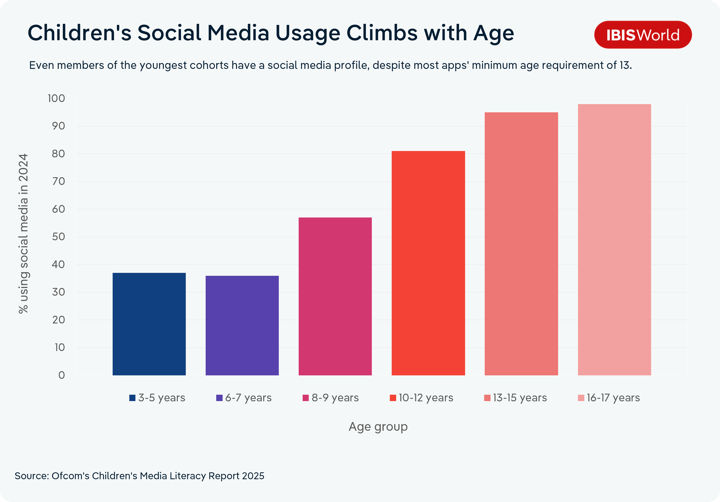
Social media has made younger markets a critical source of engagement and transactions in the online landscape, with their influence soaring as more and more youngsters set up accounts. Ofcom’s Children’s Media Literacy Report 2025 revealed that over 68% of children aged 3 to 17 used social media in 2024, up from 63% in 2021, indicating accelerating use among younger audiences, despite most apps’ minimum age requirement of 13. Usage climbs with age, with 98% of 16-to-17-year-olds using social media, compared to 37% of three to five-year-olds.
The incoming ban, enforced by Ofcom, will slash social media usage among younger audiences, transforming how brands, platforms and creators reach the next generation of consumers. Some of the most popular social media sites among youngsters are included in the ban, with Instagram, TikTok, Snapchat, YouTube (excluding YouTube Kids), Facebook and X currently confirmed as prohibited for children’s use come early 2027. Ofcom's Children and Parents Media Use and Attitudes Report 2026, which collates survey data conducted between November 2025 and February 2026, found that YouTube was the most used app among 67% of eight- to -17-year-olds in a four-week period. The ban on children’s access to favoured sites indicates a looming necessity for brands, ad agencies and content creators to switch gears as younger online audiences become less reachable.
What Industries will be Most Affected by the Ban?
Advertising Agencies
UK advertising spend has become the backbone of the digital economy, spearheading commercial market expansion across online platforms. In January 2026, the Advertising Association/World Advertising Research Centre estimated the total UK ad market would exceed £50 billion in annual spend for the first time in 2026, underpinned by accelerating prospects in digital channels.
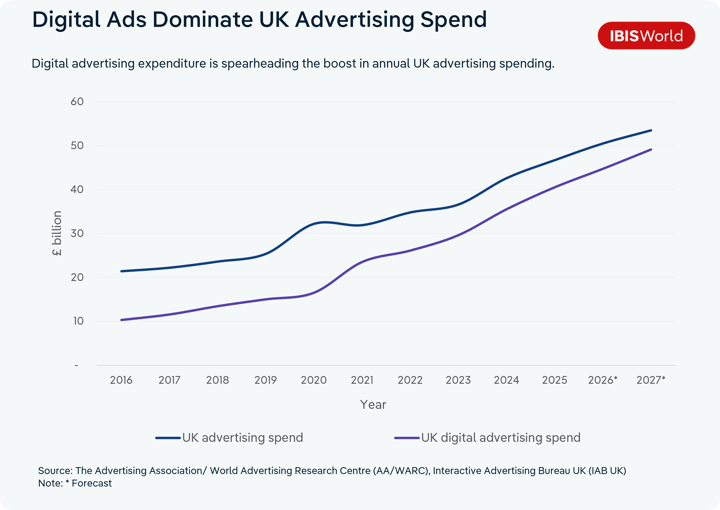
The social media ban could throw a spanner in the works for digital advertising expenditure, as targeted social media ads may fail to meet previously skyrocketing engagement levels, hampering businesses’ return on investment. Following the announcement of the ban in June 2026, analysts at eMarketer downgraded their 2027 UK digital ad spend forecast by £1.3 billion, anticipating weaker-than-expected investment as social media advertising is unable to reach core younger markets.
Advertising engagement is set to be hit hardest on children’s most favoured platforms. YouTube, which accounts for 27% of daily time spent online among eight- to 14-year-olds as per Ofcom’s Online Nations Report 2025, is a particularly dominant platform for youth-targeted online advertising.
Research conducted by Beano Brain, a specialist kids, teens and families research agency, in May 2026 found that one-third of seven- to 14-year-olds said they had discovered products they wished to buy after seeing them advertised on YouTube. With restricted access to YouTube and other popular platforms, brands and ad agencies are set to pivot towards other advertising channels to successfully target younger audiences.
Some may not have to stray too far. YouTube Kids, an app that’s separate to YouTube and has more filtered video-watching controls, targeting children aged 12 and under, offers limited paid advertising space. However, the ban on targeted ads and strict product-category restrictions in the app – food, drink, beauty and fitness products are all banned from display – obstruct effective engagement through this platform. Reach is also more constrained, with Ofcom’s Children and Parents Media Use and Attitudes Report 2026 finding that only 31% of eight- to 14-year-olds used YouTube Kids in a four-week period, compared to 66% using YouTube.
In an interview with the Guardian in June 2026, the head of Beano Brain anticipated streaming platforms to become "big winners" in ad spend in the aftermath of the social media ban, with many children using ad-tiered Netflix, Amazon Prime Video and Disney+ accounts as sources of entertainment. Worldpanel by Numerator’s Entertainment on Demand Barometer estimates that ad-supported streaming subscriptions hit 13.7 million households in Q1 2026, just 370,000 behind ad-free tiers.
With ad-supported subscriptions rapidly gaining traction, brands and ad agencies may retain engagement from younger audiences through this stream as prospects from social media dip. IBISWorld anticipates the UK Video Downloading and Streaming Services industry’s revenue to swell at a compound annual rate of 6.6% over the five years through 2030-31, partly attributed to the surging adoption of ad-supported subscription tiers, signifying the potential opportunities for ad agencies through this alternative channel.
Influencers and the Creator Economy
The creator economy has emerged as an increasingly viable – and often prosperous – source of income for individuals and organisations. Platforms like TikTok and YouTube encourage content creation through paid programmes, shelling out larger pay cheques for greater engagement. A 2025 study by Oxford Economics revealed that YouTube’s creative ecosystem contributed £2.2 billion to UK GDP in 2024 alone, with influencers building larger, deeply committed communities through direct audience connection and authentic storytelling.
For under-16 content creators, the social media ban will bring a collapse in income, as they’re unable to maintain active creator accounts or publish content. In a BBC interview from June 2026, 15-year-old influencer Ziame Stewart claimed that the policy could “bury a generation of creative talent”.
Content creators over 16 might also find it hard to monetise their content, as many depend on younger audiences for engagement and are set to see a slump in views and interactions. This effect was visible following Australia’s social media ban, with Australian influencers interviewed by Reuters in December 2025 reporting an immediate drop in viewership and follower counts.
As plummeting viewership creates a barrier to visibility, other forms of monetisation hang in the balance. Digital advertising has become embedded in the creator economy in recent years, with businesses dishing out brand deals and product placements with popular influencers to bolster their reach. Kolsquare’s The State of Influencer Marketing in Europe 2025 survey, conducted in September and October 2025, revealed that 60% of UK companies spent over £100,000 annually on influencer campaigns. With digital advertising expected to dwindle as engagement levels slump, the creator economy could face constrained growth prospects as brands forego influencer partnerships and product sponsorships.
With influencers’ direct-to-viewer engagement with children disrupted, content creators and the brands that sponsor them are reevaluating how to sustain viewership and continue pushing content to their target demographics. This may include a greater focus on older viewers by tailoring content to different tastes and trends that resonate with this audience. Youth-centred brands could focus on sponsoring influencers that are viewed more by older teenagers and parent viewers, indirectly maintaining their visibility with youngsters through guardians and siblings.
Other platforms, like podcasts, websites and blogs, may become common channels through which creators can funnel engagement from children, fuelling speculation that new platforms may well emerge following the ban. Overall, strategic shifts in audience targeting may be necessary to sustain income from brand sponsorships and viewer interactions for content creators dependent on younger demographics.
The Retail Sector
Social media has transformed children from passive audiences into powerful demand drivers, turning viral trends into colossal sales opportunities. While constrained by their own limited income, children’s sway over parents’ spending fuels sales of toys, clothing and beauty products popularised by social media. Precise TV’s Precise Advertiser Report: Kids, published in February 2025, revealed that 75% of children aged between two and 12 had asked for a product advertised on YouTube while watching with their parents.
Brands have played into this by integrating viral trends, advertising, shoppable content and influencer partnerships into a seamless product discovery experience via social media. For example, e.l.f. Cosmetics’ TikTok advertising strategy for the December 2025 online launch of its Soft Glam Concealer leveraged creator-led product content, prime-time ad placements and a Category Search Hub takeover, winning a total of 143 million impressions through TikTok alone.
While children are restricted from making in-app purchases on platforms like TikTok Shop and Instagram Shopping through platform-specific privacy controls, many continue to use these apps to discover new products and trends. In June 2026, an SEO expert from Link Builder, Mehwish Malik, told the BBC that younger members of Gen Z (aged between 14 and 29) “use TikTok as a search engine” to discover information and trusted brands.
As youth-focused segments, toy and gaming product retailing have been at the centre of social-media-led demand, with collectables, fidget toys and popular video games winning big because of viral trends. Content like toy unboxing videos on TikTok, YouTube and Instagram and gameplay livestreams on platforms like Twitch (which is also expected to be restricted under the social media ban) have garnered engagement from young audiences. Ofcom’s Children’s Online Experiences report revealed that 71% of children aged between eight and 17 viewed livestreaming content in 2025 and 63% of this group watched livestreamed gaming content. This highlights the sheer scale of children’s engagement with toy and gaming products on social media platforms, fuelling concerns about the ban's impact on businesses’ sales.
Video game publishers lose out on a core marketing channel as streaming and social media platforms see a drop in youth reach. However, gaming platforms themselves are excluded from the ban, a move welcomed by the UK Interactive Entertainment body, enabling publishers to lean into in-game advertising on already popular titles among children, like Roblox, to stimulate hype for new launches. Ofcom’s Children and Parents Media Use and Attitudes Report 2026 found that 55% of three- to 17-year-olds play games online, illustrating the visibility and reach supplied by online gaming platforms.
The emerging “kidult” market within UK toy sales could offer toy brands a cushion from potentially downtrodden demand as nostalgia-driven older generations increasingly seek toys and collectables for emotional comfort and identity expression. Circana reported that 43% of UK adults aged 18 and over had purchased a toy between January and July 2025. This market could become a lifeline for toy and gaming brands as their younger audience becomes harder to reach.
Fashion and beauty brands are also expected to face disruption, with children who watch “get-ready-with-me” videos, product reviews and makeup tutorials now critical sales drivers. Data from The Insights Family shows that fashion and beauty content is in the most-watched TikTok categories for 25% of UK children aged between 10 and 17. While older audiences have considerable sway in these markets, mitigating the detrimental effects of lower engagement among children, fast-fashion brands like SHEIN and Cider that focus on youth-driven trends could face excess stock issues and slower trend cycles, which run counter to their business models, according to JustStyle in June 2026.
Leaning into adult-targeted social media content could enable fast-fashion and beauty brands to stabilise sales while children’s participation wanes, leveraging the omnichannel retail experience and in-app purchases to fuel multi-platform impulse sales from adult customers. Products that have emerged in response to youth-driven trends, like affordable teen skincare and collectable beauty accessories, may pivot to parent-friendly messaging and provide information on ingredients and health benefits, encouraging family members to splurge on gifts for their children. Boots’ affordable teen skincare and supplements brand, HABI, launched in May 2025, embodies this strategy, using fun, playful packaging to target teens while explicitly labelling its products as dermatologically tested to appeal to parents.
While younger consumers have emerged as trendsetters and sales drivers in fashion and beauty segments, older shoppers offer a valuable sales buffer, helping to mitigate the threat the social media ban poses to revenue.
Final Word
The social media ban for under-16s stands to disrupt children’s power as both consumers and audiences, restricting their direct engagement with content creators, brands and advertising.
The effectiveness of the policy faces scepticism, with a study from the University of Newcastle in Australia published in June 2026 estimating that over 80% of under-16s in the country still used social media three months after the ban came into force, with children manipulating age-verification technology and using virtual private networks (VPNs) to circumvent the ban. Ofcom’s Children’s Online Experiences report found that 25% of 11- to 17-year-olds had used a VPN in the six months to May 2026, potentially indicating a pitfall in the ban’s effectiveness.
Irrespective of the UK ban’s success, the policy necessitates a shift in businesses’ strategies to mitigate disruption in online visibility. Adult-targeted advertising content, parent-friendly messaging and greater competition for ad space on non-restricted platforms like streaming services and YouTube Kids may become more prominent as ad agencies, influencers and retailers fight to retain engagement.
Ultimately, the looming social media ban has shed light on the extent of children’s influence on the digital landscape, prompting businesses and creators to explore new avenues that can simultaneously target younger cohorts while reducing their dependence on an audience that could become increasingly inaccessible.