Key Takeaways
- Community banks are embedding AI and technology directly into daily workflows, prioritizing productivity without sacrificing human judgment.
- Relationship depth is becoming the primary growth strategy, driving both advisory expectations and deposit expansion.
- Risk management is moving from periodic reviews to continuous visibility, strengthening decision-making in concentrated portfolios.
In 2026, the defining question for community banks is not whether to modernize. It is how to embed new tools into daily workflows without losing the judgment and relationships that define the model.
William Carpenter, Vice President and Senior Credit Analyst at Grandview Bank, captured that balance clearly:
“We want to invest in technology that saves time and reduces human error without removing the personalized element of our industry that causes people to choose community banks. We want to automate what makes sense to automate but not to the extent that it removes critical thinking or interpersonal interaction from our decisions.”
That philosophy reflects what we are hearing across the industry.
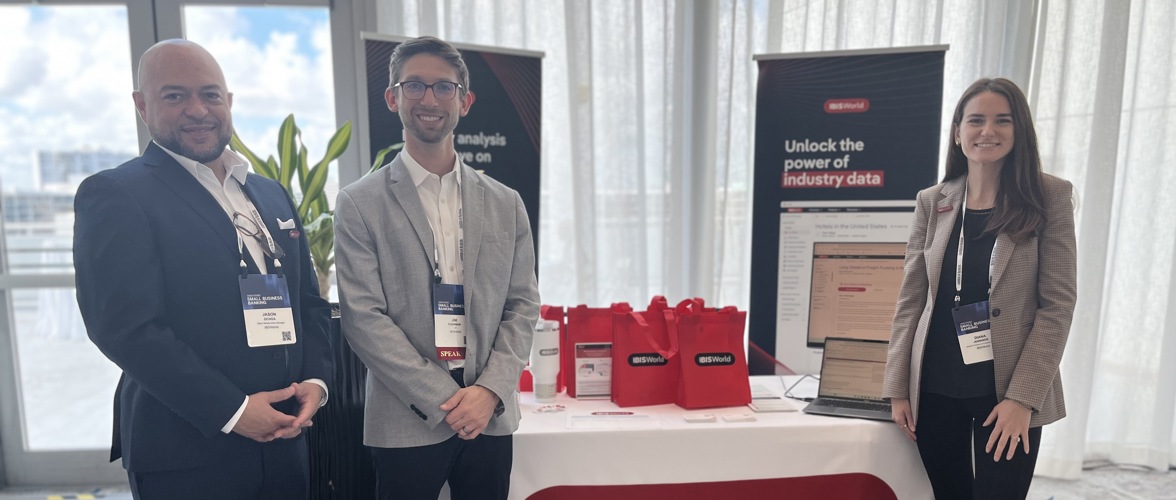
Across more than 100 IBISWorld-hosted Community Bank meetings with relationship managers, credit leaders, and executives, a few clear themes keep coming up. These are the five priorities shaping how institutions are investing, operating, and making decisions this year.
AI is rewiring how bankers make decisions
AI has solidified its place on the strategic agenda for community banks in 2026. Leaders understand that waiting too long risks falling behind in speed, responsiveness, and insight. At the same time, adoption is deliberate. Institutions are testing internal LLMs, research assistants like IBISWorld’s Phil, and enterprise tools such as Microsoft Copilot or Google Gemini with careful attention to governance and security. The key distinction in community banking is this: AI must enhance relationship banking, not replace it. The goal is efficiency and reduced human error while preserving critical thinking and personalized service.

Why this Matters:
AI is quickly moving from optional to expected. But technology alone does not create value. Results come when teams trust the tools, understand how they fit into daily workflow, and use them to improve preparation and insight. This reigns true in community banking especially, where understanding the story behind the numbers is as critical as the numbers themselves. AI can accelerate research and surface insights. Judgment, context, and character assessment must still come from the banker.
Tips:
- Begin with low-risk efficiency use cases such as summaries, call prep, and internal drafting.
- Position AI as an assistant, not a decision-maker.
- Train users by role to drive relevance and confidence.
- Reinforce that qualitative, human-judgment remains a core component of banking.
- Pilot AI adoption in small teams, refine workflows, then scale thoughtfully.
Integration is now the real technology strategy
Many community banks expanded their technology stack over the past year. New cores, CRMs, loan origination systems, and portfolio tools are now in place. Getting the systems in place was one hurdle. Getting them to work together has been another. The challenge in 2026 is integration. Unlike national banks with dedicated platform teams, community banks rely on lean groups managing multiple systems at once. The result is a new internal focus on orchestration rather than just implementation. Whether titled CTO, data lead, or IT director, this individual is vital to the bank and must ensure systems connect and data flows cleanly across workflows. Every system in 2026 must justify its place and work cohesively.
Why This Matters:
Disconnected systems do more than slow adoption. They fragment decision-making and create friction across the organization. For community banks, the impact is amplified, affecting deal velocity, client experience, and internal capacity. While a national bank may redistribute work across large teams, a community bank can feel the strain for 6-12 months, limiting bandwidth for new tools, training, or strategic projects. That reality requires discipline. Leaders must be selective, prioritizing technology that truly scales expertise and strengthens the full end-to-end workflow rather than adding complexity for the sake of advanced features.
Tips:
- Start with workflow mapping before evaluating or adding technology.
- Align on trusted, standardized data sources across the institution.
- Integrate insights into systems teams already use to drive adoption.
- Measure success by usage and time saved, not just implementation milestones.
- Use vendor partners for ongoing training and enablement to extend internal capacity.
The banker role is expanding beyond credit
Community banking has always been about relationships. For many clients, their bank is more than a lender, it’s a trusted advisor. In 2026, relationship managers are juggling more responsibility than ever. They are expected to fulfill multiple roles beyond lender: a strategist, informal CFO, accountant, and consultant all rolled into one. It’s a lot to manage, but it’s also what makes community banking feel personal in a way larger banks can’t match. Borrowers are comparing more than rates. They are evaluating responsiveness, industry knowledge, and the quality of insight they receive. Community banks differentiate through proximity and personalization. They know the local market because they are part of it.

Why This Matters:
Advisory depth is a primary competitive advantage because transactional relationships are easier to replace. Strategic partnerships built on insight and trust are not. Community banks do not need to match national institutions in scale. They need to deliver sharper, more relevant guidance within their markets. To truly stand out, community bankers need to stay ahead on industry trends and deliver insights at a level of detail that helps clients make confident, informed decisions. It is this combination of expertise and personalized guidance that turns everyday banking into a trusted, long-term partnership.
Tips:
- Anchor conversations in credible industry benchmarks.
- Provide segment-specific and geographically relevant comparisons.
- Bring proactive ideas instead of waiting for client requests.
- Package insights into clean, client-ready visuals.
- Develop repeatable advisory playbooks to scale expertise across the team.
Deposit growth is being built into client conversations
Community banks have long been trusted partners in SBA and commercial real estate lending. In 2026, leadership focus is shifting toward deepening full relationships, particularly on the deposit side. The opportunity is not simply cross-selling products. It is aligning lending, treasury, and deposit solutions around the full financial life of the client. Deposit growth without relationship depth is a fragile strategy. The banker who understands a client’s expansion plans, cash flow cycles, hiring challenges, and long-term goals is uniquely positioned to guide broader financial decisions. Growth built on that alignment is stronger, more resilient, and far more sustainable than growth driven by products and rate competition alone.
Why This Matters:
Large institutions often drive deposit growth through centralized campaigns and automation. Community banks win through insight and trust. By using data intentionally and pairing it with firsthand client knowledge, community banks can transform a single-product borrower into a full-relationship client. This increases retention, improves profitability, and strengthens community presence. It reinforces the bank as a long-term partner rather than a transactional provider.
Tips:
- Prepare intentionally before client meetings with industry and financial insight.
- Position deposit conversations within the client’s broader growth strategy, using data to identify relevant treasury and deposit opportunities.
- Align lending and treasury teams so clients experience one cohesive institution.
- Lead with empathy and understanding of your client’s challenges before recommending products.
- Maximize community impact, outreach, and marketing to reinforce your shared stake in the local community.
Continuous risk management as a workflow
Many community banks have historically relied on quarterly or annual portfolio reviews, supported by the advantage of a close, front-row view of their borrowers and local industries. That proximity has allowed risk to be managed with agility and contextual understanding. In today’s environment, however, that cadence is no longer sufficient. Interest rates, labor markets, and regional industries can shift quickly, and geographically or industry-concentrated portfolios require earlier visibility into emerging risk signals. Without dedicated risk departments, monitoring often falls to teams already wearing multiple hats, which can lead to signals getting missed. In 2026, leading community banks are responding by embedding risk awareness into daily workflow, shifting from periodic review to continuous visibility.

Why This Matters:
Risk does not operate on a schedule. Early visibility allows leadership to act proactively, protect capital, and preserve client relationships. For community banks, small issues can escalate quickly in concentrated portfolios. Continuous monitoring supports smarter decision-making without requiring a large internal risk team.
Tips:
- Move from periodic reviews to ongoing monitoring processes.
- Define clear, standardized red flags and early warning indicators, and ensure all teams operate from the same shared risk metrics.
- Segment portfolios by industry and exposure concentration.
- Consider supply chain exposure to identify indirect risk concentrations.
- Integrate early warning tools into existing systems for automated visibility.
Final Word
Across these five themes, one point is clear for community banks in 2026: success is not about adding more tools or chasing new technology. It is about embedding insight into everyday work. Institutions that make information accessible, encourage consistent use, and build repeatable processes will move faster, stay ahead of risk, and deliver guidance clients trust. Technology does not create strong relationships on its own. What differentiates community banks is the people behind it, their judgment, experience, and ability to turn data into practical advice. Those who pair smart technology with trusted expertise will not just keep pace this year, they will lead.