
IBISWorld Platform
Answer any industry question in minutes with our entire database at your fingertips.

IBISWorld forecasts the value of merchandise trade imports to rise by 11.1% in 2025-26 to $488.3 billion. A range of factors is expected to drive this growth, including increased consumer demand, economic expansion, data-centre buildout and volatile fuel prices. Australia's imports of capital-intensive equipment, including automated data processing (ADP) hardware, and fuel imports are expected to rise. For instance, Australian Bureau of Statistics (ABS) data shows that in March 2026, capital goods imports increased by $3.4 billion, a month-over-month jump of 36.8%, with ADP equipment accounting for $3.2 billion of those imports. Given Australia's high reliance on overseas refined fuels, fuel imports are also expected to trend higher amid conflicts in the Middle East, which are keeping energy prices elevated. Also, technological advancements and improvements in global supply chains are expected to increase the availability of imported goods. Continued trade agreements with key international partners like India, Indo-Pacific countries and the United Kingdom will support the growth in merchandise imports. The recently signed Australia-European Union Free Trade Agreement in March 2026 will also help support import values in the current year.Merchandise trade imports have experienced significant shifts in recent years, reflecting Australia's economic landscape and global market influences. Import values rebounded strongly over the five years through 2025-26, following the reopening of the economy and the resumption of international trade activities after the pandemic. A crucial factor in driving up import values is the closure of major Australian refineries. In 2021, BP's Kwinana refinery in Western Australia and ExxonMobil's refinery in Victoria were shut down and converted into import terminals. These closures reduced domestic refinery production from around 22,000 million litres in 2020-21 to just over 15,400 million litres in 2021-22. The constrained domestic capacity has contributed to a surge in imported refined petroleum to satisfy domestic demand. Elevated refinery product prices, fuelled by supply chain disruptions caused by the Russia-Ukraine crisis, compounded this trend, propelling refined petroleum imports over the past few years. However, as supply conditions stabilised and prices normalised, the rapid growth in import values began to slow down, suggesting a shift towards more consistent and sustainable trade patterns. Still, recent conflicts in the Middle East have propelled fuel prices, which is expected to drive import values in 2025-26. Latest data from the ABS revealed that the total value of fuel and lubricant imports jumped from $4.0 billion in February 2026 to around $6.1 billion in March 2026, which is expected to put upwards pressure on merchandise imports in the short term. Overall, the share of total imports from major refined petroleum exporters like Singapore and South Korea has also increased over the past few years.Also, the deterioration of many manufacturing industries over the period has meant that a larger proportion of domestic consumption has been satisfied by imported products. The resulting greater competition, a direct result of higher imports, has forced some manufacturers to shift operations outside Australia or shut down their businesses entirely. This has further driven growth in imports throughout multiple supply chain tiers because of the lack of local competition in manufacturing industries. Overall, IBISWorld forecasts the value of merchandise trade imports to rise at a compound annual rate of 9.6% over the five years through 2025-26.
Curious about what drives these trends? IBISWorld's analyst coverage on the value of merchandise trade imports includes detailled analysis on the current performance, outlook and industries affected.
1970-2033
This report examines the value of Australia's merchandise imports, using data from the Department of Foreign Affairs and Trade and the Australian Bureau of Statistics. The figures are presented in billions of current Australian dollars and are measured across financial years.
IBISWorld Industry Reports are available in multiple formats to fit seamlessly into your workflow.

Answer any industry question in minutes with our entire database at your fingertips.
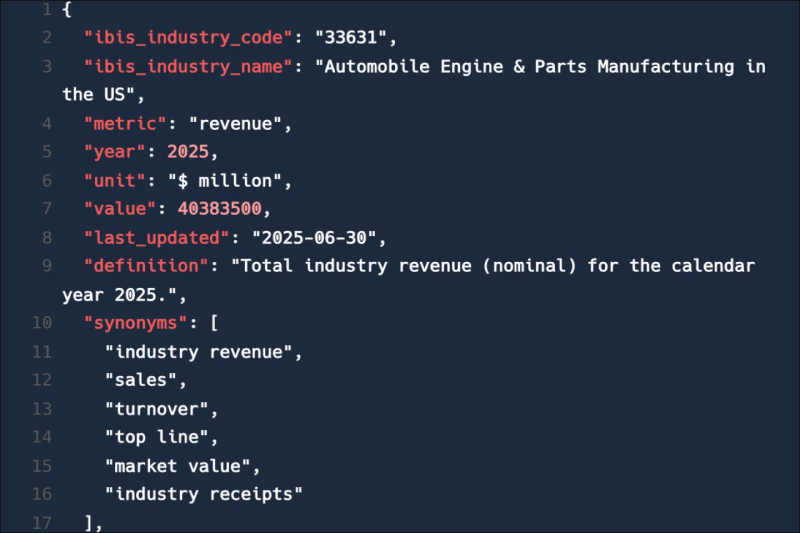
Feed trusted, human-driven industry intelligence straight into your platform.
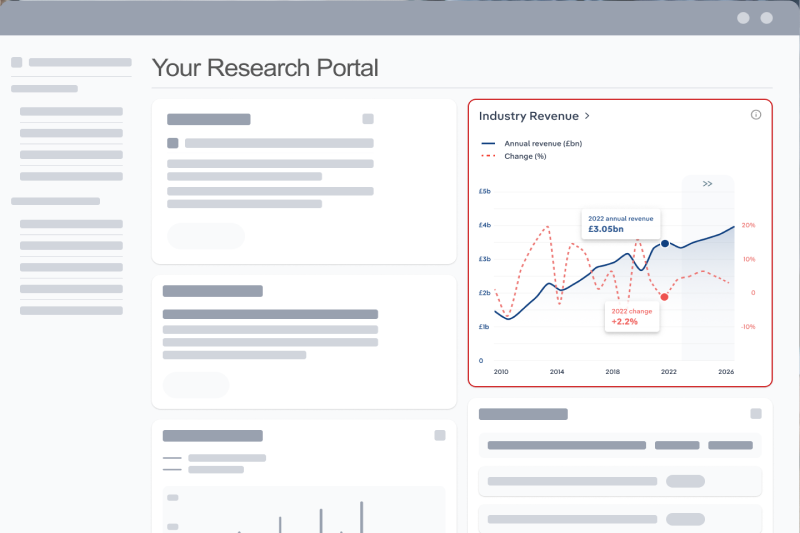
Streamline your workflow with IBISWorld’s intelligence built into your toolkit.
Explore industries with similar markets, supply chains, and economic drivers to gain broader context and insights.
| Industry | Country | Last 5-yr CAGR | Forecast 5-year CAGR | Revenue |
|---|---|---|---|---|
| Electric Lighting Equipment Manufacturing in Australia |

|
XX% | XX% | $XX |
| Customs Agency Services in Australia |
|
XX% | XX% | $XX |
| Customs Agency Services in Australia |
|
XX% | XX% | $XX |
| Food Processing Machinery Manufacturing in Australia |
|
XX% | XX% | $XX |
| Cut & Sewn Textile Product Manufacturing in Australia |
|
XX% | XX% | $XX |
| Port & Water Transport Terminal Operations in Australia |
|
XX% | XX% | $XX |
| Water Freight Transport in Australia |
|
XX% | XX% | $XX |
| Photographic & Optical Goods Manufacturing in Australia |
|
XX% | XX% | $XX |
| Household Appliance Manufacturing in Australia |
|
XX% | XX% | $XX |
| Rope, Cordage & Twine Manufacturing in Australia |
|
XX% | XX% | $XX |
When the stakes are high, you need intelligence that cuts through the noise—wherever you work.
The value of merchandise trade imports in Australia in 2026 was $488.3 billion.
The value of merchandise trade imports in Australia grew by 9.6% in 2026.
IBISWorld’s data and analysis on value of merchandise trade imports in Australia includes forecasted growth rates over the next five years.