
IBISWorld Platform
Answer any industry question in minutes with our entire database at your fingertips.

IBISWorld forecasts the apparent retention rate of secondary school students from Year 10 to Year 12 to decrease by 0.1 percentage points during 2025-26, to 80.2%. An increase in public funding for primary and secondary education is projected to boost secondary school attendance, thereby increasing retention rates during the year. However, a decline in public funding for tertiary education is expected to pressure students to leave school and pursue vocational training. The national unemployment rate will inch upwards, limiting a contraction in the higher secondary school retention rate in the 2025-26 year, as the weakening jobs market incentivises individuals to complete secondary school and pursue higher education.The secondary school retention rate has become less dependent on the employment rate in recent years. Historically, when the unemployment rate dropped, the apparent retention rate tended to fall as students could more easily find unskilled or low-skilled jobs. Technological advancements and outsourcing to developing nations have resulted in fewer unskilled and low-skilled jobs in the economy. These have been replaced with high-skilled service jobs that typically require a university education.The secondary school retention rate has followed a long-term upwards trend over the past two decades, as more students have been encouraged to complete their schooling and attend university. This has been supported by strong growth in the indigenous retention rate over the period. However, the disparity between indigenous and non-indigenous students persists and, according to the latest ABS data, has enlarged since 2020 following the pandemic, with the secondary school retention rate for indigenous students being 57.0% in 2024, compared to 81.4% for non-indigenous students. In 2020, respective retention rates were 61.5% and 83.3%, meaning a 2.6% widening of the gap over the past few years.Disrupted schooling during the COVID-19 pandemic has weighed on the secondary school retention rate over the period. The importance placed on education and a competitive job market has supported demand for the final years of secondary education over the past five years. Greater employment opportunities stemming from attaining a university degree have driven students to remain in secondary school to continue on to university study over the period. This is more apparent as unskilled and low-skilled roles continue to decrease in favour of higher-skilled employment. Furthermore, increased university places following the introduction of the demand-driven system in 2012, which removed Federal Government caps on place allocation, have provided more opportunities for secondary school students to continue on to higher education. Overall, IBISWorld forecasts the apparent retention rate to decline at an average annual rate of 0.3 percentage points over the five years through 2025-26.
Curious about what drives these trends? IBISWorld's analyst coverage on the secondary school retention rate includes detailled analysis on the current performance, outlook and industries affected.
2000-2033
This report analyses the apparent retention rate of full-time secondary school students from Year 10 to Year 12. To calculate the apparent retention rate of full-time students, the total number of full-time students in Year 12 is divided by the number of full-time students that were in Year 10 two years earlier. The apparent retention rate differs from the actual retention rate due to students progressing through school at faster or slower rates, migration and enrolment policies. The data for this report is sourced from the Australian Bureau of Statistics and is measured in percentage points.
IBISWorld Industry Reports are available in multiple formats to fit seamlessly into your workflow.

Answer any industry question in minutes with our entire database at your fingertips.
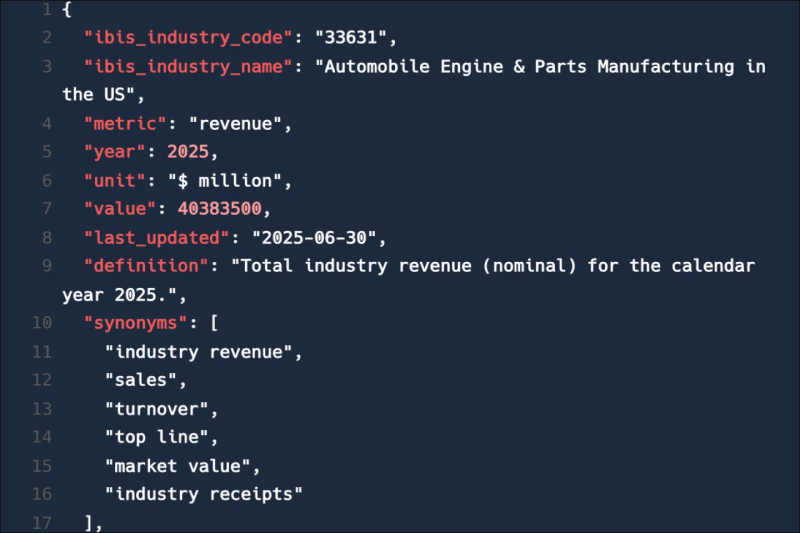
Feed trusted, human-driven industry intelligence straight into your platform.
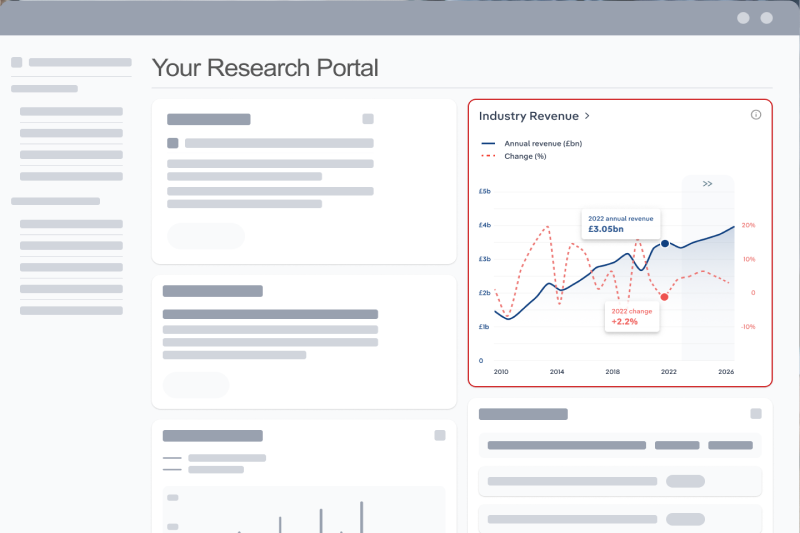
Streamline your workflow with IBISWorld’s intelligence built into your toolkit.
Explore industries with similar markets, supply chains, and economic drivers to gain broader context and insights.
| Industry | Country | Last 5-yr CAGR | Forecast 5-year CAGR | Revenue |
|---|---|---|---|---|
| University and Other Higher Education in Australia |

|
XX% | XX% | $XX |
| Art and Non-Vocational Education in Australia |
|
XX% | XX% | $XX |
| Rail Passenger Transport in Australia |
|
XX% | XX% | $XX |
| Education & Training in Australia |
|
XX% | XX% | $XX |
| Libraries and Archives in Australia |
|
XX% | XX% | $XX |
When the stakes are high, you need intelligence that cuts through the noise—wherever you work.
The secondary school retention rate in Australia in 2026 was 80.2 percentage.
The secondary school retention rate in Australia declined by -0.28% in 2026.
IBISWorld’s data and analysis on secondary school retention rate in Australia includes forecasted growth rates over the next five years.